The Ministry of New and Renewable Energy (MNRE) has announced a four-month timeline extension for eligible renewable energy projects affected by disruptions linked to the ongoing situation in West Asia.
The relief is aimed at developers facing supply-chain, logistics and construction challenges caused by geopolitical disruptions. It applies to renewable energy projects whose Scheduled Commissioning Date (SCD) or Scheduled Commencement of Supply Date (SCSD) falls on or after February 28, 2026.
The decision follows requests from renewable energy developers seeking additional time to complete projects affected by difficulties in sourcing equipment, transporting materials and maintaining planned construction schedules.
Force Majeure Relief for Renewable Projects
MNRE’s decision follows an earlier memorandum issued by the Department of Expenditure under the Ministry of Finance, which recognised the geopolitical situation in West Asia as a state of war for contractual purposes.
This classification allows eligible developers to invoke Force Majeure provisions contained in government and public-sector contracts, where applicable.
Under standard Power Purchase Agreements (PPAs), war and similar extraordinary events beyond the control of contracting parties can qualify for contractual relief. Where such events directly prevent developers from fulfilling their obligations, extensions may be granted subject to the relevant contractual provisions.
MNRE has asked major renewable energy implementing agencies, including the Solar Energy Corporation of India (SECI), NTPC, NHPC and SJVN, along with state energy departments, to consider eligible claims.
Power procuring entities may provide extensions of up to four months without imposing financial penalties or liquidated damages for delays directly attributable to the West Asia disruptions.
Developers Must Meet Eligibility Conditions
The relief is subject to specific conditions. Developers must have been fully compliant with their contractual obligations as of February 27, 2026.
The extension will apply only to delays directly linked to the West Asia disruptions. Developers cannot use the provision to seek relief for unrelated delays, project-management issues or other operational shortcomings.
This requirement is intended to ensure that the relief is targeted at projects genuinely affected by the geopolitical situation.
Grid Connectivity and Transmission Relief
MNRE has also sought coordinated action from the Ministry of Power, Central Electricity Authority, Central Electricity Regulatory Commission and grid operators.
The ministry has requested corresponding extensions for grid connectivity and General Network Access arrangements where projects qualify for the revised timelines. It has also sought matching extensions for applicable waivers of Inter-State Transmission System (ISTS) charges, without financial penalties.
For renewable developers, these provisions could help prevent a delay in project commissioning from triggering additional financial and contractual liabilities across interconnected project agreements.
Support for Renewable and Storage Projects
The move is expected to provide greater certainty to India’s renewable energy developers as international supply chains continue to face geopolitical risks.
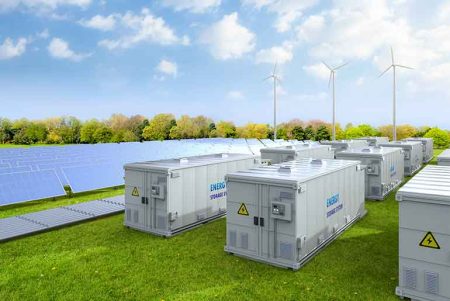
For the battery energy storage sector, the decision could also be significant as more solar and wind projects are being paired with Battery Energy Storage Systems (BESS) to provide firm and dispatchable power.
By allowing eligible projects additional time without penalties, the government aims to protect project economics, reduce contractual disputes and maintain momentum in renewable energy deployment.
The latest relief underscores the growing importance of resilient supply chains as India accelerates investment in renewable generation, energy storage and associated power infrastructure.
 Electrify your feed! Click here to join our Whatsapp group and to get the latest updates, expert insights, and innovations driving India’s energy storage revolution.