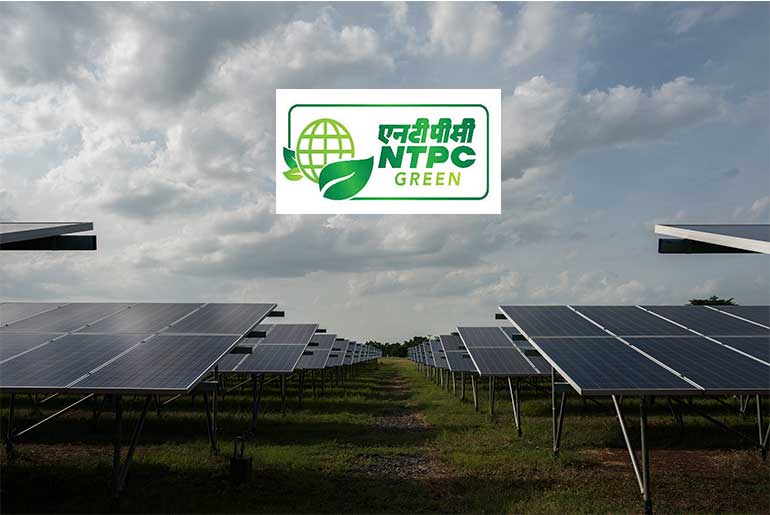
NTPC Green Energy Limited (NGEL) has commissioned an additional 50 MW of solar capacity in Rajasthan as part of the 150 MW solar component of its 100 MW Renewable Energy Round-the-Clock (RE-RTC) project. The newly commissioned capacity represents the third tranche of the solar project being developed by Project Eleven Renewable Power Private Limited, a subsidiary of ONGC NTPC Green Private Limited, the joint venture between ONGC Green Limited and NTPC Green Energy.
The latest commissioning has increased the commercial operational capacity of the NGEL Group from 10,786.56 MW to 10,836.56 MW, further strengthening the company’s renewable energy portfolio.
The RE-RTC project is designed to provide renewable power with improved supply reliability, supporting India’s transition towards a cleaner and more flexible power system. Round-the-clock renewable energy projects typically combine multiple renewable energy sources and are increasingly being integrated with energy storage solutions to ensure consistent power supply.
The commissioning follows a series of recent capacity additions by NTPC Green in Rajasthan. Earlier, the company had operationalised 62.5 MW of solar capacity across two projects. This included 12.5 MW, which raised the cumulative commissioned capacity of a 150 MW solar project to 100 MW, marking the second tranche of that project.
In addition, NTPC Green commissioned the second tranche of 50 MW under a separate 300 MW solar project in Rajasthan, increasing its cumulative operational capacity under that project to 200 MW. The project is being developed by Project Sixteen Renewable Power Private Limited, another subsidiary of ONGC NTPC Green Private Limited, and was declared commercially operational on May 15, 2026.
The latest capacity addition aligns with NTPC Green’s broader strategy of expanding utility-scale renewable energy generation while maintaining grid reliability. The company has reiterated its focus on deploying grid-friendly solar projects that can be integrated efficiently into the national power system without compromising grid stability.
As renewable energy penetration increases, NTPC has also highlighted the growing importance of Battery Energy Storage Systems (BESS) and other storage technologies in supporting reliable renewable power delivery. The company indicated that a portion of its upcoming renewable energy capacity additions will be backed by energy storage systems to help balance intermittent solar and wind generation, improve dispatchability, and enhance grid flexibility.
The integration of energy storage is expected to play a crucial role in enabling round-the-clock renewable power, reducing dependence on conventional generation during periods of low renewable output, and supporting India’s clean energy transition.
Looking ahead, NTPC has outlined an ambitious expansion roadmap, targeting the addition of approximately 6 GW of capacity annually between FY2032 and FY2037. The company said its future capacity additions will be planned to maintain a diversified and balanced energy portfolio, with a mix of renewable energy, conventional power, and storage assets.
With its latest solar commissioning in Rajasthan, NTPC Green continues to strengthen its position as one of India’s leading renewable energy developers. The project also reflects the increasing role of integrated renewable energy and battery storage solutions in meeting the country’s rising electricity demand while supporting national decarbonisation goals and enhancing the resilience of the power grid
 Electrify your feed! Click here to join our Whatsapp group and to get the latest updates, expert insights, and innovations driving India’s energy storage revolution.