Across India’s bustling streets, a quiet revolution is taking place — one battery swap at a time. From e-rickshaws ferrying passengers through narrow lanes to delivery riders powering the nation’s quick-commerce boom, Battery Smart has become the unseen force driving India’s EV transformation. With its lightning-fast two-minute swaps, data-driven network, and community-led model, the company is redefining how electric mobility can be both scalable and sustainable.
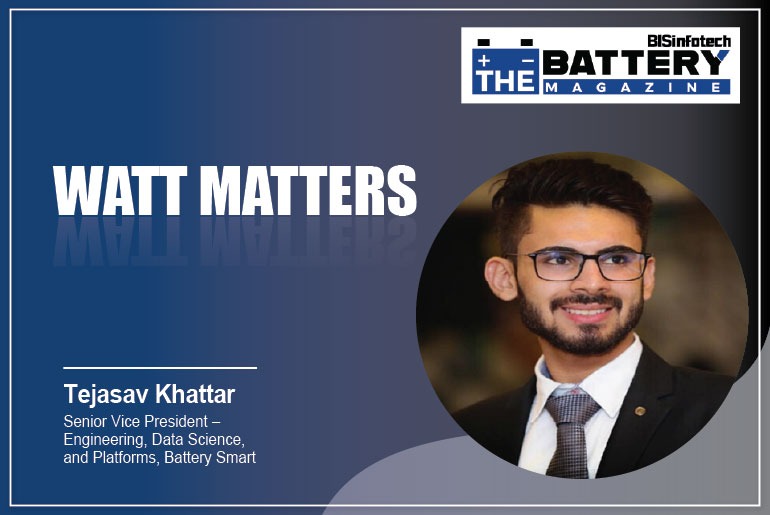
Shweta Kumari from The Battery Magazine had the opportunity to speak with Tejasav Khattar, Senior Vice President – Engineering, Data Science, and Platforms at Battery Smart, to understand how technology, partnerships, and innovation are fueling this momentum. In this exclusive interaction, he sheds light on the company’s rapid expansion, its role in empowering local entrepreneurs, and how it’s building the backbone of India’s battery-swapping ecosystem.
Let’s delve into the interview to know more about how Battery Smart is powering progress toward a cleaner, smarter, and more connected future of mobility.
Battery Smart has emerged as India’s largest battery-swapping network for two- and three-wheelers. What key technological or operational strategies helped you scale so rapidly across multiple cities in such a short span?
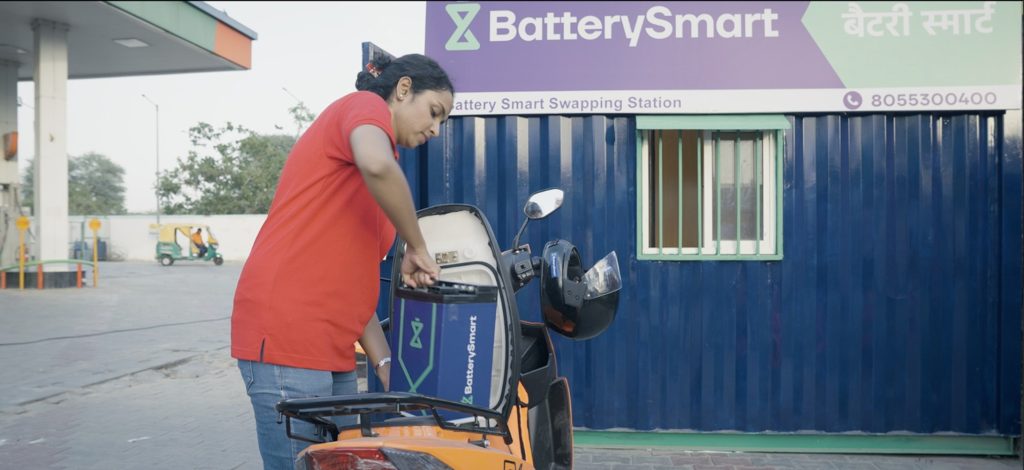
At Battery Smart, we’re working to make electric mobility affordable and accessible for everyone. Our battery-swapping technology helps solve key challenges in the EV space: high upfront cost, range anxiety and the lack of charging infrastructure. With our network, EV drivers can swap their discharged batteries for fully charged ones in under two minutes, allowing them to stay on the road longer and earn more.
Key Operational and Tech driven strategies that have enabled our rapid scale:
- Asset-light, partner-led model: To build a robust and scalable swapping network, we adopted an asset-light, partner-led model that empowers thousands of local entrepreneurs to host and operate our swap stations. This approach helps us overcome constraints like limited real estate, high setup costs, and varying city-level demand. It not only accelerates deployment but also embeds our network within the very communities where drivers live and work, ensuring relevance and accessibility.
- From a supply chain perspective, ensuring battery quality, managing lifecycle performance, and enabling sustainable end-of-life processes demand strong partnerships. We’ve built a diverse supply base with multiple government-certified OEM partners, reducing dependencies and ensuring reliable battery availability and performance across our network.
- Technology forms the backbone of this ecosystem. Every Battery Smart battery is IoT-enabled and equipped with an advanced Battery Management System (BMS). Our real-time monitoring and AI-powered analytics allow us to track battery health, predict issues, and optimize performance remotely. This ensures safety, extends battery life, and builds user confidence — which is critical for adoption at scale.
In addition, we have developed a suite of in-house applications, including dedicated driver and partner apps, that enable seamless operations across our network. These apps facilitate transparent payments, prevent fraud, and ensure secure, facial recognition–based authentication. They also support real-time battery tracking, station discovery for drivers, and accurate record-keeping of swap transactions for partners.
Together, our partner-led station model, tech-driven operations, and collaborative ecosystem are breaking down barriers to EV adoption — enabling us to deliver a rapid, reliable, and affordable battery-swapping network of 1,600+ stations across 50 cities. Collectively, we have enabled over 90 million swaps so far.
Your model focuses on empowering local partners and small businesses. Can you elaborate on how this partner-led approach contributes to both scalability and community-level economic growth?
Our partner-led model lies at the core of both our scalability and social impact. By empowering local entrepreneurs and small business owners to operate Battery Smart swap stations, we’ve built a network that grows rapidly while creating tangible economic opportunities at the grassroots.
Here’s how the model works and why it matters:
- Empowering local entrepreneurs: We collaborate with small business owners, mom-and-pop stores, and local operators who run our swap stations. This helps them earn additional income while becoming an integral part of India’s clean mobility ecosystem. It transforms EV adoption into a community-driven movement, rather than a top-down infrastructure project.
- Scalability through a partner-led approach: Our asset-light model allows partners to invest in and operate stations, while we provide the batteries, technology, and operational backbone. This structure minimizes capital and administrative overheads, enabling us to scale quickly across cities and geographies. It also offers agility — stations can be deployed wherever demand exists — and ensures greater accessibility, reliability, and trust among drivers, since operations are managed by people who understand their local markets.
- Building community trust and accessibility: Working with local partners fosters strong credibility and connection with drivers who depend on our service daily. It ensures that swapping stations are located where they’re most needed — near driver hubs, markets, and residential clusters.
To date, our partners have collectively earned around ₹206 crore, reflecting the real economic value being created through this model. In essence, our partner-led approach not only enables us to scale efficiently but also ensures that the benefits of India’s EV revolution reach the grassroots, driving shared growth and sustainable livelihoods.
The company’s network now spans Tier 1, 2, and 3 cities. How do user behavior, operational challenges, and adoption trends differ across these markets, and how does your team adapt to them?
Operating across Tier 1, 2, and 3 cities gives Battery Smart deep insight into the diverse needs and behaviors of EV users across India. Each market presents distinct challenges and opportunities shaped by its demographics and level of EV maturity.
- In Tier 1 cities, adoption is driven by early EV adopters and digitally savvy users. App-based engagement is high, with many drivers using digital tools for payments and station discovery. Our focus here is on network density—ensuring a station within one kilometer—and real-time demand forecasting to reduce peak-hour wait times and enhance driver retention. These markets also have a high concentration of gig and quick-commerce drivers, with both two- and three-wheelers fueling strong demand for battery-swapping technology.
- In contrast, Tier 2 and 3 cities represent the next wave of adoption, driven by affordability, community trust, and livelihood impact. Many users are first-time EV owners, making on-ground support and local engagement essential. Despite infrastructure and financing challenges, our teams overcome these through localized training, tailored communication, and community-led onboarding. Today, over 80% of our network operates outside metros, with adoption rising rapidly as drivers experience tangible benefits in uptime, earnings, and reliability.
- We follow a data-driven expansion strategy through three key models: Expansion X (identifying new station locations), Demand X (mapping high driver-density zones), and Lead Grading (evaluating operational viability and profitability).
- Our approach is never one-size-fits-all. By combining real-time data, local partnerships, and on-ground adaptability, Battery Smart continues to unlock EV adoption across India’s most diverse mobility markets.
Lead-acid batteries still dominate India’s e-rickshaw segment. How is Battery Smart addressing the transition toward advanced lithium-based solutions, and what are the challenges in upgrading existing fleets?
- At Battery Smart, we are actively driving the transition from lead-acid to advanced lithium-ion batteries by making this shift both economically viable and operationally seamless for drivers and fleet owners.
- Lead-acid batteries typically last only 8–12 months and require long 6–8 hour charging cycles, restricting driver earnings. In contrast, lithium-ion batteries deliver higher safety, longer lifespan, and lower total cost of ownership, directly translating into improved uptime, better efficiency, and higher daily income for e-rickshaw drivers.
- Our battery-swapping model removes the capital barrier—drivers no longer need to purchase expensive lithium batteries upfront. Through our network, they gain access to high-quality, interoperable lithium batteries on a pay-per-use basis, eliminating concerns about maintenance and replacement costs.
- In Delhi, where regulations are stricter and infrastructure more mature, the transition is well underway. In Tier 2 and 3 cities, adoption is more gradual due to initial change of tech and lower awareness. However, as drivers experience the tangible benefits of lithium technology—from higher uptime to reduced operating expenses—uptake is steadily increasing.
- To accelerate this shift, our onboarding and support teams actively educate drivers, demonstrate real-world earnings improvements, and handle all technical complexities in the background.
Looking ahead, what’s next for Battery Smart in terms of innovation and expansion? Are there plans to integrate renewable energy into swap stations, expand into other vehicle categories, or explore international markets?
Our focus will be twofold: strengthening our presence in the markets we already serve and expanding thoughtfully into new regions. But for us, it’s not just about building infrastructure, it’s about building a smart, reliable ecosystem. We’re combining technology, data insights, and strong local partnerships to make sure our network delivers dependable, high-uptime mobility solutions across both urban and rural India.
We also believe the EV landscape will evolve dramatically over the next five years. With stronger government policies, deeper OEM collaborations, and growing public and private investments, battery swapping technology will become mainstream, especially for commercial vehicles.
All our efforts are aimed at accelerating EV adoption by making battery swapping faster, more convenient, and widely available, helping more drivers transition to clean mobility.
 Electrify your feed! Click here to join our Whatsapp group and to get the latest updates, expert insights, and innovations driving India’s energy storage revolution.