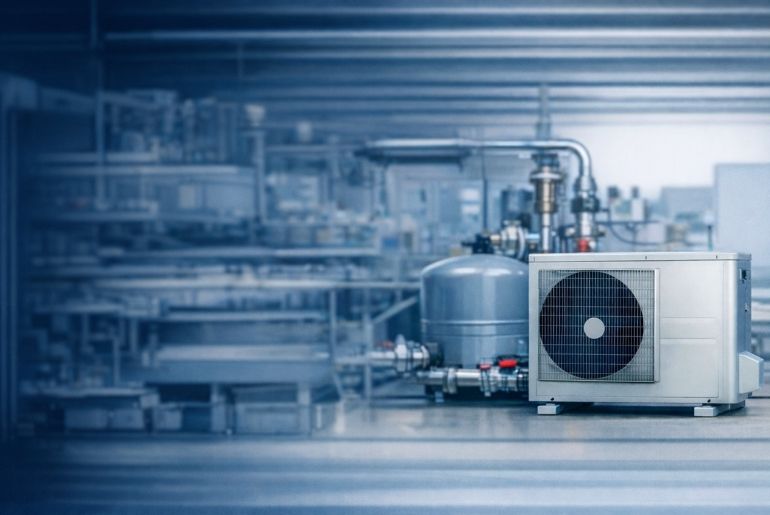
A team of researchers from Norway’s SINTEF and Swiss company COWA Thermal Solutions has successfully developed a novel thermal battery system designed to efficiently store heat generated by heat pumps. The breakthrough aims to improve energy efficiency in buildings while enabling flexible heating solutions, a critical step toward sustainable energy management.
How the Thermal Battery Works
The new system leverages salt hydrates, which can absorb and store heat from conventional heat pumps. This stored energy can then be released when needed, allowing buildings to maintain comfortable temperatures while reducing reliance on continuous electricity consumption. The researchers emphasized that the technology could potentially transform how heat pumps are used, shifting from a real-time energy supply model to a flexible heat storage system.
Dr. Ingrid S. from SINTEF, one of the lead researchers, stated, “This technology allows heat pumps not only to provide immediate heating but also to store thermal energy efficiently for later use. It represents a significant step toward decarbonizing building heating systems.”
Applications and Benefits
According to the research team, the thermal battery can be integrated into residential and commercial buildings, enabling users to store surplus heat during low-demand periods and use it during peak demand. This reduces energy wastage and enhances overall efficiency. By storing heat effectively, the system also supports grid stability by minimizing fluctuations in electricity demand.
COWA Thermal Solutions highlighted that the battery could scale from individual homes to larger commercial applications, making it a versatile option for energy planners and utilities seeking to optimize renewable energy integration.
Future Prospects
The researchers are now working on further optimizing the battery’s performance and exploring commercial deployment opportunities. They aim to make the technology widely accessible, contributing to global efforts in energy efficiency and climate change mitigation.
This development represents a promising innovation in renewable energy and thermal storage technologies, offering a practical solution for reducing building energy consumption while supporting sustainable infrastructure development.
 Electrify your feed! Click here to join our Whatsapp group and to get the latest updates, expert insights, and innovations driving India’s energy storage revolution.