
Close Menu
The Battery MagazineThe Battery Magazine
  • Just In
  • Batteries
    • Battery Manufacturing (BESS)
    • Battery Materials & Chemistries
    • Battery Recycling
    • C&I Storage
  • Solar
  • Renewable energy
    • Wind Energy
    • Hydropower
    • Green Hydrogen
    • Bioenergy
  • Tenders
    • Energy Storage
    • Solar Energy
    • Wind Energy
  • Policy
    • Storage
    • Solar
    • Wind
    • EV
    • Transmission
  • EV
    • EV Batteries
    • EV Charging Infrastructure
    • Electric Mobility Trends
  • Grid
    • Transmission & Distribution
    • Grid Infrastructure
    • Power Generation
    • Power Equipments
  • Exclusive
    • Cover Story
    • Watt Matters
    • Perspective
    • Articles
  • More
    • E-Mag
    • Events
    • Contact Us
Facebook LinkedIn WhatsApp
The Battery MagazineThe Battery Magazine
  • Just In
  • Batteries
    • Battery Manufacturing (BESS)
    • Battery Materials & Chemistries
    • Battery Recycling
    • C&I Storage
  • Solar
  • Renewable energy
    • Wind Energy
    • Hydropower
    • Green Hydrogen
    • Bioenergy
  • Tenders
    • Energy Storage
    • Solar Energy
    • Wind Energy
  • Policy
    • Storage
    • Solar
    • Wind
    • EV
    • Transmission
  • EV
    • EV Batteries
    • EV Charging Infrastructure
    • Electric Mobility Trends
  • Grid
    • Transmission & Distribution
    • Grid Infrastructure
    • Power Generation
    • Power Equipments
  • Exclusive
    • Cover Story
    • Watt Matters
    • Perspective
    • Articles
  • More
    • E-Mag
    • Events
    • Contact Us
LinkedIn Facebook WhatsApp YouTube
The Battery MagazineThe Battery Magazine
Home » Articles » Solar with Battery Storage: A Strategic Asset for Indian Data Centres and Industrial Parks
Articles

Solar with Battery Storage: A Strategic Asset for Indian Data Centres and Industrial Parks

Shweta KumariBy Shweta KumariSeptember 25, 20253 Mins Read
Facebook Twitter LinkedIn WhatsApp
Solar Plus Storage

Digitally influenced transformational and industrial acceleration periods place India’s infrastructural backbone of data centres and industrial parks at a pivotal position in the energy transition. With energy demand rising, the integration between solar energy and battery storage comes into strategic capitalisation, not just a green alternative but a reliable, economical solution fit for tomorrow.

Stimulated by cloud computing, 5G, and AI workload explosions along with the data localisation norms, the data centre formation in India is witnessing fast growth. As per JLL reports, India’s data centre capacity should touch 1645 MW by 2026, from 854 MW in 2023, growing over a 24% CAGR. Concurrently, industrial parks comprise manufacturing, automotive, textile, and electronics clusters and together constitute approximately 40% of the country’s electricity consumption. Such entities require uninterrupted power with quality assurance to maintain production cycles and ensure that the downtimes become not just prohibitive but precious.

Historically, both data centres and industrial parks have been dependent on grid power, with diesel generators acting as a supplementary source. Nonetheless, this method is fast becoming unsustainable, given volatile fuel prices, mandatory grid tariff increases, and the mandate to decarbonise all major industries. Depending upon the state, grid electricity for a large industrial consumer could be anywhere between ₹6–₹15 per unit, whereas diesel generation tends to cost well above ₹16 per unit. By comparison, solar power is the cheapest, having seen its cost plummet by over 80% in the last decade and offering power at a rate as low as ₹3–₹5 per unit through open access or on-site rooftop systems.

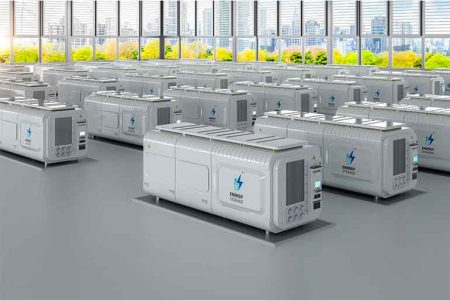
Solar energy, by itself, cannot provide the reliability and 24×7 operations required by these heavy industries. The generation is, by nature, intermittent and depends heavily on weather conditions or daylight hours. This is where BESS comes in. Battery systems would store excess solar energy generated at peak sunshine hours and feed it back to the grid when desired: during the evening hours or during outages of grid power, thus ensuring a power supply round-the-clock.

Integration of energy storage with solar power gives rise to maximised economic returns. In addition, these types of systems enable the facilities to earn cash by entering into demand response and ancillary markets for their stored energy, thereby further supplementing their energy resilience.

Though advances have been made, challenges persist. Initial capital costs for solar with battery storage are really high— they could cost up to ₹8-₹9 crore per MW of solar system involved, depending on battery size and technology. Technical know-how, issues with standardisation, and regulatory complexity in some states are all further hurdles. However, with improvements in technology and the evolution of financial models, such as leasing, RESCO, and pay-as-you-go models, the barriers are slowly being dismantled against uptake.

Summing up, solar energy integrated with battery storage is not an out-of-the-ordinary technology—it is fast emerging as a foundational power asset for India’s next-gen data infrastructure and industrial growth. It offers continuity to processes, cost advantages, and carbon reduction—three factors no modern-day enterprise can compromise on. As India embarks on its journey of digital and manufacturing ambitions, solar-plus-storage will be powering not only the plants but also the future.

whatsapp icon Electrify your feed! Click here to join our Whatsapp group and to get the latest updates, expert insights, and innovations driving India’s energy storage revolution.
battery energy storage India Energy Transition India renewable integration solar-plus-storage
Shweta Kumari
  • Website
  • LinkedIn

Sub-editor by profession. Love for words and storytelling, where every word narrates a story. Shaping stories in a world powered by electrons—where lithium meets logic, and every spark tells a tale of innovation, sustainability, and our electrified future.

Keep Reading

10 Mistakes to avoid in Renewable Plus Storage Projects in India

The Integration Gauntlet: 10 Critical Flaws Renewable Plus Storage Projects in India Must Avoid

Decoding Renewable Energy Tender Models in India: The Business Frameworks Behind Solar, BESS and PHES Projects

Decoding Renewable Energy Tender Models in India: The Business Frameworks Behind Solar, BESS and PHES Projects

Why Every Utility-Scale Solar Projects in India Will Eventually Need Energy Storage

Why Utility-Scale Solar Projects in India Will Eventually Need Energy Storage

Comments are closed.

Renewable energy
PIP Partners with Fourier to Deploy Hydrogen-Powered Energy Storage System in Gujarat

PIP Partners with Fourier to Deploy Hydrogen-Powered Energy Storage System in Gujarat

June 4, 2026
IIT Guwahati

IIT Guwahati Develops Perovskite Technology Achieving 25.73% Solar Cell Efficiency

June 4, 2026
India’s Clean Energy Sector

India’s Clean Energy Workforce Grows by 6.6 Lakh, Rooftop Solar Leads Job Creation

June 4, 2026
SJVN Flags

SJVN Flags Renewable Power Demand Gap Amid Rising Capacity Additions

June 4, 2026
Batteries
NavPrakriti and IIT Kharagpur

NavPrakriti and IIT Kharagpur Partner to Advance Battery Recycling and Critical Mineral Recovery

June 4, 2026
Advait Energy Secures 150 MW/300 MWh BESS Project from GUVNL

Advait Energy Secures 150 MW/300 MWh BESS Project from GUVNL

June 4, 2026
cylib and Vianode

cylib and Vianode Partner to Advance Recycled Graphite for EV Batteries

June 4, 2026
Trina Storage

Trina Storage Wins 160 MWh Ultra-High Voltage Battery Project in Japan’s Kyushu Region

June 3, 2026

Subscribe for Updates

Get the latest news about energy storage in your inbox.

    © 2026 Thebatterymagazine.com.
    • Home
    • About Us
    • Contact Us
    • Privacy Policy
    • Terms of Service

    Type above and press Enter to search. Press Esc to cancel.