In the early months of 2026, India’s battery energy storage sector encountered a rule that quietly changed everything. It did not announce itself with sweeping rhetoric or headline-grabbing tariffs. Instead, it arrived with a deceptively simple number—20%. Under new guidelines issued by the Ministry of Power, any Battery Energy Storage System (BESS) project seeking Viability Gap Funding (VGF) must now demonstrate that at least 20% of its total project cost comes from domestic content. On paper, this looks modest. In practice, it has become one of the most consequential industrial policy interventions in India’s clean energy transition.
This is India’s 20% Domestic Content Rule for BESS—and it is reshaping how projects are engineered, sourced, audited, and ultimately imagined.
A Policy with Strategic Intent
The rule is part of a larger recalibration of India’s energy strategy. With nearly ₹9,400 crore allocated for VGF-backed deployment of 30 GWh of grid-scale BESS, policymakers faced a critical question: Should public funds merely accelerate capacity—or should they also build capability?
The answer mirrors an earlier moment in India’s solar journey. Much like the Approved List of Models and Manufacturers (ALMM) created a domestic manufacturing push in solar PV, India’s 20% Domestic Content Rule for BESS aims to ensure that state support does not simply underwrite imported—often Chinese—systems.
Crucially, VGF disbursements from the Power System Development Fund (PSDF) are now linked directly to verification of this domestic content threshold. Compliance is no longer declarative; it is contractual.
The Real Problem: Cells Are Still Imported
Here lies the paradox at the heart of the rule.
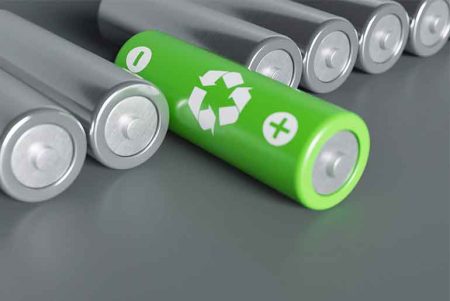
Battery cells account for 60–65% of a BESS project’s cost, and despite ambitious announcements from Reliance, Ola, and ACC Energy Storage, large-scale Indian cell manufacturing for grid applications is still ramping up. In 2026, most grid-scale cells continue to arrive from China, Korea, or Japan.
So how do integrators reach 20% domestic content without domestic cells?
The answer has triggered a profound shift in how Indian BESS projects are designed.
The Rise of the “Non-Cell” Strategy
To meet India’s 20% Domestic Content Rule for BESS, system integrators have turned inward—towards the Balance of System (BoS). What was once peripheral has now become central. Engineering depth, software intelligence, and thermal resilience are no longer add-ons; they are compliance tools.
1. Indigenous EMS: The Brains of the System
Perhaps the most consequential move came earlier, in an August 2025 amendment, when the government mandated that Energy Management System (EMS) application software must be developed in India.
This single clause transformed the compliance equation.
Rather than relying on imported “black-box” EMS platforms, integrators are now partnering with Indian software firms such as Kalkitech and Statiq to build grid-aware, revenue-optimising control systems.
These EMS platforms are tailored to Indian realities—tight frequency bands, evolving ancillary service markets, and the need for revenue stacking between peak shaving, arbitrage, and grid services. From a cost perspective, software and control electronics now contribute 5–8% of total project value, making EMS one of the most powerful levers for meeting domestic content norms.
In effect, intelligence has become localization.
2. Thermal Management: Engineering for 45°C India
India’s climate does not forgive thermal shortcuts. With ambient temperatures regularly crossing 45°C, battery degradation and safety risks multiply.
Under the 20% rule, thermal management systems (TMS) have become a localization frontier. While compressors are still often imported, heat exchangers, liquid cooling plates, manifolds, HVAC ducting, and control logic are increasingly fabricated in Indian manufacturing clusters such as Pune and Chennai.
More importantly, engineering innovation is taking root. Integrators are designing “tropicalized BESS” enclosures, combining enhanced insulation with Indian-made phase-change materials (PCM) to reduce dependence on energy-intensive chillers.
Thermal systems now contribute 3–5% of project cost, with localization levels exceeding 60% in many deployments—an essential pillar of India’s 20% Domestic Content Rule for BESS.
3. The Container Is No Longer a Box
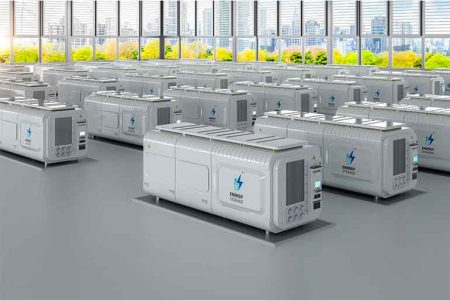
A modern BESS enclosure is not a shipping container; it is a fire-rated, seismically engineered, grid-connected laboratory.
Here, localization is nearly complete.
Structural steel, internal busbars, fire suppression systems (aerosol and water mist), and mounting hardware are now sourced almost entirely from Indian vendors, including industrial majors like Tata Steel and Larsen & Toubro.
This “husk” of the BESS typically adds 4–6% to domestic content—solid, auditable, and politically defensible.
The 20% Math: How Integrators Actually Get There
For a representative 100 MWh BESS project, the compliance pathway often looks like this:
- Battery Cells: 60–65% (mostly imported)
- EMS & Software: 5–7% (100% domestic, mandatory)
- Power Conversion Systems: 10–12% (partial localization via Indian assembly)
- Enclosures & Structure: 4–6% (100% domestic)
- Thermal & Fire Systems: 3–5% (high localization)
- EPC, Civil Works & Testing: 5–8% (100% domestic)
The result? 22–28% domestic content—comfortably above the threshold, even without local cells.
This is why India’s 20% Domestic Content Rule for BESS is less about manufacturing volume today and more about engineering sophistication.
The Compliance Question: Real Value or Paper Value?
Predictably, the rule has sparked debate.
Some industry voices worry about “paper compliance”—inflated engineering or consultancy fees routed through Indian entities while core technology remains foreign. The concern is not unfounded.
To counter this, the Ministry of Power is expected to tighten audit frameworks, moving toward HSN-code-level verification and deeper scrutiny of value addition. The message is clear: localization must be measurable, not cosmetic.
From 20% to 50%: The Road Ahead
No one in the industry believes the journey ends at 20%.
As PLI-backed gigafactories reach commercial scale between late 2026 and 2027, policymakers are expected to raise the bar—first to 40%, and eventually to 50% domestic content. When that happens, the industry will be forced to confront the hardest frontier: cell manufacturing.
But by then, something fundamental will already have changed.
Indian BESS integrators are no longer traders assembling imported kits. They are becoming engineering houses, competing on software intelligence, thermal efficiency, system reliability, and supply-chain mastery.
Why the 20% Rule Matters
At its core, India’s 20% Domestic Content Rule for BESS is not protectionism. It is preparation.
It ensures that as India builds storage at scale, it also builds capability, resilience, and intellectual ownership. It rewards engineering depth over price arbitrage. And it lays the groundwork for a future where India is not just a buyer of batteries—but a builder of storage systems.
In the long run, the rule may be remembered not for the percentage it mandated—but for the mindset it forced the industry to adopt.
 Electrify your feed! Click here to join our Whatsapp group and to get the latest updates, expert insights, and innovations driving India’s energy storage revolution.