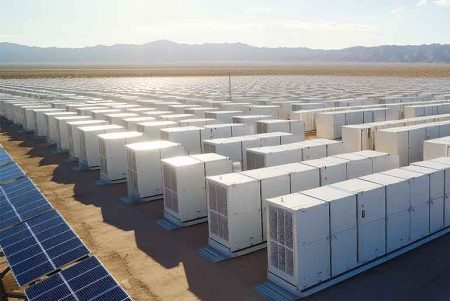
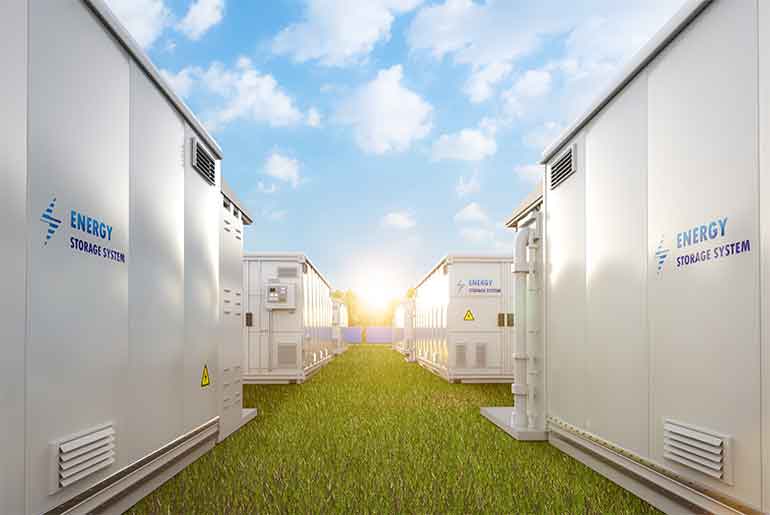
If you are currently sitting in an executive boardroom planning out your next multi-megawatt tariff bid, you already know that the conversation around green energy has fundamentally changed. We are no longer just talking about throwing up vast rows of cheap solar panels or erecting wind turbines on wind-swept ridges. The real race—the one that will separate the market leaders from the stranded asset casualties—lies in successfully matching generation with storage. But let’s be entirely honest with each other: building out utility-scale Renewable plus Storage Projects in India is proving to be an unforgiving engineering and commercial gauntlet. It is not just a matter of scaling up procurement. As we sprint to meet the aggressive clean energy mandates, our industry is facing an uncomfortable reality check. If we blindly copy generic global engineering templates without customizing them to our extreme environmental and grid conditions, we run the risk of creating massive financial liabilities.
According to the Central Electricity Authority’s (CEA) National Generation Adequacy Plan (2026-27 to 2035-36) released in March 2026, India’s peak power demand is projected to soar to a staggering 459 GW by 2035-36. To safely balance the grid against this massive spike, the CEA estimates that the nation’s energy storage requirement must expand to 174 GW / 888 GWh by 2035. This colossal figure includes 80 GW of Battery Energy Storage Systems (BESS) and 94 GW of Pumped Storage Projects (PSP).
Furthermore, the Ministry of Power’s Energy Storage Obligation (ESO) trajectory mandates that utilities progressively scale their storage procurement to 4% of total consumption by 2030.
The capital is ready, the government mandates are clear, and the tariffs are being hammered out. Yet, as early-stage installations begin executing across the country, several hidden technical and strategic vulnerabilities are beginning to surface. If you want to ensure your utility-scale assets remain profitable, bankable, and physically safe for the next 20 to 25 years, here are the 10 critical structural mistakes that Renewable plus Storage Projects in India must proactively avoid.
“One of the key bottlenecks facing India’s energy storage sector today is the limited monetization framework. At present, the market largely relies on energy arbitrage as the primary use case for battery energy storage systems. However, in mature markets such as the United States, Europe, and Australia, storage assets derive value from multiple revenue streams, including ancillary services, transmission support, capacity markets, and grid-balancing applications. By depending predominantly on energy arbitrage, we are not fully unlocking the value that energy storage can deliver to the power system.
Another major challenge is India’s continued dependence on China for battery procurement and critical components. Over the past year, China has tightened technology transfers, adjusted export policies, and reduced VAT rebates on battery products. These developments have contributed to cost pressures across the global battery supply chain and have raised concerns about the long-term viability of some aggressively bid storage projects. While the industry initially welcomed record-low tariffs, rising battery costs have prompted questions about the feasibility of certain projects.
With battery prices increasing, we are already beginning to see concerns emerge around project viability. While the industry celebrated the record-low tariffs discovered in several storage tenders, there are now growing questions about whether some of these projects will remain commercially feasible under the current cost environment. India’s ambition remains extremely high, and as per CEA projections, battery storage deployment could reach around 325 GWh by 2035-36. However, unless we develop a strong domestic supply chain, this growth momentum will continue to face disruptions from external factors. While India’s battery assembly capacity has expanded significantly, the real value addition lies in manufacturing. Nearly 65% of the value addition in a battery comes from cell manufacturing. If we continue to depend on another country for that critical part of the value chain, our long-term growth and energy storage ambitions will inevitably remain vulnerable to external pressures.”
— Debmalya Sen, President, India Energy Storage Alliance (IESA)
Chapter I: The System Integration & Layout Gauntlet
Treating System Integration as a “Plug-and-Play” Procurement Exercise
A widespread miscalculation among asset managers is viewing a containerized BESS as a standardized appliance—similar to buying a massive commercial inverter. There is a common assumption that you can simply purchase battery racks from Supplier A, power conversion systems (PCS) from Supplier B, and an Energy Management System (EMS) from Supplier C, connect them on-site via local engineering contractors, and expect a flawless 20-year asset.
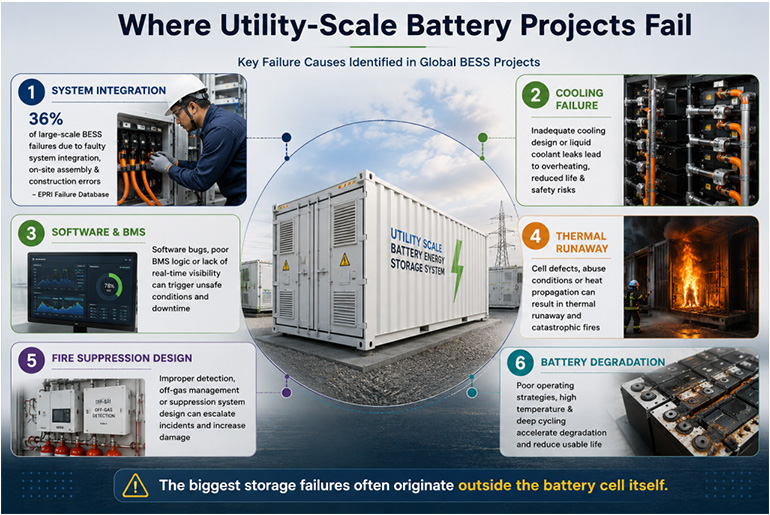
The reality on the ground tells a completely different story. Comprehensive global data from the Electric Power Research Institute (EPRI) Failure Incident Database indicates that 36% of all large-scale BESS failures originate directly from faulty system integration, on-site assembly, and construction errors. In stark contrast, raw cell manufacturing defects account for less than 4% of total field failures.
When you develop Renewable plus Storage Projects in India, you are dealing with an intricate web of low-voltage DC wiring, high-speed fiber-optic communication buses, and high-voltage AC grid connections. Sub-standard, manual on-site assembly of Balance of System (BOS) components—particularly during the critical crimping and joining of high-current DC cables—introduces micro-resistance points. Over months of high-power cycling, these minor resistance points generate localized hotspots that can easily bypass standard safety breakers, leading to devastating localized failures.
To mitigate this, developers must move away from fragmented procurement models and instead mandate rigorous, end-to-end Factory Acceptance Testing (FAT) under full thermal loads before any equipment arrives at the project site.
Violating Safe Spatial Configurations (The Indoor Trapping Pitfall)
With land acquisition costs rising sharply across key resource-rich states like Gujarat, Rajasthan, and Karnataka, developers are constantly looking for ways to reduce their overall physical footprint. A highly tempting strategy is to house dense high-voltage battery racks inside permanent indoor masonry buildings or converted substation structures to cut down on civil works, land clearing, and perimeter security overheads.
However, compressing large-scale battery assets within enclosed indoor structures is an incredibly high-stakes mistake. Look closely at the major fire at the Vistra Moss Landing facility in California. The subsequent engineering investigations revealed that because the battery racks were tightly packed into a massive, enclosed, decommissioned fossil-fuel power plant building, the localized thermal anomalies faced severe ventilation blockages. The lack of open-air dissipation allowed heat and toxic gases to build up rapidly inside the structure, creating an uncontrollable environment that complicated emergency response efforts.
Outdoor, modular, containerized configurations must be the absolute baseline standard for renewable plus storage projects in India. It must also have a strict physical buffer zone between each container array and any adjacent structure (ideally, at least 3 metres, of clear separation). Even in situations where a catastrophic thermal runaway event occurs in one unit, it should be naturally isolated from neighboring racks. Saving 5-10 lakh on land footprint by packing batteries inside and tight, is a short-sighted strategy and could put your entire capital investment at risk.
Underestimating Liquid Coolant Leak Hazards
As newer battery cells cross the 300+ Ah threshold to boost energy density, forced-air cooling systems are rapidly being phased out. The industry is pivoting toward closed-loop liquid cooling plates that run directly beneath the battery cells inside the racks. While liquid cooling offers significantly better temperature uniformity, it introduces a major physical vulnerability into your asset: the proximity of conductive fluids to high-voltage DC busbars.
Consider the hard lesson from the commissioning of the Victorian Big Battery facility in Australia. A minute, undetected leak in a single megawatt-scale container’s liquid cooling loop allowed a small amount of coolant to drip directly onto the high-voltage electrical components. This caused a localized electrical short circuit, which rapidly escalated into a multi-container fire that took several days to safely extinguish.
For Indian operators, our intense ambient dust and high relative humidity during monsoon seasons significantly increase the risk of seal degradation and premature corrosion. Developers must insist on installing dual-layer automated coolant leak detection networks that use both pressure-drop telemetry and volatile organic compound (VOC) sniffers. These systems must be engineered to instantly isolate the fluid pumps and trip the string-level circuit breakers the exact moment an internal leak is detected, long before the moisture can trigger an arcing event.
Chapter II: Chemistry, Software, and Fire Mitigation Realities
Selecting Volatile Battery Chemistries for High-Ambient Indian Terrains
When calculating the levelized cost of storage (LCOS), it is easy to get hyper-focused on raw energy density and round-trip efficiency (RTE) numbers. In the early stages of global utility-scale deployment, this focus led many developers to opt for Lithium Nickel Manganese Cobalt (NMC) chemistries due to their superior energy density profiles.
However, deployed field data has proven that NMC has a relatively low thermal runaway trigger point (roughly 150°C to 180°C) and releases self-oxidizing, highly explosive gas mixtures when it fails. These safety issues have pushed global market demand for grid-scale applications to favor Lithium Iron Phosphate (LFP), which has a much higher thermal breakage point at approximately 270°C and maintains vastly superior stability in extreme chemical conditions.
- Lithium Nickel Manganese Cobalt (NMC) Chemistry: 150°C to 180°C (High Risk profile due to a lower breakdown threshold and the release of self-oxidizing, volatile gases).
- Lithium Iron Phosphate (LFP) Chemistry: 270°C (Stable baseline offering a significantly wider thermal safety margin under extreme ambient conditions).
In Renewable plus Storage Projects in India (where temperatures throughout summer in Rajasthan or Andhra Pradesh reach between 45C and 48C on average), using NMC to pursue small operational efficiencies poses a huge risk to operations. Auxiliary power required to cool air conditioning systems to maintain batteries within narrow operating thresholds will quickly offset any theoretical benefits. Therefore, for stationary applications on the Indian Grid, the default chemical of choice should be LFP or other advanced alternative battery chemistries such as sodium-ion, which provide long-term thermal stability.
Loose BMS Operational Boundaries and Poor Telemetry Integration
A high-quality battery cell is only as dependable as the software code regulating its daily operational boundaries. If the cell-level Battery Management System (BMS) relies on loose parameters or laggy data processing, the underlying hardware will degrade prematurely or fail unexpectedly.
A clear example of this can be seen in the first wave of commercial utility-scale energy storage deployments in South Korea, which suffered a series of nearly 30 high-profile BESS fires. Extensive state-sponsored forensic investigations revealed that a primary root cause was poor control software integration. The master control interfaces failed to accurately track internal voltage spikes and State of Charge (SOC) imbalances during rapid charging cycles. This allowed localized lithium plating to occur silently within the cells, eventually tearing through internal separators and causing catastrophic short circuits.
For your Renewable plus Storage Projects in India to operate safely, you cannot afford to treat software as an afterthought. There must be a seamless, high-speed data connection linking the cell-level BMS, the container-level Energy Management System (EMS), and the overarching substation SCADA platform. If a single battery module starts showing erratic voltage behavior or abnormal temperature changes, the control software must be capable of automatically isolating that specific rack within milliseconds, preventing a minor cell issue from turning into a full-scale operational outage.
Assuming Nameplate Capacity Will Remain Constant Throughout Project Life
One of the most dangerous commercial assumptions in utility-scale storage development is treating a battery’s Day-One capacity as if it will remain available throughout the entire contract period.
In reality, all battery systems experience gradual degradation driven by cycle frequency, depth of discharge, ambient temperature, and charging behaviour. A battery commissioned at 100 MWh today may only deliver 75-85 MWh after a decade of intensive operation if degradation is not properly managed.
Many developers continue to model project economics using overly optimistic degradation curves. This creates a hidden risk whereby contracted discharge obligations remain fixed while actual available capacity steadily declines. The result can be performance penalties, reduced merchant revenues, and expensive mid-life augmentation requirements.
For Renewable plus Storage Projects in India, developers should establish conservative degradation assumptions, maintain augmentation reserves in financial models, and continuously optimize operating strategies to balance revenue generation against long-term asset health.
 Flawed Fire Suppression Architecture and Toxic Runoff Mismanagement
One of the most dangerous misconceptions in asset protection is assuming that traditional clean-agent gas flooding systems (such as FM-200 or Novec 1230) are sufficient to handle a battery fire. These systems are designed to extinguish standard fires by displacing oxygen. However, a lithium-ion battery fire does not rely on atmospheric oxygen; it is a self-sustaining chemical reaction driven by internal thermal decomposition.
Independent quality audits conducted by Intertek Clean Energy Associates (CEA) revealed a concerning statistic: 26% of all deployed large-scale BESS installations had structural defects in their fire suppression and venting configurations. Furthermore, when emergency teams use heavy water streams to cool down an active battery fire, the water reacts with the failing cells to produce highly toxic, corrosive hydrofluoric acid runoff.
- Critical Safety Requirement: Traditional gas suppression cannot stop an active thermal runaway. True safety requires early-stage off-gas detection sensors capable of identifying minute levels of hydrogen and carbon monoxide gas before any smoke or visible flames appear.Additionally, your project layout must feature dedicated retention basins designed to capture, contain, and neutralize toxic firefighting runoff, ensuring it cannot seep into local groundwater tables or contaminate the surrounding soil.
- Early Off-Gas Detection: Ultra-sensitive sensors sniff out minute venting gases at the first sign of cell breakdown, long before any smoke or visible flames appear.
- Instant Rack Isolation: The system uses high-speed BMS telemetry to instantly trip circuit breakers, cutting off electrical energy to isolate the affected rack within milliseconds.
- Targeted Water Deluge: Localized water systems activate to aggressively cool down neighboring healthy cells, absorbing the heat and stopping the thermal runaway from spreading to the rest of the container.
Cyber-Operational Technology (OT) Blind Spots
As the Indian power market transitions toward dynamic real-time markets, automated ancillary grid services, and fast-acting frequency response tenders, modern energy storage assets are becoming deeply digitized. They rely on external cloud connections and automated software commands to instantly adjust their output based on fluctuating grid frequencies and pricing signals. This digital connectivity makes them prime targets for sophisticated cyber threats.
Global cybersecurity assessments frequently emphasize the dangers of deploying flat network architectures within utility infrastructure. If a cyberattacker manages to breach a developer’s standard corporate IT network (via a basic phishing email or compromised employee credentials), and there is no strict firewall separating that network from the physical operational site, they can gain direct access to the operational technology (OT) network. From there, malicious actors could remotely alter BMS voltage setpoints, turn off cooling systems, and override safety limits to intentionally trigger an asset-wide thermal event.
When designing Renewable plus Storage Projects in India, implement a strict “Zero Trust” cyber architecture. The physical OT layer—which controls the actual battery switches, inverters, and cooling pumps—must be completely sandboxed from the external corporate IT network. Every single inbound dispatch or shutdown command must require multi-factor cryptographic authentication before it can execute at the site level.
Overstating Revenue Streams and Market Opportunities
As India’s power markets mature, many project developers are beginning to consider multiple future revenue streams in their financial models, such as energy arbitrage, ancillary services, frequency regulation, capacity payments and real-time market participation.
While revenue stacking can significantly improve project economics, assuming all potential revenue streams will materialize immediately can lead to unrealistic investment assumptions.
In some international storage markets, ancillary service prices fell sharply during periods of increased battery deployment and heightened market competition, and assets with only one premium revenue stream have since delivered lower-than-expected returns.
Developers need to take a conservative financial modelling approach for Renewable plus Storage projects in India and not base investment decisions solely on future market reforms or unproven revenue mechanisms. The primary business case should remain viable even under lower-than-expected ancillary service revenues.
Chapter III: Commercial, Procurement, and Grid Infrastructure Realities
Designing Hardware Redundancy Out of Balance of System (BOS) Architectures
In highly competitive reverse-auction tariff environments, developers often look for any opportunity to trim upfront capital expenditure (CAPEX) to make their bids viable. This pressure frequently leads engineering teams to streamline auxiliary balance-of-system hardware, eliminating component redundancy in favor of centralized designs.
However, cutting corners on system redundancy often leads to higher operational expenses down the road. During the planning of Australia’s massive Waratah Super Battery project, grid engineers strongly emphasized the risk of single-point failures in critical upstream components like main step-up transformers or central power conditioning blocks. If a centralized transformer fails or suffers an internal fault, the entire storage facility can be knocked offline for months, regardless of how healthy the individual battery cells are.
For Indian developers, this risk is magnified because finding high-voltage replacement parts locally on short notice is incredibly difficult. Your project architecture should ideally feature an N+1 redundancy model for all critical support systems, including auxiliary power loops, HVAC units, and control modules. It is also wise to invest in comprehensive Delay in Start-Up (DSU) and business interruption insurance policies that reflect realistic, current global supply chain realities.
Decoupling Storage Deployment from Real-Time Transmission Planning
It is entirely possible to design a flawless, state-of-the-art hybrid generation facility, but that asset will ultimately be useless if the local transmission grid lacks the capacity to evacuate power when the batteries need to discharge.
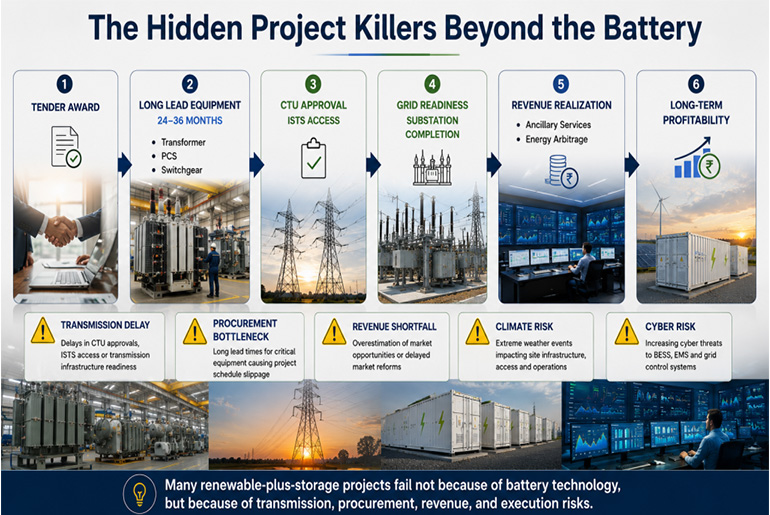
A comprehensive power sector market study conducted by YES Securities identified that land acquisition hurdles, delays in building evacuation infrastructure, and getting timely Inter-State Transmission System (ISTS) grid approvals remain the single largest bottlenecks for clean energy developers across India. If a developer builds a 100 MW solar plus storage asset but the Central Transmission Utility (CTU) substation expansion is delayed by 18 months, that expensive battery asset will sit idle, facing unmitigated capacity degradation without earning any revenue.
- Battery Asset Commissioning: The final stage of powering up and operationalizing the energy storage facility.
- Grid Infrastructure Readiness: The full completion and technical approval of the Central Transmission Utility (CTU) substation and Inter-State Transmission System (ISTS) lines.
- Mandatory Synchronization: Project execution schedules must line up perfectly so the completed battery asset is never left stranded or idle without a functional grid corridor to evacuate its power.
When managing Renewable plus Storage Projects in India, your deployment schedules must be completely synchronized with actual substation construction timelines. You cannot assume that grid evacuation capacity will simply be available when your site is ready. Storage assets should only be energized when transmission corridors are fully functional and capable of handling high-power bi-directional energy flows.
Ignoring Climate Resilience and Extreme Weather Risks
Utility-scale storage systems are increasingly being deployed in regions exposed to heatwaves, flooding, dust storms, cyclones, and extreme rainfall events.
Recent global events have demonstrated that environmental risks can disable critical infrastructure even when battery systems themselves remain operational. Flooded substations, damaged access roads, cooling system failures, and prolonged grid outages can all prevent storage assets from participating in electricity markets.
For the development of projects in India, planning for climate resilience should also begin at the design stage, with provisions made for elevated equipment platforms, sophisticated drainage systems, flood-risk assessments, dust control enclosures and improved thermal management systems to be integral project features, not just enhancements.
As the deployment of renewables with storage expands in Rajasthan, Gujarat, Andhra Pradesh, Tamil Nadu and along the coastlines, design resilience will be as important as electrical performance.
Failing to Account for Long-Lead Procurement Timelines
A common mistake that can derail project economics is assuming that critical electrical components can be procured on standard 6-to-9-month commercial timelines.
Due to an unprecedented global wave of grid modernization, the manufacturing queues for specialized high-voltage step-up transformers, custom switchgear, and utility-scale power conditioning systems (PCS) have surged significantly. Lead times for these critical items now routinely span 24 to 36 months globally.
In India’s intensely competitive bidding landscape, where project execution windows are tightly regulated by power purchase agreements (PPAs), facing a two-year delay on a vital substation transformer can completely destroy your project’s financial viability. It can trigger severe liquidity damages and even lead to the cancellation of your hard-won contract. Deep supply chain mapping, securing manufacturing slots early, and committing upfront capital for long-lead equipment must happen during the initial bidding phase, long before the final tender is officially awarded.
The Path Forward for Indian Developers
As India transitions from simple renewable generation to a sophisticated, storage-backed grid network, the metrics for success are shifting. Winning a tender is no longer just about offering the lowest tariff; it is about demonstrating long-term operational resilience. By learning from global engineering missteps and designing assets tailored to our local environmental realities, Indian developers can ensure that these massive investments become highly reliable anchors for our nation’s clean energy future.
 Electrify your feed! Click here to join our Whatsapp group and to get the latest updates, expert insights, and innovations driving India’s energy storage revolution.