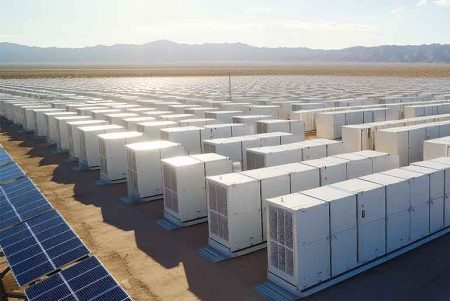
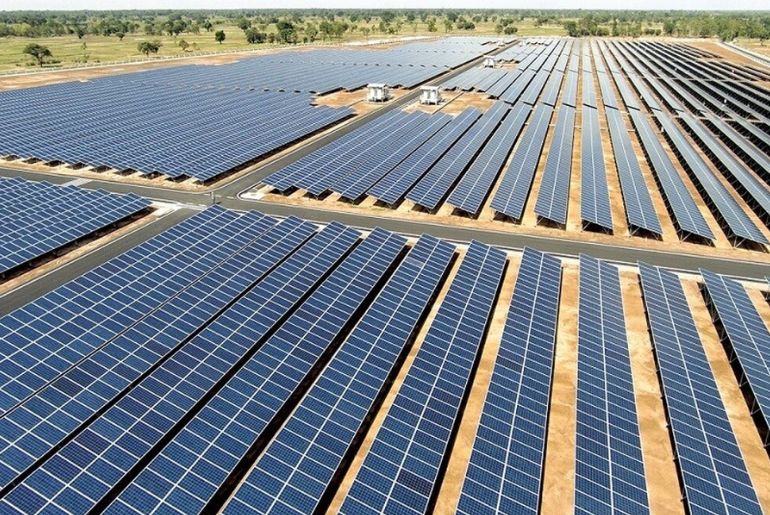
As India marches ahead with unwavering dedication towards its monumental goal of achieving 500 GW of non-fossil fuel capacity by 2030, the sun has emerged as the protagonist of this national epic. Solar energy isn’t just a vertical in India’s power portfolio; it is the heartbeat of a new industrial revolution. We talk of gigafactories in Gujarat, massive parks in Rajasthan, and the “Sun-held-captive” in BESS containers. Yet, for a transition this massive to succeed, it requires more than just sunlight and silicon. It requires a perfectly synchronized orchestra of governance. Let’s decode who plays what role in transitioning the Energy Story Smoothly.
To the uninitiated, the Indian solar sector might look like a labyrinth of acronyms—MNRE, SECI, CERC, Grid-India. But when we look closer, and we see a sophisticated, living ecosystem. If the solar panels are the “muscle” and the batteries are the “heart,” these organizations are the Solar Symphony—the conductors ensuring that every gigawatt of power finds its way from a remote desert to a city’s lightbulb without a flicker of instability.
India’s Solar Energy Scorecard : Almost by Half of 2026
According to the latest data released by the Ministry of New and Renewable Energy (MNRE), India has achieved a staggering as of May 2026, India’s cumulative installed solar power capacity has surpassed 150 GW (154.24 GW as of April 30, 2026), making it a top global leader in solar energy generation. The nation significantly accelerated this growth by adding a record 44 GW in a single year, driven by both large-scale ground-mounted projects (117.36 GW) and rooftop installations (26.75 GW). When combined with wind, biomass, and large hydro, our non-fossil fuel share has already crossed the 200 GW mark. This isn’t just a number; it’s a testament to a decade of aggressive Solar Governance.
To understand how we reached here, and where we are going, we must decode the role of each “Guardian” in this frontier.
The Visionary Architect: MNRE (Ministry of New and Renewable Energy)
MNRE is teh Apex body who sits at the Centre of Everything. Born from the Commission for Additional Sources of Energy (CASE) in 1981, it evolved into a full-fledged ministry in 2006. If India were a construction site, the MNRE is the Lead Architect.
The MNRE doesn’t build the plants, but it writes the “Grand Strategy.” From the National Solar Mission to the PLI (Production Linked Incentive) schemes for high-efficiency modules, the MNRE creates the policy vacuum that pulls in billions of dollars in investment. Its role is to ensure that “Solar-to-Society” isn’t just a slogan but a realized economic benefit through schemes like PM-KUSUM, which empowers farmers to become energy entrepreneurs.
The Engine Room: Solar Energy Corporation of India
If MNRE is the brain, SECI is the Hands. Established in 2011, SECI is the only Central Public Sector Undertaking (CPSU) dedicated solely to the solar and RE sector.
SECI’s genius lies in Risk Mitigation. In the early days, investors were scared—would the DISCOMs (power buyers) pay on time? SECI stepped in as the “Vanguard.” By acting as an intermediary procurer, SECI signs Power Purchase Agreements (PPAs) with developers and Power Sale Agreements (PSAs) with states. Because SECI has an ‘AAA’ credit rating, international banks feel safe lending to Indian projects. They are the “Tendering Machine” that has turned India into one of the world’s lowest-cost solar producers.
The Bank Manager: IREDA (Indian Renewable Energy Development Agency)
You cannot build a green future on red balance sheets. Established in 1987, IREDA (a Navratna Company) is the Finance Manager of the sector. First it was Under the motto “Energy for Ever,” IREDA provides specialized “Green Loans” that commercial banks often shy away from.
IREDA’s role has been transformative for small and medium developers. By offering competitive interest rates and managing the disbursement of government incentives, they have ensured that the solar transition isn’t just a game for the “Big Names” but a competitive market for everyone. They are the reason “Solar Finance” is now a mature asset class in India.
The Referee: CERC (Central Electricity Regulatory Commission)
Think of the Indian power sector as a high-speed highway. On this road, you have massive developers, state utilities, and millions of consumers all trying to move at once. To prevent a pile-up, you need a referee who is both a master of the rules and a guardian of the people. In the world of Solar Governance, that referee is the Central Electricity Regulatory Commission (CERC).
Since it began its journey under the Electricity Regulatory Act of 1998, the CERC has become the backbone of the industry. It doesn’t just push paper; it ensures that the “market” actually works for everyone—making power cheaper, more efficient, and more reliable.
The CERC is the ones who issue licenses to the companies moving power across state lines and the traders buying and selling it. By setting the Indian Electricity Grid Code (IEGC), they create the physical “operating system” that keeps the national grid stable.
Without the CERC’s technical standards, the sudden surge of solar power in the afternoon could overwhelm our old transmission lines. They ensure the “physical integrity” of the system so that when you flip a switch, the power is there.
Perhaps most importantly, the CERC decides how much electricity should cost at the bulk level. Their primary goal is to promote competition. By making the market transparent, they force power companies to be more efficient, which ultimately keeps the tariffs—the price you see on your bill—as low as possible. They aren’t just looking at the big corporations; they are looking out for the “economy” of the entire nation.
The Grid Guardians: Grid-India (formerly POSOCO)
This brings us to the most critical, yet invisible, part of the symphony. Grid-India (Grid Controller of India Limited) is the Nervous System.
For decades, the grid was simple—coal plants provided a steady, heavy hum (inertia). Solar is different; it is “flighty.” A cloud passes, and 50 MW vanishes. Grid-India ensures the grid doesn’t collapse under this intermittency. They are the ones demanding Grid-Forming (GFM) capabilities. As we transition to a solar-heavy grid, Grid-India is mandating that batteries and inverters stop just “following” the grid and start “forming” it—providing the digital stability needed to keep the frequency at a perfect 50Hz.
The Physical Highway: CTUIL (Central Transmission Utility of India Ltd)
You can produce 200 MW in the deserts of Bikaner, but it is useless if it cannot reach the factories of Chennai. CTUIL is the Master Planner of the Inter-State Transmission System (ISTS). They build the massive “Green Energy Corridors”—the high-voltage lines that act as the arteries of our energy body. Their role is to anticipate where the next 50 GW will be built and have the “plug points” ready before the panels even arrive.
The Convergence: How It Shapes Our Society
When these bodies work in harmony, the impact on society is profound. It isn’t just about “Clean Power”; it is about Energy Sovereignty.
- Job Creation: The SECI and NTPC tenders have catalyzed a domestic manufacturing ecosystem, creating lakhs of jobs in the “Gigafactory Belt.”
- Rural Empowerment: Through MNRE’s rooftop and solar-pump schemes, the “last mile” of India is moving from energy poverty to energy surplus.
- Price Stability: Because our Solar Governance is robust, solar power is now cheaper than coal in India. This keeps electricity bills manageable for the common citizen while the world grapples with fossil fuel inflation.
Conclusion
As we look Forward, the narrative is shifting. We have built the “Body” (the capacity) and the “Muscle” (the panels). Now, through the collective intelligence of MNRE, SECI, CERC, and Grid-India, we are giving that body a “Brain.”
The energy transition is no longer just a policy vision—it is an industrial reality. By understanding the role of each guardian, we see that India’s solar success isn’t an accident. It is a calculated, regulated, and brilliantly engineered symphony. The sun may provide the light, but these bodies provide the Grid Stability that turns that light into the lifeblood of a rising nation.
 Electrify your feed! Click here to join our Whatsapp group and to get the latest updates, expert insights, and innovations driving India’s energy storage revolution.