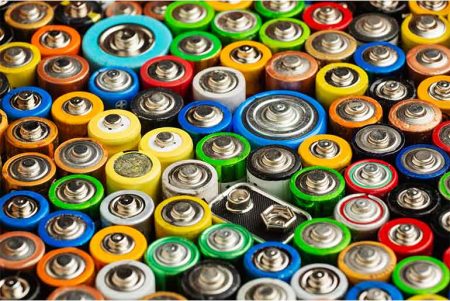



Battery Energy Storage Systems (BESS) are increasingly important as countries add more solar and wind to their electricity networks. They store electricity when it’s available and then release it when demand is high or when renewable generation is low. Underpinning every BESS is a battery cell so cell manufacturing is a key element of the growing energy storage industry.
Demand for BESS cells is going up in line with the growth in renewables, the grid and the requirement for a more reliable power supply. Manufacturers are ramping up production, developing bigger cells and working on improving the performance of the cells whilst trying to keep the cost down.
Benchmark Mineral Intelligence say global BESS cell shipments hit over 600GWh in 2025 (up nearly 100% on the prior year). China remains the market leader with all ten of the BMI’s top BESS cell suppliers being Chinese companies.
Of those, CATL, HiTHIUM, EVE Energy, BYD and CORNEX were the five leading suppliers by reported BESS cell shipments in 2025.
1. CATL
CATL retained its position as the world’s largest BESS cell supplier in 2025, shipping some 121GWh of cells during the year (around 20% of the global market) according to Benchmark Mineral Intelligence.
CATL supply battery cells for a range of energy storage projects, from small scale to very large scale. They supply cells for grid scale installations as well as for projects which are designed to manage the variable output of renewables. Their size of manufacturing base and their established battery supply chain has enabled them to serve projects which require very large volumes of cells.
The company is also looking at other battery technologies beyond the conventional Li-ion. In April 2026 their collaboration with energy storage system integrator HyperStrong was extended to include 60GWh of sodium ion BESS cells. This is a clear sign of interest in alternative chemistries for stationary storage.
CATL is a massive manufacturer with a huge customer base and so remains a very significant supplier to people who are looking to source cells for large scale energy storage projects.
2. HiTHIUM
HiTHIUM came in second place in global BESS cell shipments in 2025 (approx 12% of the market) according to Benchmark Mineral Intelligence.
The company is very much focused on stationary energy storage (the market requirements are very different to those for EV batteries). Storage projects will typically require cells that can be relied upon over a very long period of time, that can be cycled many times and that will deliver a predictable performance throughout their life.
HiTHIUM has broadened its business as utilities, renewable energy developers and storage system integrators look to source larger quantities of batteries. The products are for a range of applications from grid scale storage through to other stationary energy storage applications.
HiTHIUM signed a 5 year cooperation agreement with CRRC in December 2025 for 120 GWh. That’s a good illustration of the scale of the supply side partnerships that are now emerging as the developers go ahead and plan these very large storage projects.
As demand continues to grow HiTHIUM’s ability to scale production and to deliver cells which are appropriate for the stationary market will be key to its market position.
3. EVE Energy
EVE Energy was third in the global BESS cell supplier rankings in 2025 (c.12% of market shipments) according to Benchmark Mineral Intelligence.
The company makes Li-ion batteries for a number of applications, principally EVs and stationary energy storage. Their presence in the BESS market has grown as project developers have looked for a supplier who can deliver the requisite volumes of cells for utility scale.
Supply agreements have been a key part of this expansion. In 2025 alone EVE Energy reportedly signed a 50GWh agreement with HyperStrong and a 20GWh agreement with Rochenergy. That kind of volume is going to require supply agreements of course.
Competition between cell manufacturers is ramping up as they all increase their production and go after the contracts of the system integrators. For EVE Energy it’s all about maintaining our position through the ability to deliver reliable products, manage our manufacturing capacity and meet the requirements of our customers in all the different markets.
Its position in the ranking also reflects the fact that the BESS sector is creating opportunities for battery manufacturers who serve a range of applications.
4. BYD
BYD came fourth globally as a BESS cell supplier in 2025 (Benchmark Mineral Intelligence).
The company has a real presence across the battery value chain from cells right through to complete energy storage systems. It has the experience of both supplying the battery and integrating the battery into a system for stationary storage.
BESS requires more than just the cells. You need battery management, power conversion, thermal management and safety systems. Some companies are very much cell focused, BYD is not. BYD has a presence in several of those other areas as well.
Its storage products are used in applications such as renewable energy integration and electricity supply management. As more solar and wind come online the storage can help to deal with the mismatch between when the electricity is generated and when it is required.
BYD’s in the market is largely due to its combination of battery manufacture and system integration. Its future growth will be contingent in part upon how well it can respond to the changing storage requirements and the competition from the specialist BESS suppliers.
5. CORNEX
CORNEX came fifth in the global BESS cell supplier rankings in 2025 according to Benchmark Mineral Intelligence.
The company is expanding its manufacturing footprint to meet demand from both the energy storage and the EV markets. Benchmark reported that CORNEX had over 400GWh of production capacity under construction and another 100GWh in the pipeline for EV and BESS applications.
These figures illustrate the scale of investment going on across the battery industry. The manufacturers are obviously preparing for continued demand from the EV space as well as responding to the very rapid growth in the stationary storage market.
Planned capacity must not be confused with actual production. Any facilities which are under construction will still have to be completed and commissioned before they can start to produce. The rate of expansion will therefore be a function of the rate of construction, the rate of installation of equipment and the rate of customer demand.
CORNEX’s position as one of the leading suppliers is a clear indicator of the shifting competitive dynamics. The ability to ramp up production and lock in major supply contracts is the key to securing a strong market position as the BESS market continues to expand.
What the Top Cell Manufacturers Mean for Energy Storage
The rise of CATL, HiTHIUM, EVE Energy, BYD and CORNEX is a reflection of the increasing importance of energy storage within the wider battery industry. Battery cells are no longer being made solely to serve the EV market. Stationary storage has emerged as a major market with its own set of technical requirements and its own supply chains.
For project developers the cell supplier selection process is far more than a simple price comparison. Cycle life, safety, warranty terms, product consistency and delivery schedules all have an impact on the project’s performance and cost over the long term. The manufacturer has to ensure their product meets the technical and regulatory requirements of the markets in which they are operating.
The market is still extremely concentrated in China. BMI reported that the ten largest BESS cell suppliers accounted for approximately 90% of the world’s shipments in 2025. That’s a massive concentration of market share and it really does underline the scale of the Chinese cell manufacturing industry and the difficulty that other countries will have in establishing their own domestic cell manufacturing.
As renewable energy capacity continues to grow, demand for storage is going to remain a significant part of the battery industry’s growth. The big players will be competing not just on volume of cells but on performance, quality and on delivering projects on time.
For the BESS sector the ability to make reliable cells at a competitive cost will be key to making energy storage a more viable proposition across the electricity grid, commercial facilities and renewable energy projects.
 Electrify your feed! Click here to join our Whatsapp group and to get the latest updates, expert insights, and innovations driving India’s energy storage revolution.