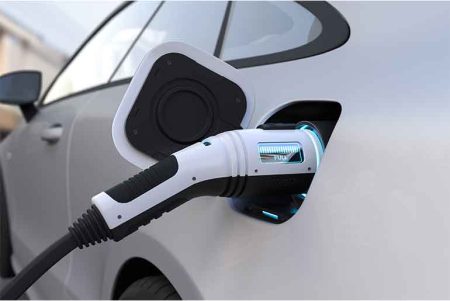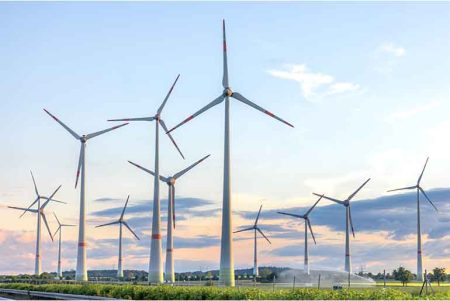

Rapid transformation of the battery industry because of Electric Vehicles (EV’s); Energy Storage Systems (ESS); Renewable Power Technology (RPT); and so on… but hidden deep within these growing technologies, is one key element that supports all these products, that is, Rare Earth Permanent Magnets (REPM). The REPMs do not physically exist inside the battery cells; however, they provide significant support to the numerous technologies surrounding the battery, including motors (for example) and Power Electronics, Manufacturing Equipment, and Clean Energy Systems, etc.
To gain insight into the complexities of the Battery Industry’s reliance on these Magnetic Materials, let’s first understand what the REPMs actually are.
What Are REPM (Sintered Rare Earth Permanent Magnets)?
REPM stands for Sintered Rare Earth Permanent Magnets. These are high-strength magnets made mainly from rare earth elements like Neodymium (Nd), Praseodymium (Pr), and Dysprosium (Dy).
Here’s how they work and why they are special:
They are created through a process called sintering, where powdered rare earth material is pressed and heated to form a dense, extremely strong magnet.
- They are much more powerful than conventional ferrite or ceramic magnets.
- They stay magnetized permanently, even under very high temperatures and extreme mechanical stress.
- They enable high-efficiency motors, compact designs, lightweight systems, and strong power density.
- In EVs, wind turbines, robotics, and battery manufacturing machines, these magnets are used because no other magnet type can match their performance.
In simple words, REPM are super-strong magnets without which modern electric mobility and battery innovation cannot function.
EV Motors Depend on Rare Earth Permanent Magnets for High Efficiency
The most direct connection between the battery industry and rare earth permanent magnets is the EV motor. Most electric cars today use Permanent Magnet Synchronous Motors (PMSMs), and these motors cannot operate without these magnets.
Why is this important for battery performance?
Because motors built with rare earth permanent magnets deliver:
- Higher torque
- Faster acceleration
- Lower energy loss
- Better heat management
- Longer driving range
A PMSM is 30–40% more efficient than a motor that does not use rare earth permanent magnets. This improves the battery’s job — allowing the same battery to travel more kilometers on the same charge.
Examples
Tesla’s Model 3 (rear motor) and many other mass-market EVs use permanent-magnet technology to improve efficiency and extend range. Independent industry reporting highlights the adoption of permanent magnets in Tesla Model 3 drivetrains as part of the car’s efficiency gains.
BYD Blade Battery / BYD factories — BYD’s integrated Blade battery manufacturing and large production facilities (for example, Chongqing) show how vertical integration in battery cell manufacturing pairs with large-scale vehicle production. While BYD designs its battery cells, the vehicles and factory automation around those cells still depend on motors and components that often use REPM.
Tata Nexon EV — Tata Motors lists the Nexon.ev’s motor as a Permanent Magnet Synchronous Motor on its official specification sheet. This local example ties the global motor trend directly to Indian EVs.
Better Motor Efficiency Means Smaller and Cheaper Batteries
The battery is the most expensive part of an EV. If the motor uses energy efficiently, the battery does not need to be oversized. This is where rare earth permanent magnets play a major role.
When an EV motor consumes less power:
- The vehicle can use a smaller battery
- The cost of the battery pack reduces
- The battery stays cooler and lasts longer
- The overall EV price becomes more affordable
Even a small efficiency gain created by rare earth permanent magnets can lower battery pack costs by several thousand rupees. So the magnets indirectly reduce pressure on battery chemistry, size, and cost.
Battery Manufacturing Machines Depend on These Magnets
Gigafactories rely on automation. Many machines used in electrode coating, cell assembly, and testing use motors and equipment that run on rare earth permanent magnets.
These include:
- Robotic handlers
- Precision coating machines
- Magnetic separators for material purification
- Cell-grading and sorting systems
- Vacuum pumps, compressors, and AGVs
Without rare earth permanent magnets, the accuracy, speed, and efficiency needed to produce millions of battery cells per month would not be possible. These magnets make modern battery production fast, safe, and highly automated.
Power Electronics in EVs Use Components Built With REPM
An EV battery needs power electronics to function smoothly. Many of the rotating and motor-driven components inside these systems depend on rare earth permanent magnets.
These components include:
- DC-DC converters
- Onboard chargers
- Traction inverters
- Cooling fans and compressors
- High-speed switching components
Better power electronics improve battery life, charging efficiency, and safety. Again, rare earth permanent magnets quietly support the entire system.
Energy Storage Systems (ESS) Also Rely on REPM Components
Large-scale battery energy storage systems — in factories, renewable plants, and grids — use multiple components powered by rare earth permanent magnets.
Some examples are:
- Cooling system blowers
- Motorized circuit breakers
- Precision actuators
- High-speed switching units
- Safety and protection systems
When ESS components are more efficient, the battery experiences less thermal and electrical stress, improving its overall lifespan.
Renewable Energy Growth Increases Demand for Both Magnets and Batteries
India’s renewable energy expansion, especially wind energy, heavily relies on rare earth permanent magnets. Modern direct-drive wind turbines use large REPM-based generators.
The chain effect is simple:
- More renewable power → more need for battery storage
- More battery storage → more manufacturing capacity
- More manufacturing → more components requiring rare earth permanent magnets
So the rise of clean energy and the rise of batteries are deeply connected through REPM.
India’s New Magnet Mission Will Boost Battery and EV Manufacturing
India currently imports nearly all of its high-grade rare earth permanent magnets, mainly from China and Japan. This creates a vulnerability for India’s EV and battery sector.
To solve this, the government recently announced the ₹7,280-crore Magnet Mission, focused on building India’s first full-scale domestic REPM manufacturing ecosystem.
Local REPM production will:
- Strengthen India’s EV motor industry
- Reduce the cost of battery manufacturing machines
- Improve localization of EV and battery components
- Stabilize supply chains
- Support the vision of self-reliance in clean energy
As the nation builds gigafactories and EV plants, having domestic access to rare earth permanent magnets will be a major competitive advantage.
REPM Reduce System Costs Across EVs and ESS
When systems become more efficient due to rare earth permanent magnets, the battery benefits directly. Some system-level advantages include:
- Reduced battery pack size
- Lower thermal load
- Less energy consumption
- Better fast-charging stability
- Longer battery life
Even modest improvements in efficiency lead to cost reductions throughout the EV and ESS ecosystem.
A Strong Magnet Industry Creates a Strong Battery Industry
The success of the battery industry depends not only on lithium, nickel, graphite, and new chemistries but also on surrounding components powered by rare earth permanent magnets.
Without these magnets:
- EV motors become less efficient
- Battery packs need to be larger
- Renewable power becomes less productive
- Gigafactory automation becomes slower
- Battery production costs rise
India’s clean mobility plan cannot succeed without an equally strong foundation in rare earth permanent magnets.
Conclusion
Sintered REPM may seem like a small component, but rare earth permanent magnets are essential for the battery industry’s progress. They make EV motors more efficient, reduce battery costs, improve power electronics, support battery manufacturing, and strengthen renewable energy adoption. As India progresses through the journey of adopting electric vehicles (EV) with the introduction of gigafactories and utilizing clean energy, it will be strategically and necessarily beneficial to create capabilities for the domestic production of rare earth permanent magnets.
 Electrify your feed! Click here to join our Whatsapp group and to get the latest updates, expert insights, and innovations driving India’s energy storage revolution.