
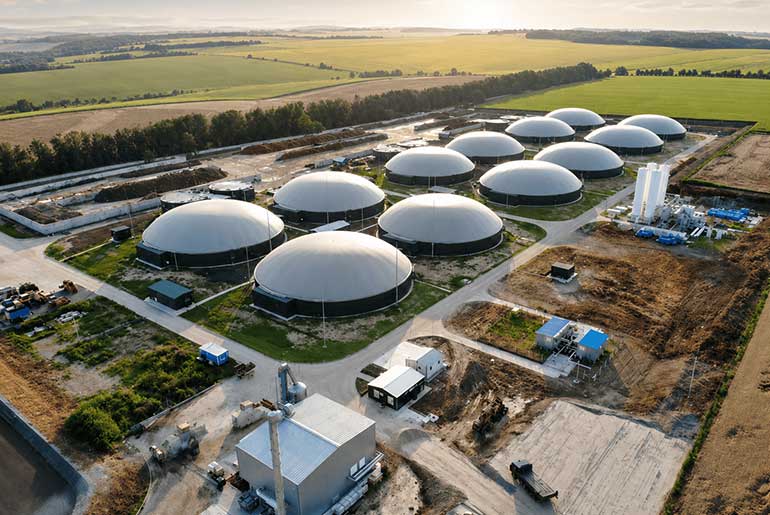
Alchemy Cleantech and Paragon Biofuels have jointly inaugurated the Ankleshwar Bio CNG Plant, a watershed moment in their shared vision of turning organic waste into a valuable source of clean energy. Developed through a strategic partnership between the two companies, the facility reflects a growing shift toward circular and sustainable resource management, where waste is no longer seen as a disposal challenge but as a resource that can generate renewable fuel, support agriculture, reduce emissions, and create economic opportunities. The project represents another step forward in India’s efforts to build a cleaner and more resilient energy ecosystem while unlocking value from waste streams that would otherwise go unused.
The Ankleshwar Bio CNG Plant, with a capacity to process 43,800 tonnes of organic waste per year, will produce 2,373 tonnes of Compressed Bio-Gas (CBG) – a renewable fuel that can be used directly as a substitute for conventional CNG in various applications. As India aims to reduce its dependence on fossil fuels and increase its domestic energy resources, projects like this illustrate how local waste streams can make a significant contribution to the country’s energy requirements.
The environmental impact of the facility is enormous. The plant is anticipated to save approximately 17,000 tonnes of carbon dioxide emissions annually by transforming organic waste into clean fuel rather than allowing it to decompose in landfills or other disposal sites. To put this into context, the impact is similar to saving around 6,272.6 hectares of forest land or nearly 7.95 million litres of petrol annually. These results are very much in line with India’s larger sustainability objectives and its promise to reduce greenhouse gas emissions and hasten the shift to cleaner energy sources.
But the project’s value is much greater than just fuel production. The biological conversion process also produces significant by-products that can be returned to the agricultural ecosystem. Each year, the facility is expected to produce approximately 7,300 tonnes of solid Fermented Organic Manure (FOM) and 27,375 cubic metres of liquid FOM. These nutrient-rich bio-fertilisers can contribute to improving soil health and promoting more sustainable farming practices, creating a circular system where waste from one sector becomes a valuable input for another.
For the companies behind the initiative, the Ankleshwar facility represents a practical demonstration of how circular economy principles can be implemented at scale. It showcases a model where environmental responsibility and economic value creation are not competing objectives but interconnected outcomes.
Speaking about the inauguration, Sushant Arora, Founder of Alchemy Cleantech, said the project reflects a broader vision of building regenerative energy systems that make better use of existing resources.
“At Alchemy Cleantech, we believe the future of energy lies not in extraction, but in regeneration. The Ankleshwar Bio CNG Plant is proof that waste is not a problem to be buried—it is a resource waiting to be unlocked. Together with Paragon Biofuels, we are taking a decisive step toward building a truly circular energy economy in India, where every tonne of organic waste becomes clean fuel, fertile soil, and shared prosperity. This is just the beginning; our vision is a network of such plants across the country that collectively transform how India produces and consumes energy.”
The project is also anticipated to deliver significant economic benefits to the local ecosystem. The plant will directly employ about 50 people and indirectly support the livelihood of another 150 through the waste collection, transportation, logistics operations and allied vendor networks. This employment impact underlines the importance of investing in sustainable infrastructure that can bring about not only environmental benefits but also local economic growth and community involvement.
As India progresses in its urbanisation and industrialisation, the challenge of managing increasing volumes of organic waste is becoming more and more important. Facilities like the Ankleshwar Bio CNG Plant offer a solution that addresses multiple challenges at the same time – diverting waste from disposal sites, producing renewable energy, supporting farmers with organic fertilisers and creating employment opportunities across the value chain.
For Paragon Biofuels, the project also marks an important milestone in a much larger investment strategy focused on expanding India’s waste-to-energy sector. The company sees significant long-term potential in converting organic waste into clean fuel and building infrastructure that strengthens both environmental sustainability and energy security.
Commenting on the development, Susmit Gupta, Managing Director of Paragon Biofuels, said:
“Waste-to-clean energy will be one of the defining pillars of India’s energy security over the coming decades. At Paragon Biofuels, we have a strong conviction in this opportunity and are committing INR 500 crores to help scale the sector. The Ankleshwar Bio CNG Plant is an important milestone that demonstrates how capital, technology, and policy can align to create sustainable infrastructure with measurable impact. We are investing in a future where organic waste becomes a strategic national resource—producing clean fuel, supporting rural livelihoods, reducing emissions, and strengthening India’s journey towards a circular and energy-secure economy.”
The inauguration of the Ankleshwar Bio CNG Plant is expected to act as a blueprint for future projects by the Alchemy Cleantech–Paragon Biofuels partnership. The two companies have expressed a shared ambition to build scalable and replicable waste-to-energy plants across India’s industrial and urban centres, forming a network that can unlock the value of organic waste streams.
As the country works toward cleaner energy systems and more sustainable resource management practices, projects like Ankleshwar show how one piece of infrastructure can bring multiple benefits all at once. Turning waste into fuel, fertiliser, jobs and environmental value, the plant demonstrates real-world potential for a circular economy – one that extends the lifespan of resources and embeds sustainability into the very foundations of growth.
And this latest development is not just the launch of a new plant; it is another step forward in reimagining waste as a resource and building an energy future that is cleaner, more resilient and better suited to the needs of a rapidly changing India.
 Electrify your feed! Click here to join our Whatsapp group and to get the latest updates, expert insights, and innovations driving India’s energy storage revolution.