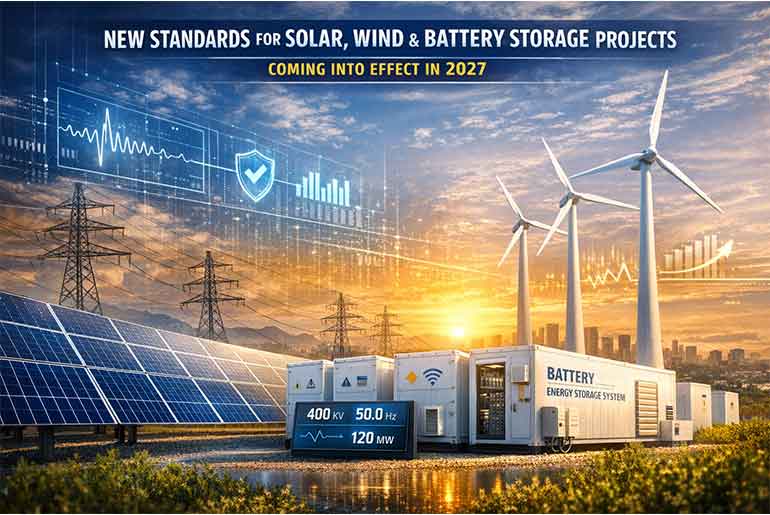
A significant change is on the horizon for India’s power sector with the introduction of new technical standards established by the Central Electricity Authority (CEA) governing the design and construction of solar, wind, and battery energy storage systems (BESS). The updated technical standards will officially commence on 1 April 2027.
The new regulations are intended to improve the reliability, safety and interconnection of renewable energy projects. For the first time, comprehensive technical standards have been established for BESS, which reflects the growing importance of storage during India’s transition to renewable energy.
Under the new rules, all renewable energy plants and storage systems must be designed for continuous operation within defined voltage and frequency limits. Developers will also need to maintain proper documentation, install monitoring systems, and ensure strong communication networks within the plant and with the grid.
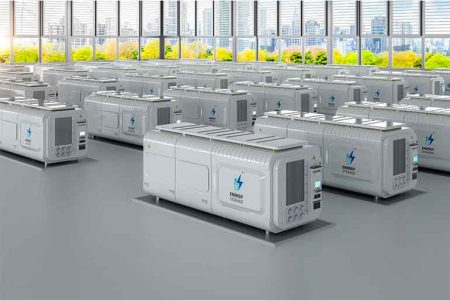
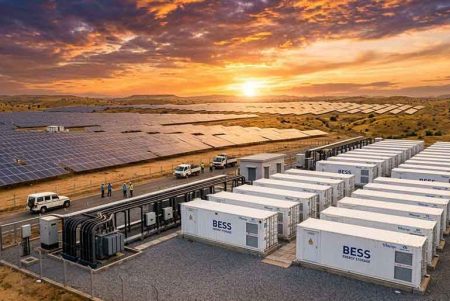
A key focus is on battery storage systems. The rules clearly define how BESS should operate and what capabilities they must have. Examples of this include active power regulation, voltage regulating, frequency response and integrating support to the grid during failure events. To be able to accomplish these tasks large-scale battery energy storage systems (BESS) over 50 MW will need the following advanced functions; Automatic Generator Control (AGC), Grid forming Capabilities and Black Start Support.
The CEA has also set clear performance expectations for batteries. Systems must maintain at least 90% performance after five years, 80% after ten years, and 70% after fifteen years. This ensures long-term reliability and protects project quality.
Solar and wind energy facilities must comply with the criteria above: appropriate site selection; quality of equipment; safety measures; and ability to perform for at least 25 years. There also are established requirements for inverters, transformers, cables, and control systems.
An additional consideration is maintaining grid stability. New standardised requirements will also mean that both solar and wind energy producers are now required to assist in keeping the electrical grid stable, by furnishing voltage control, regulating reactive power and continuously monitoring the electrical grid in real-time. Security and reliability of communications between both electrical generation facilities and utility (grid) operators must also be assured, to aid in coordination.
Overall, these new regulations mark a strong step toward building a more stable and future-ready power system in India. As renewable energy capacity continues to grow, such standards will play a key role in ensuring that solar, wind, and battery storage systems work efficiently together and support the country’s clean energy goals.
 Electrify your feed! Click here to join our Whatsapp group and to get the latest updates, expert insights, and innovations driving India’s energy storage revolution.