India is undergoing a rapid clean-energy revolution. From electric mobility to renewable energy storage, the demand for efficient, reliable, and safe battery technologies has never been greater. At the heart of this transformation lies Lithium Iron Phosphate (LFP) chemistry, now the preferred choice across EVs, residential, commercial, and industrial applications. Designing batteries that are robust, reliable, and tailored to Indian conditions is no longer optional; it is the foundation of sustainable growth in the EV sector.
According to Mordor Intelligence, the battery swapping market in EVs alone is projected to grow at a CAGR of 26.52% between 2025 and 2030, underscoring the immense adoption of LFP batteries in India’s mission to reduce pollution and embrace sustainable and reliable energy.
Let’s talk about some of important factors in inside LFP batteries to establish the highest level of quality and reliability.
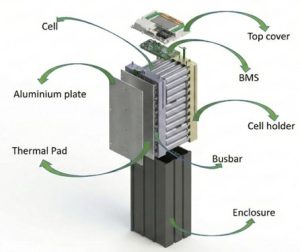
Key Reliability Factors Inside LFP Batteries
The performance and longevity of LFP batteries depend on multiple engineering and operational factors. These include:
LFP Cells: The Foundation of Battery Reliability
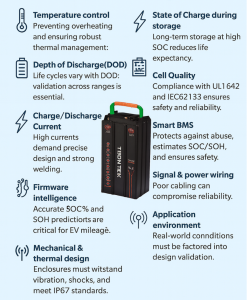
Lithium Iron Phosphate (LFP) cells form the backbone of modern battery packs. Their life and reliability depend on cell quality, validated engineering data, and robust design practices. Placement, welding, and thermal management are critical factors that determine long‑term performance. Cycle‑life claims must be backed by data across different depths of discharge (DoD) and operating temperatures to reflect real‑world use. Users should verify compliance with global safety standards such as UL1642 and IEC62133. Pre‑qualified cells ensure consistency, safety, and credibility in demanding applications.
The Role of the BMS
If cells are the foundation, the Battery Management System (BMS) is the heart. A well‑engineered BMS safeguards against abuse, enhances performance, and extends life. It monitors temperature, ensures safety, predicts state of health (SOH), and displays state of charge (SOC)—vital for electric vehicle range estimation. Conversely, a poorly designed BMS can compromise the entire pack and raise safety risks. Minimum criteria for reliability, including FIT numbers and MTBF predictions, should be standardized for electronic components and BMS design.
Mechanical Design and Protection
Mechanical construction is equally vital. The enclosure must withstand shocks, vibrations, and harsh EV operating conditions while offering ingress protection of at least IP67 against dust and water. Poor welding or weak joints can lead to failures, while expert thermal design is essential to handle high discharge and rapid charging currents.
“A badly engineered battery can cost more in the long run due to frequent failures and replacements.”
Standards & Compliance
To ensure safety and reliability, LFP batteries must adhere to global and Indian standards:
- Cell standards: UL1642, IEC62133
- Battery pack standards: IEC62619, IEC61960, AIS/IS standards for EVs
- Reliability metrics: FIT number / MTBF predictions for BMS components
- Ingress protection: IP67 or higher for dust and water resistance
Engineering Excellence at Trontek
Trontek has been a leader in manufacturing robust and reliable LFP batteries for over a decade, catering to EVs and energy storage solutions.
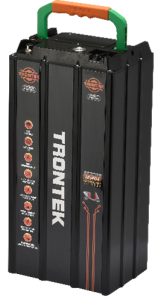
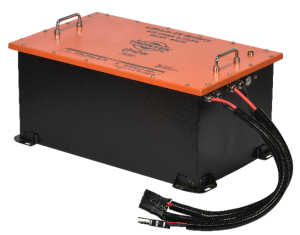
- CAD-based design: In-house thermal and mechanical simulations by R&D experts.
- Laser welding: Ensures strong, reliable joints.
- Lean manufacturing: Automated production lines for consistency and efficiency.
- Validation know-how: Strict pass/fail criteria using automated test equipment.
- Continuous R&D investment: Reinforces innovation and supports India’s Make in India mission.
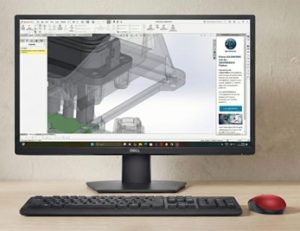
In-house CAD and thermal design for battery pack.
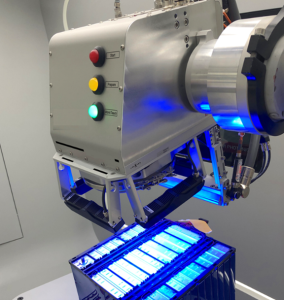
The production lines are equipped with laser welding machines.
The Strategic Insight
The Total Cost of Ownership (TCO) is the ultimate measure of battery value. While low-cost, poorly designed batteries may seem attractive initially, they often lead to higher expenses due to failures, replacements, and safety risks.
The quality triangle—cell integrity, BMS reliability, and mechanical robustness—must align to deliver long-term performance. Skilled R&D teams, strict validation, and compliance with international standards are non-negotiable for to yield the best reliability of batteries.
 Electrify your feed! Click here to join our Whatsapp group and to get the latest updates, expert insights, and innovations driving India’s energy storage revolution.