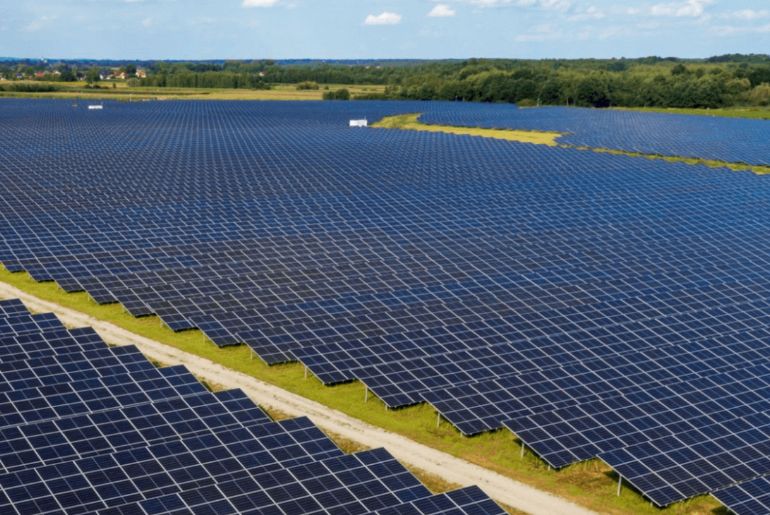
India continues its rapid renewable energy expansion, with the country adding 3,002.62 MW of solar capacity in February 2026, bringing the total addition from 1st April 2025 to 28th February 2026 to 37,957.90 MW. According to the latest data from the Ministry of New & Renewable Energy (MNRE), India’s cumulative solar capacity now stands at 143.60 GW.
The breakdown of cumulative solar capacity includes:
- Ground-mounted solar plants: 109.50 GW
- Grid-connected rooftop solar: 24.86 GW
- Hybrid projects (solar component): 3.51 GW
- Off-grid solar: 5.73 GW
February also saw contributions from other renewable energy sectors, including 482.10 MW of wind power, raising the total wind capacity added in FY26 so far to 5,094.68 MW, with cumulative wind capacity reaching 55,132.50 MW.
This month, other renewable sectors saw only small gains. For example, small hydro added 12.75 MW (for a total of 70.81 MW in FY26 and 5,171.36 MW overall). Biomass non-bagasse cogeneration added 14.20 MW in FY26, and waste-to-energy off-grid projects added 1.04 MW in February (for a total of 17.45 MW in FY26). In February, there were no new additions to large hydro, but the total capacity of large hydro is now 51,164.67 MW.
In total, India’s installed renewable energy (excluding large hydro) reached 215,523.20 MW, while total renewable energy capacity, including large hydro, reached 266,687.87 MW. Adding nuclear capacity of 8,780 MW, of which 700 MW was added in FY26 so far, India’s total non-fossil fuel capacity has now reached 275,467.87 MW, marking significant progress toward the country’s ambitious 500 GW non-fossil fuel target by 2030.
The data shows that India’s main focus on solar energy as the main driver of its transition to renewable energy has not changed. Ground-mounted solar projects are still the most common way to add capacity, but rooftop solar and hybrid installations are becoming more important for decentralised energy access. Wind energy is still a big part of the renewable mix, even though it adds less energy each month.
These figures highlight India’s consistent progress in building a clean, sustainable, and resilient energy system, providing reliable power for households, industries, and rural areas, and furthering its goal of achieving net-zero emissions by 2070.
 Electrify your feed! Click here to join our Whatsapp group and to get the latest updates, expert insights, and innovations driving India’s energy storage revolution.