
India’s swift electrification process is revealing significant flaws in worldwide battery engineering expectations. Although numerous battery standards and designs originate from Europe, China, or North America, India represents the ultimate challenge for these systems requiring functionality in temperatures above 45°C, intense monsoons, elevated humidity, bumpy roads, and rigorous daily usage patterns. Manufacturers and engineers globally are now understanding that simply complying with global battery standards is insufficient; to thrive in India, batteries need to be designed for this distinctly challenging operating environment.
Why India Is Not a Typical Market
Commonly used industrial benchmarks, laboratory test methods and standards are typically based on moderate climate and known operating conditions; whereas, the actual operating conditions found within India represent the antithesis of these assumptions on a daily basis. Summer temperatures frequently cross 45°C in northern and central India, and direct sunlight can push battery pack temperatures far above ambient levels. The extremes of the climate/time/non-ideal operating conditions result in an increase in the speed of reaction between chemicals thus increasing the degradation of the chemicals, thereby reducing their usable range, as well as increasing the likelihood of an incident such as a thermal runaway.
During the monsoon, heavy rainfall and high moisture levels stress water management and sealing technologies. Coastal cities such as Kolkata, Mumbai, and Kochi are bathed in humidity throughout the year, making adequate ingress protection essential for reliable performance. Meanwhile, Indian roads — known for potholes, uneven terrain, and frequent traffic impart constant vibration and shock loading that can undermine battery pack integrity and longevity.
Taken together, these environmental realities mean that a battery that passes global tests may still fail prematurely in India. This is why India’s conditions are rightly described as the ultimate stress test for global battery standards.
The Challenge of Extreme Heat and Thermal Management
Heat is the enemy of battery health. Lithium-ion batteries — the dominant technology in electric vehicles (EVs) globally — are particularly vulnerable to elevated temperatures. While standard test conditions assume optimal performance up to about 35°C, Indian summer conditions frequently exceed these limits, resulting in performance drops and accelerated degradation.
At temperatures above 45°C, not only does range drop noticeably, but high ambient heat also shortens battery life drastically. Data indicates that vehicle batteries are expected to lose capacity much more quickly in hot temperatures over extended periods compared with moderate operating conditions. In addition, hotter temperatures present an increased risk of thermal runaway, where excessive heat creates a continuing reaction that produces additional heat which can lead to fire.
As a result, advanced thermal management systems have become essential for all electric vehicles (EVs) sold in India. Traditionally, air cooling systems did not perform very well and with hotter temperatures, liquid cooling systems that circulate coolant through all battery cells are becoming a necessity to keep them operating at safe temperatures and to provide fast charging in hotter climates. This is consistent with global trends in countries where temperatures are usually higher, whereas in those countries, managing thermal performance is viewed as a fundamental requirement, rather than an added feature.
Complex thermal management systems also create higher costs and add complexity to the product, particularly in segments like two- and three-wheeled vehicles and budget passenger electric vehicles that have a lower cost-to-performance ratio. It will continue to be a challenge for automotive engineers to balance performance, safety, and affordability in a world with rapidly changing technologies.
Monsoons, Humidity, and the Need for Robust Sealing
India, unlike many of the Western markets, has extreme seasonal rain, as well as an extremely humid climate for most of the year, which creates a hostile environment to battery performance unless properly considered. More than just the battery cells may be affected by moisture; the connectors, cooling systems, and control electronics may also be compromised by moisture.
In order to mitigate these issues with batteries currently designed for use on Indian highways, the new battery packs are designed to meet much higher ingress protection (IP) ratings (i.e., battery packs for use in water immersion would have at least an IPX7 rating) as well as implementing better gaskets and seals that provide additional protection against moisture ingress. This will significantly reduce the potential for short-circuiting, corrosion, and other moisture-related failures due to the extreme weather conditions seen in low-humid environments. Also, battery management systems (BMS) are developed to continually monitor both moisture and temperature levels with a goal of proactively shutting down systems before moisture levels reach a point where there is a safety risk.
Another aspect of this vulnerability to moisture is how monsoon season in India underscores the limits of the moisture testing typically done in laboratory environments. Conditions such as standing water and splashing created during heavy rains frequently exceed the conditions that are accounted for during regular laboratory testing. Thus, validating field performance and monitoring actual moisture levels during typical monsoon conditions will be critical for engineering performance improvement.
Vibration, Shock, and Duty Cycles: India’s Daily Abuse Test
India’s road conditions are another harsh reality for battery packs. Although they are often ignored in controlled (lab) testing, continuous vibration, frequent bumping and jarring caused by potholes, and incessant stop-and-going in heavy traffic produce mechanical stresses on EV Battery systems. These mechanical stresses, such as loosening of connectors or degradation of pack integrity, accelerate material fatigue, and are often downplayed in the world’s battery standard processes.
Additionally, the typical high usage of electric vehicles in India, due to commercial applications such as ride-sharing, logistics/deliveries, and public transportation. It’s typical for an EV to be used between 10-12 hours/day and carry initially full capacity passenger counts, placing more demands on the batteries and battery management systems (BMS) as compared to low usage scenarios. This type of daily performance is in many ways a different type of stress test, demonstrating vulnerabilities that would not surface under normal low utilization patterns.
Thermal Runaway and Safety Standards
Thermal runaway is a significant threat to EV safety. India has hot weather and the use of low-grade materials or inconsistent quality control increases this risk. The numerous incidents in real life as well as documented EV fires show the need for effective and enforced battery safety standards.
Recently, Indian standards like AIS-156 were revised and now include more stringent battery safety requirements. These are:
- All batteries must have battery management systems built in that can handle over-voltage, over-temperature and short-circuit situations, as well as thermal propagation prevention mechanisms.
- All battery packs will be subjected to water exposure testing.
- All packs must be equipped with venting to relieve gases created during a fire, multiple temperature sensors and traceability documentation.
The intent of these standards is to raise the level of safety for batteries manufactured in India to meet or exceed international standards while addressing the specific dangers present within India. In doing so, India is setting a precedent for how EV batteries should be engineered for climates and conditions that go beyond temperate zones.
Liquid Cooling vs. Passive Approaches
Liquid cooling has recently gained support as an innovative answer for electric vehicle manufacturers in India, allowing for consistent thermal regulation across a battery pack using liquid, non-electrically conductive coolants that circulate around every battery cell to prevent localized heat build-up (hot spots) while helping to decrease charging times. Passive air or cold plate cooled battery systems may work well in relatively mild climates; however, they will not perform up to expectations when subjected to high ambient temperatures and external heat exposure.
Similarly, hybrid passive cooling strategies that utilize advanced materials such as nanofluids combined with heat pipes and superior thermal interface materials to transfer heat away from battery cells during peak loading times have been developed in response to changing electric vehicles thermal management dynamics within the Indian operating environment.
While adopting these types of cooling systems would allow electric vehicle manufacturers to enhance the performance of their products, the cost associated with building them, in conjunction with continued technical support and maintenance, places electric vehicle manufacturers in a difficult position; thus, they must determine how to create products that could outperform the highest levels of stress testing experienced in India, without driving the price of their products beyond reach of the mass marketplace.
The Role of Battery Chemistry
Battery chemistry also plays a central role. Traditional lithium-ion chemistries like Nickel Manganese Cobalt (NMC) offer high energy densities but can be less thermally stable than alternatives such as Lithium Iron Phosphate (LFP). In high-temperature conditions, LFP chemistries tend to degrade more slowly and are less prone to thermal runaway, making them appealing for Indian applications.
Nevertheless, each chemistry involves trade-offs between energy density, cost, cycle life, and safety. As Indian battery engineering evolves, hybrid and next-generation chemistries — including solid-state batteries — may eventually play a role. But for now, balancing chemistry choice with robust thermal and mechanical design remains a core challenge.
The 2025 Pivot: Sodium-Ion and the End of Lithium-Dependency
As we move through late 2025, the “India-Ready” engineering challenge has entered a new phase: the commercial pilot of Sodium-Ion technology. While lithium remains the leader for long-range performance, Sodium-Ion has emerged as the hero for India’s massive two-wheeler and stationary storage markets.
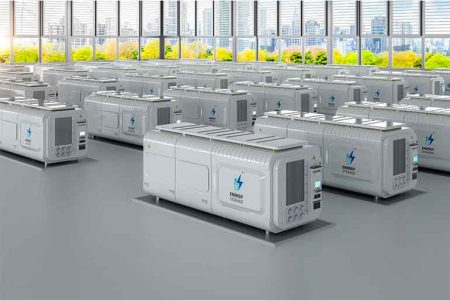
Unlike lithium, sodium is abundant in India, and the chemistry is inherently safer in extreme heat—performing reliably at temperatures up to 70°C without the same risk of thermal runaway. Companies like Naxion Energy have already launched India’s first residential and industrial sodium-ion storage systems this year, proving that the future of the Indian battery may not be lithium-based at all.
This visualizes the emerging alternative to lithium, which is better suited for India’s high-temperature “stress test.”
The 360° Lifecycle: From Stress Test to Circular Economy
The challenge of engineering a durable battery in India now extends beyond its first life on the road. Under the Battery Waste Management Amendment Rules 2025, which became effective in February, manufacturers are now legally responsible for the entire lifecycle of the battery.
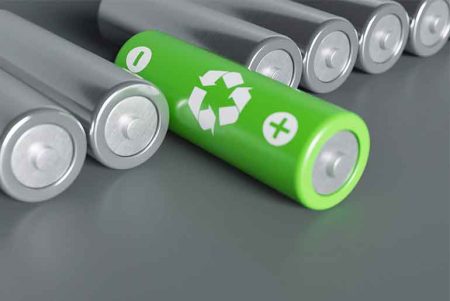
Every battery pack sold in India today must carry a digital “passport” often a QR code or barcode that tracks its health and ensures it is returned for recycling or “second-life” use in grid storage. By 2030, domestic recycling is projected to meet over 20% of India’s demand for critical minerals like lithium and cobalt, effectively turning India’s “stress-tested” waste into a strategic mineral mine.
Engineering for Real-World Indian Conditions
The core takeaway is this: India’s conditions — heat, humidity, rough roads, and heavy duty cycles — are not edge cases but the norm. Designing batteries that survive and thrive here requires a deep understanding of how these factors interact in the real world. Simply applying global battery standards without adaptation is insufficient. Only those engineered for India as the ultimate stress test will deliver reliability, safety, and long-term performance.
As EV adoption grows and India becomes a major manufacturer and exporter of electric vehicles and battery systems, lessons learned here will help chart a new direction for global battery standards — ones that account for climatic extremes and real-world abuse as fundamental design criteria.
 Electrify your feed! Click here to join our Whatsapp group and to get the latest updates, expert insights, and innovations driving India’s energy storage revolution.