Charging infrastructure is becoming a key part of making electric vehicles (EVs) and battery-powered transportation solutions more popular. India’s move to electric mobility is now in a crucial growth phase. Government support, the quick growth of charging networks, and new ideas from the private sector have all helped make battery charging and EV charging operators compete with each other.
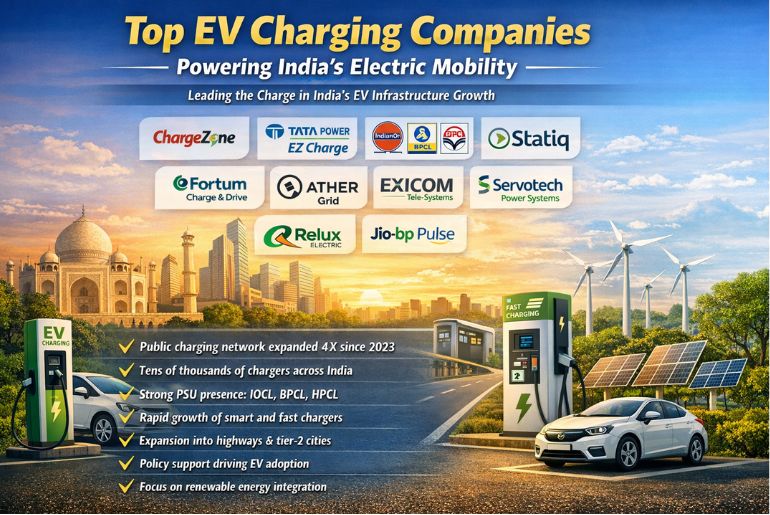
Recent analysis shows that between early 2023 and mid-2025, India’s public charging network expanded fourfold, with tens of thousands of chargers installed throughout metro areas, tier-2 cities, and highway corridors. This infrastructure development will be essential to attaining cleaner transportation and battery-based power solutions, as national plans for EV adoption by 2030 accelerate electrification targets.
Here, we highlight the top 10 battery charging and EV charging infrastructure companies that are currently active in India. These companies are leading the way in deployment, technological innovation, and wide geographic coverage.
1. ChargeZone – India’s Largest EV Charging Network
With a wide reach, ChargeZone has become the biggest EV charging company in India. Over 13,500 charging stations are currently part of its network, which serves over 8,000 users every day and has almost 2.5 lakh app downloads.
In order to support EV drivers throughout metro corridors and regional connections, the company’s strategy makes use of both DC fast chargers for intercity routes and AC chargers for urban use. ChargeZone’s success establishes it as a leader in India’s battery charging ecosystem and highlights the trend toward scalable, software-enabled charging networks.
2. Tata Power EZ Charge – Legacy Infrastructure with Broad Reach
EZ Charge, Tata Power’s EV charging arm, is one of the most well-known infrastructure brands in India. It has thousands of AC and DC chargers in more than 500 cities, and it has both public and semi-public charging stations.
EZ Charge chargers work with a lot of different plug types, like CCS and CHAdeMO. They are known for being reliable and working with a lot of different EV models. The company also works with automakers and fleet operators to provide charging solutions for homes and businesses.
3. Indian Oil, BPCL & HPCL – PSUs Powering National Network
India’s three major oil marketing PSUs are among the largest charging infrastructure deployers in the country:
- Indian Oil Corporation Ltd. (IOCL) leads the public charging market with nearly 8,000 public charging stations.
- Bharat Petroleum Corporation Ltd. (BPCL) operates over 3,100 stations, with a growing focus on battery charging solutions.
- Hindustan Petroleum Corporation Ltd. (HPCL) adds another 2,290+ charging locations to the network.
Together, these PSU networks account for a significant share of India’s charging infrastructure, embedding EV chargers at fuel stations nationwide and supporting broader adoption beyond early adopters.
4. Statiq – Fast-Growing Private Charging Network
Statiq has emerged as one of the fastest-growing EV charger networks in India, with presence in 60+ urban hubs and thousands of installed chargers.With chargers installed in more than 60 urban areas and thousands of them, Statiq has become one of the fastest-growing EV charger networks in India.
The company stands out because it uses mobile apps for routing, offers dynamic pricing incentives, and places its products in busy places like malls, offices, and parking lots. Statiq’s growth into tier-2 and tier-3 cities makes it easier for people outside of big cities to charge their batteries.
5. Fortum Charge & Drive – International Expertise, Local Deployment
Fortum Charge & Drive, the Indian branch of the Finnish clean energy company, brings its knowledge of charging electric vehicles to India. The company has set up high-speed DC chargers and made deals with OEMs and local governments.
Fortum’s chargers support multiple plug standards and feature scalable power outputs suited to commercial and passenger EV fleets alike.
6. Ather Grid – Homegrown Player with Connected Platforms
Originally known for its electric scooters, Ather Energy has expanded into public charging with its Ather Grid network. Ather’s chargers are strategically placed to support both its own vehicles and other brand EVs, often with integrated app-based user experiences.
Ather Grid focuses on usability and reliability, especially in urban centers with dense EV adoption.
7. Exicom Tele-Systems – Software-Driven Charging Solutions
Exicom Tele-Systems is an important technology provider in the US that makes charging systems for fleets and public stations that can connect to the Internet of Things (IoT). Its solutions use both hardware and smart software management to allow for real-time monitoring, energy optimization, and reporting at the fleet level.
The company is also working with OEMs and mobility partners to integrate chargers at dealerships and fleet depots.The company is also working with OEMs and mobility partners to add chargers to dealerships and fleet depots.
8. Servotech Power Systems – Affordable, Scalable Chargers
Servotech Power Systems has become known in India as a charger maker that focuses on value. They make affordable AC and DC charging hardware for two-, three-, and four-wheeled vehicles.
The company’s products can be set up quickly in homes, businesses, and institutions, making it a great place to get cheap charging infrastructure.
9. Relux Electric – Driving Corridor and Highway Charging
Relux Electric is growing quickly, especially in southern and western India, where it is focusing on major highways and intercity corridors. Recent reports show that the company plans to become one of the top three charge point operators by speeding up the rollout of its network.
Relux focuses on DC fast chargers and smart placements that make long-distance EV travel easier, which is very important for people to trust electric mobility.
10. Jio-bp Pulse – Strategic Energy Joint Venture
Reliance Industries and bp have teamed up to create Jio-bp Pulse, which has built an electric vehicle charging network that includes fast chargers at gas stations, city plazas, and business centers. Pulse wants to work with companies in the energy and mobility industries to offer fast and reliable battery charging options for both passenger EVs and commercial fleets.
Industry Growth Trends & Policy Support
The story of India’s EV charging infrastructure is one of faster infrastructure deployment and policy support. Industry data shows that the number of public charging stations has gone up from a few thousand in 2022 to tens of thousands by the end of 2025. The recent Union Budget 2025, on the other hand, made it clear that expanding incentives and building more infrastructure, such as highway charging networks, should be a national priority.
There are still problems, even though the infrastructure is growing quickly. Some charging stations still have low usage rates in some areas, and uneven distribution has made operators rethink how they deploy them.
India’s EV charging landscape is likely to keep changing in the future. Market forecasts say that charging networks need to grow to hundreds of thousands of chargers across the country to meet expected EV adoption goals by 2030. OEMs, infrastructure companies, and government agencies will need to keep working together, and fast and ultra-fast charging technology will need to keep getting better.
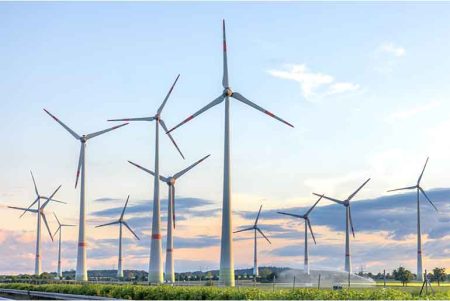
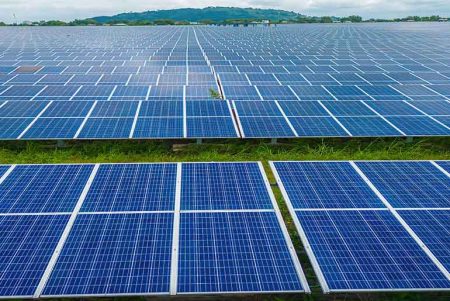
Indian companies are also looking into renewable energy integration, energy storage systems, and interoperability standards to make their products more reliable and long-lasting as new battery technologies and grid-integrated charging solutions become available.
As new battery technologies and charging solutions that work with the grid become available, Indian companies are also looking into renewable energy integration, energy storage systems, and standards for interoperability to make their products more reliable and long-lasting.
Their work shows that they see not only a business opportunity, but also a strategic shift toward cleaner, battery-powered transportation that will change the way people move around in India in the future.
 Electrify your feed! Click here to join our Whatsapp group and to get the latest updates, expert insights, and innovations driving India’s energy storage revolution.