In an energy landscape where batteries often dominate the conversation, the real intelligence lies in how that stored energy is controlled, deployed, and stabilized. As India accelerates toward renewable integration and large-scale storage adoption, power electronics are emerging as the silent backbone of this transformation.
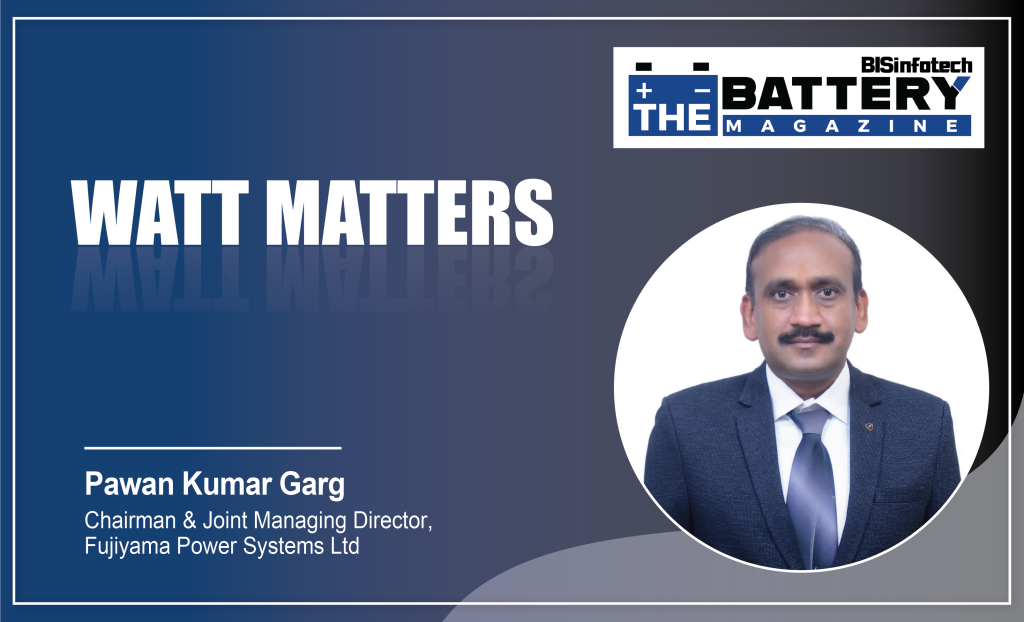
In this exclusive interaction with The Battery Magazine, Pawan Kumar Garg, Founder & Joint Managing Director, Fujiyama Power Systems Ltd., shares a grounded yet forward-looking perspective on the evolving storage ecosystem. In conversation with Shweta, Sub-Editor, the discussion explores the deeper engineering challenges behind lithium-ion integration, inverter intelligence, grid resilience, and the realities of “Make in India” in the power electronics supply chain.
Moving beyond surface-level optimism, Mr. Garg addresses safety standards, interoperability, domestic manufacturing ambitions, and the structural shifts required for India to become a global hub for ruggedized, grid-ready energy solutions. The conversation reflects Fujiyama’s R&D-driven approach and its ambition to transition from being a participant in the storage market to a benchmark setter in intelligent energy deployment.
Let’s delve into the interview to understand how Fujiyama Power Systems envisions powering India’s next phase of energy evolution.
India talks a lot about batteries, but power electronics quietly decide whether storage actually works. From your vantage point, is India underestimating the role of power electronics in its energy transition?
While lithium-ion chemistry naturally captures significant attention, we believe power electronics deserves equal focus as the enabling architecture that determines whether storage actually delivers value. Without sophisticated PE, critical functions like bidirectional power flows, grid-tie synchronization, harmonic mitigation, and frequency regulation become challenging—all essential for India’s renewable-heavy future.
The question we often reflect on is not just storage capacity, but controllability. In India’s energy transition, power electronics play a vital role as a gatekeeper of reliability, safety, and grid integration. At Fujiyama, we’re working to help the industry evolve from “how much can we store” to “how intelligently and safely can we deploy what we store.”
As lithium-ion batteries replace lead-acid at scale, many inverter and UPS systems fail at integration rather than chemistry. What design mistakes do you see most often in the Indian market—and how is Fujiyama avoiding them?
The most damaging mistake is treating lithium-ion as a “drop-in replacement” for lead-acid. This simplistic approach leads to catastrophic failures:
Common Integration Failures:
- Communication Breakdown: Poor or absent handshake between the Battery Management System (BMS) and inverter controller, leading to overcharge, deep discharge, or thermal runaway.
- Thermal Mismanagement: Designing for laboratory conditions (25°C) rather than real-world Indian summers (45°C+) and confined installation spaces.
- Voltage Mismatch: Using charge profiles designed for lead-acid on lithium chemistries with vastly different voltage windows.
- Protection Gaps: Missing pre-charge circuits or using undersized fuses and cell level data monitoring of the battery.
Fujiyama’s Approach:
We implement “Closed-Loop Communication Architecture” where the inverter dynamically adjusts charge-discharge curves based on real-time, cell-level data from the BMS. Our systems continuously monitor voltage variance across cells, temperature gradients, and State of Charge (SoC) to ensure the battery never operates outside its safe operating area.
Battery fires and inverter failures have damaged consumer trust. In your view, is this primarily a technology problem, a quality problem, or a cost-cutting mindset problem in the industry?
In our view, this is primarily a quality and approach challenge rather than a fundamental technology limitation. The industry has sometimes prioritized aggressive pricing over rigorous engineering standards.
Common Quality Gaps We Observe:
- Use of non-graded cells with inconsistent internal resistance to make battery pack
- Components not rated for high-temperature Indian environments
- Basic BMS implementations lacking cell-level balancing and comprehensive thermal monitoring
- Assembly practices that may not meet optimal safety standards
At Fujiyama, we believe safety should be a foundational engineering standard across all price points. Every component—from power semiconductors to thermal protection—undergoes accelerated life testing under peak Indian ambient conditions. Our philosophy is straightforward: comprehensive safety measures protect not just individual customers, but the credibility and future of the entire industry.
Grid instability, voltage fluctuations, and poor power quality are realities in India. How are inverter intelligence, controls, and firmware evolving to make battery-backed systems more grid-aware and resilient?
While the quality has improved over the years and the government proactively taking measures to make Grid and power Supply more resilient.
As a power electronics and battery manufacturer, we clearly recognize that with rising renewable energy penetration and inverter-based generation, active grid support is no longer optional—it is essential. Accordingly, our firmware is evolving from passive protection to active grid participation.
With LVRT (Low Voltage Ride Through) Feature our systems now remain connected during brief voltage dips (up to 1.5 seconds), providing reactive power support to help stabilize the local grid rather than tripping instantly and compounding the problem.
Our higher-end systems can operate in grid-forming mode, creating a stable voltage and frequency reference for critical loads even when the grid is unstable or absent.
“Make in India” sounds powerful, but component dependency is still real. Which parts of the power electronics and storage supply chain worry you the most today—and where does India genuinely have an edge?
Current Challenges:
The industry remains dependent on power semiconductors (IGBTs, MOSFETs, diodes),Lithium cells, Solar cells etc. These components represent a significant portion of the cost structure and are largely imported, making the supply chain vulnerable to global disruptions.
India’s Strengths:
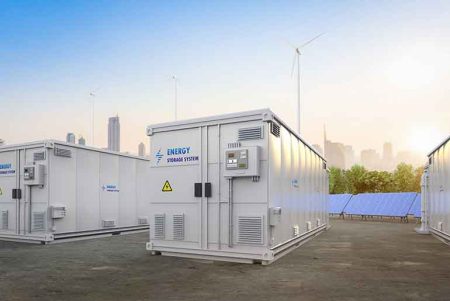
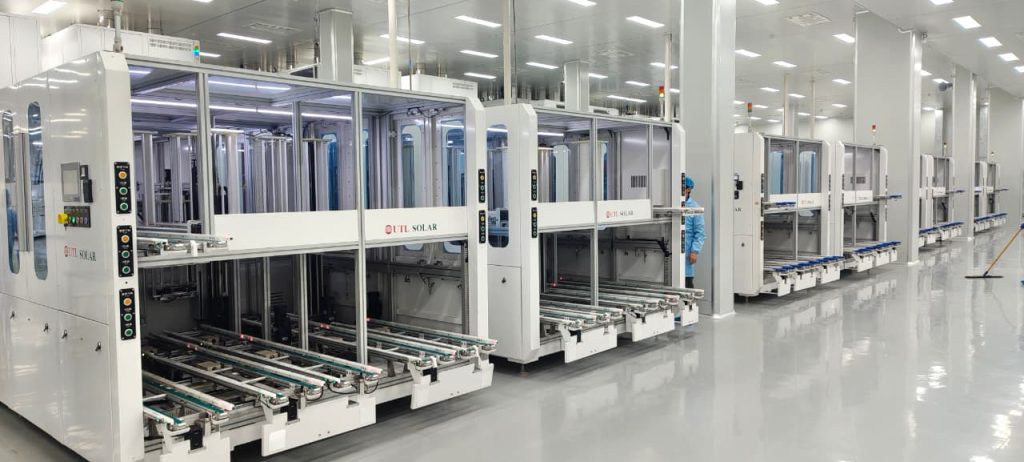
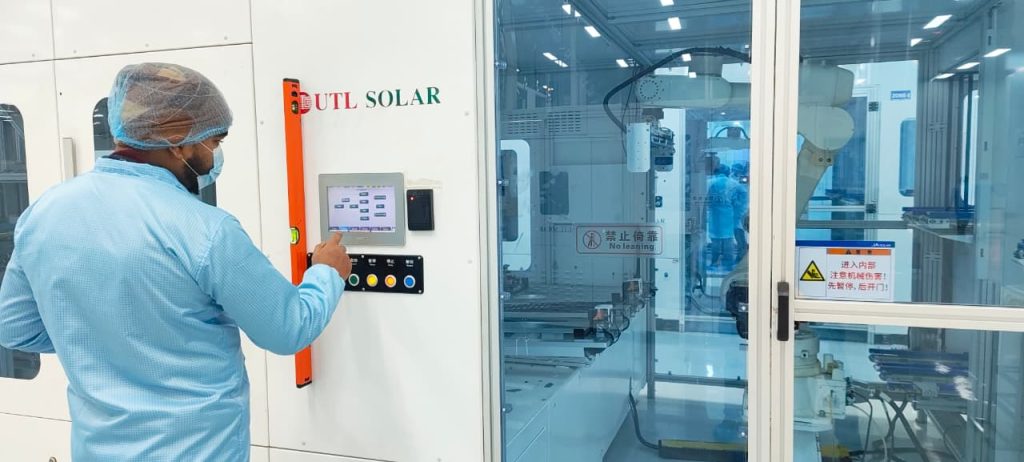
India has developed strong capabilities in embedded software, control algorithms, and system integration. Our engineering talent’s ability to develop robust firmware for challenging electrical environments—managing voltage fluctuations, harmonic distortion, and temperature extremes—represents a genuine competitive advantage. Fujiyama is trying to bridge this gap slowly as we recently commissioned 1 GW of solar cell manufacturing lines and are manufacturing BMS inhouse. Our upcoming BESS line of 2 GWh capacity is also expected to be commissioned soon, making total BESS manufacturing capacity of 2.54 GWh
Solar-plus-storage is often promoted as the next big opportunity. In reality, what is holding back widespread adoption in the C&I segment—technology readiness, pricing, regulation, or customer awareness?
It’s a combination of factors, but regulatory complexity and high upfront costs are the primary barriers. While the technology is mature, the lack of uniform net-metering policies and the high cost of capital for storage-intensive projects continue to deter mid-sized industries. Traditional project finance still does not fully recognize energy storage as a bankable asset class.
To accelerate adoption, we need innovative models such as Storage-as-a-Service, which can de-risk upfront investments and align costs with realized savings.
Equally important is customer awareness. A clearer understanding of how solar plus storage delivers superior ROI compared to grid + diesel generators dependence will play a critical role in driving broader adoption.
Policy often focuses on capacity addition, not performance. If you could change one regulation or standard to improve the quality and safety of India’s energy storage ecosystem, what would it be?
Policy-driven manufacturing capacity addition is essential to reduce India’s dependence on imported energy storage systems. At the same time, performance assurance must be built into deployment.
Most of the projects led under Discoms/PSUs are structured under PPAs that mandate strict performance obligations, ensuring that system reliability and long-term output are central to project success.
Regulation: I would mandate Standardized Communication Protocols for all BESS-integrated inverters. Currently, the industry is a “walled garden” of proprietary software. Forcing interoperability would ensure that safety and performance are transparent, verifiable, and enforceable by law.
Looking ahead to 2030, do you believe India will build globally competitive power electronics and storage companies, or will it remain a market dominated by imports? Where does Fujiyama intend to place itself in that future?
By 2030, India will be more than a consumption market—it will emerge as a global R&D hub for ruggedized power electronics and energy storage solutions.
Our deep engineering talent, combined with firsthand exposure to some of the world’s most challenging grid conditions, uniquely positions India to design technologies that perform reliably anywhere in the world.
With the Government of India mandating and actively promoting Make in India through schemes and policies such as ALMM, PLI, and product development funds, we are poised to significantly reduce import dependence. These initiatives enable the development of globally competitive, high-quality solutions that are not only locally manufactured but also internationally valued.
Fujiyama’s position: we are an R&D-driven company. Our ambition is not merely to compete with imports—it is to set the global benchmark for how energy is stored, managed, and intelligently deployed.
In the coming years, we will try to focus on backward integration in storage systems and power electronics, strengthening domestic capabilities, reducing supply-chain vulnerabilities, and building technology leadership from the ground up. Through innovation, integration, and execution, we aim to contribute meaningfully to India’s journey toward energy self-reliance while creating solutions trusted worldwide.
 Electrify your feed! Click here to join our Whatsapp group and to get the latest updates, expert insights, and innovations driving India’s energy storage revolution.