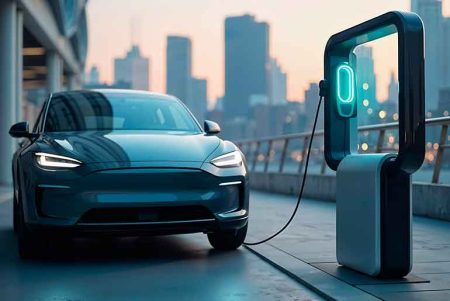

The pace of India’s EV rollout is rapidly accelerating, driven by a nationwide surge in charger deployments. Public EV charger have multiplied from roughly 6,000 in early 2023 to more than 24,000 by mid-2025 — a four-fold jump in just 15 months, led through government incentives, private-sector participation, and local manufacturing.
But a quieter challenge lies behind the headlines of “record installations” that could determine how far and how fast this transition goes: charger reliability.
According to various reports, only 60 percent of EV charger in India are consistently operational. In some networks, as many as one in five DC fast chargers remain out of service due to payment failures, software faults, or electrical issues. These numbers may not make the front page, but for every time a EV driver pulls up to a dead charger, they shape perception and adoption far more powerfully than statistic ever could.
Key Steps for Reliable Charger Operation
Regular maintenance ensures that both AC and DC chargers continue to perform safely and efficiently long after installation. Many failures can be predicted, and prevented, through simple inspections and periodic monitoring.
- Basic Maintenance (Applies to Both AC and DC Chargers)
These basic steps, needed with any kind of charger, often reveal early signs of trouble:
- Inspect the charger casing and connectors for cracks, discoloration, rodent infestation signs or burn marks that may indicate overheating or mechanical stress.
- Isolate the power supply before opening the enclosure — even low-voltage control circuits can carry stored charge, posing a risk for the technicians.
- Visually examine internal components for rust, corrosion, or water ingress, especially in outdoor chargers that are exposed to weather conditions.
- Periodically tighten loose connections and clean accumulated dust from terminals, busbars, and fan filters to prevent degradation due to tracking and thermal runaways.
- Poor input power — such as harmonic distortion, voltage imbalance, or incorrect phase rotation — can stress electronic components. Left unchecked, poor power quality can lead to overheating, blown fuses, or premature IGBT failure.
Electrical Checks for AC Chargers
AC chargers (typically up to 22 kW) are simpler in design when compared to DC chargers which tend to be higher rated, but still require following regular checks to keep them in working condition:
- Fault Loop Integrity – Loose terminals and corroded conductors increase the resistance in the protective path. When left unchecked, the charger’s breakers or RCDs may fail to disconnect quickly during a short circuit — risking damage to the internal power supply or user shock hazards.
- Insulation Condition – Temperature variations and humidity cause insulation degradation, which can lead to small leakage currents that gradually worsen. Identifying reduced insulation values early prevents nuisance RCD tripping, false fault alarms, or catastrophic insulation breakdown.
- Continuity of Neutral/Earth Conductors – A broken or poorly bonded neutral or earth can cause erratic charging behavior, inaccurate metering, or non-responsive charger displays. Simple continuity verification ensures that protective and return paths remain intact.
- Earth Resistance – Poor grounding causes voltage imbalances in sensitive electronic components within the chargers. Tracking earth resistance over time helps detect corrosion or changes in soil moisture before grounding becomes ineffective.
Together, these checks safeguard against electrical shock, tripping failures, and unreliable charging performance — the most common issues in AC chargers.
Electrical Checks for DC Chargers
DC fast chargers handle significantly higher voltages (400–1000 V) and power levels, making proactive maintenance essential to ensure user and technician safety. Small irregularities can lead to costly component failures or complete shutdowns, making following periodic checks essential:
- Insulation and Isolation Health – Regular insulation testing is needed as high-voltage insulation deteriorates due to thermal cycling and contamination, which can cause DC leakage. This can trigger charger shutdowns or even damage the vehicle’s onboard electronics.
- Cooling System Inspection – Dust buildup or clogged filters can restrict airflow, while coolant levels or pump malfunctions may cause thermal derating or automatic shutdowns. Regular cleaning and temperature monitoring keep the charger within safe operating limits.
- Earth Resistance and Bonding – Because DC chargers often share grounding systems with multiple high-power circuits, rising earth resistance can reduce surge protection effectiveness and increase risk of shocks to user. Periodic checks identify corrosion or mechanical loosening in grounding networks.
- Connector and Cable Condition – DC charging cables endure high currents and frequent handling. Cracked insulation or worn connectors can lead to tracking or arcing, potentially damaging the charger outlet. Physical inspection and thermal scanning can detect these early signs.
Turning Measurements into Maintenance Intelligence
When recorded consistently, these test results form a historical fingerprint of each charger’s performance. By tracking these values over time, operators can move from reactive repair to predictive maintenance, scheduling interventions before failures occur, ensuring higher uptime and safer charging for every user.
Empowering Technicians with the Right Tools and Training
Even the best maintenance protocol depends on people. India’s EV push has outpaced the training curve for field technicians, especially in high-voltage and DC applications. Many electricians familiar with AC distribution find EV chargers more complex — combining both power and data systems.
Developing standardized maintenance kits and training programs can bridge this gap. A good kit enables technicians to perform electrical, thermal, and mechanical checks safely and consistently. Training ensures they interpret results correctly, follow isolation procedures, and document findings systematically.
The Road Ahead
India’s EV goals are ambitious and achievable, but the next phase of growth won’t be about how many chargers we install, but about how well they perform. In markets like California and Norway, public charger uptime targets exceed 95%. For India to reach similar confidence levels, maintenance must become as visible a metric as installation counts. Every reliable charger on the street builds trust, confidence, and momentum for electric mobility.
Charger maintenance may not be glamorous, but it’s the invisible backbone of a dependable EV ecosystem. As the country accelerates toward electrification, ensuring that our chargers stay safe, efficient, and operational will be just as important as getting them deployed.
 Electrify your feed! Click here to join our Whatsapp group and to get the latest updates, expert insights, and innovations driving India’s energy storage revolution.