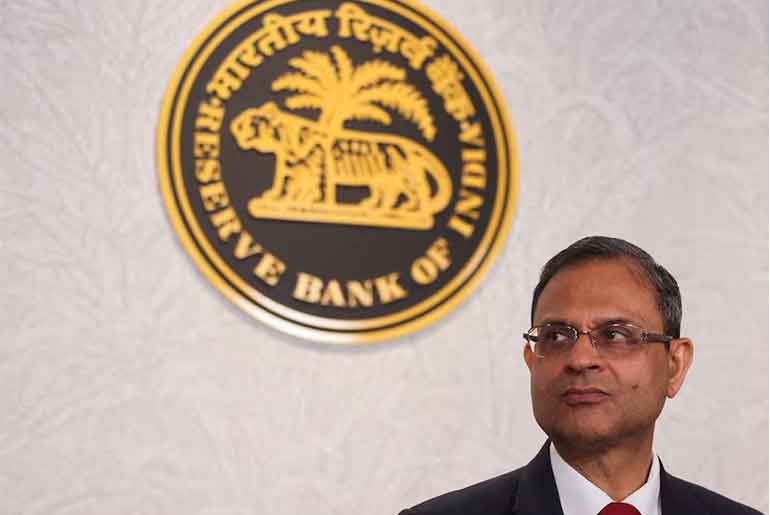
The Reserve Bank of India (RBI) has raised the policy repo rate by 25 basis points to 5.50%, citing rising inflationary pressures and global economic uncertainties. The Monetary Policy Committee (MPC) unanimously approved the increase and shifted its policy stance to calibrated tightening.
Following the decision, the Standing Deposit Facility (SDF) rate has been adjusted to 5.25%, while the Marginal Standing Facility (MSF) rate and Bank Rate now stand at 5.75%. The MPC said the decision was taken after assessing evolving macroeconomic and financial developments and the economic outlook.
The RBI noted that the global economic environment remains challenging amid the re-escalation of the West Asia conflict, volatile crude oil prices, elevated bond yields in advanced economies, trade uncertainties and an appreciating US dollar. These factors are expected to weigh on the global growth outlook and contribute to inflationary pressures.
India’s economy, however, continues to show resilience. Real GDP growth stood at 7.8% in Q1 2026-27, supported by private consumption, investment activity and positive net exports. The RBI has projected real GDP growth for 2026-27 at 7.1%, with growth estimated at 7.2% in Q2, 6.9% in Q3 and 6.8% in Q4.
Inflation has emerged as a key concern for monetary policy. Consumer Price Index (CPI) inflation increased to 4.8% in August 2026 from 4.5% in July, driven largely by higher food and fuel prices. Core inflation also increased to 4.2% in August.
The RBI has projected CPI inflation for 2026-27 at 5.2%, with inflation expected at 4.9% in Q2, 6.0% in Q3 and 5.7% in Q4. The central bank highlighted risks from a deficient southwest monsoon, El Niño conditions and volatility in international oil prices.
The MPC indicated that rate cuts are off the table in the near term, with future policy action likely to involve either a rate hike or a pause depending on the evolution of growth and inflation. The duration and extent of the tightening cycle will depend on underlying inflation, the broadening of price pressures and the impact of supply-side shocks.
The RBI also said system liquidity had remained in substantial surplus during August and September, while credit growth continued to be robust and broad-based across sectors.
On the external front, India’s current account deficit remained modest in Q1 2026-27, although the merchandise trade deficit increased to US$58.7 billion during July-August 2026, compared with US$55.1 billion during the same period a year earlier. Net FDI inflows improved to US$13.8 billion during April-August 2026 from US$9.6 billion a year earlier.
The central bank also announced measures to improve financial-sector infrastructure, including interoperability among NBFC account aggregators and the creation of a Technical Consultative Committee for Financial Markets.
The RBI said the policy measures are aimed at maintaining price and financial stability while supporting sustainable economic growth amid heightened global uncertainty.
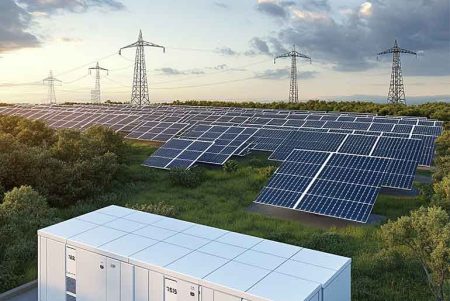
The repo rate hike is expected to have implications for the power sector, particularly for capital-intensive projects requiring significant debt financing. Higher borrowing costs could increase financing expenses for utilities, renewable energy developers, battery energy storage projects and other power infrastructure investments, potentially affecting project economics and investment decisions. At the same time, the impact could vary across the sector depending on project financing structures, existing debt exposure and the ability of developers to pass higher financing costs through long-term power purchase or service agreements. Industry leaders are expected to assess the rate hike in terms of its implications for project costs, investment momentum, renewable energy deployment and the broader transition toward a more flexible and reliable power system.
Industry Reaction
Arman Puri, Director, Hindustan Power
“The first rate hike in over three years was expected. The more important signal is the shift to calibrated tightening, which tells developers to plan for a cycle of increases and not a single move. Power and infrastructure projects are financed largely through long-tenor debt, so the cost of capital flows directly into the cost of electricity. A 25 basis point increase is absorbable and does not change project economics on its own. What the sector must now do is price upcoming bids and financing plans for a higher-rate environment. Electricity demand continues to grow strongly, and that will keep capital flowing into new capacity.”
Maulik Patel, Head of Research, Equirus Securities
“The RBI hiked the policy rate by 25 bps while changing its stance to a calibrated tightening, while revising up both growth and inflation estimates. With FY27 GDP growth estimated at 7.1%, the economy has room to absorb tighter policy, and the RBI is right to act as inflation becomes increasingly broad- based. Even after today’s hike, the real policy rate remains negative at around –40 bps, given CPI is projected to average 5.9% over the next two quarters. This points to further tightening ahead. However, we don’t expect it to embark on an aggressive hiking cycle considering elevated yields and liquidity absorption measures, and the central bank will be wary of front-loading hikes into a growth outlook that, while strong, is not immune to external shocks”.
Vinay Pai, MD & Head of Fixed Income, Equirus Group,
“The RBI’s 25-basis-point repo rate hike marks an important inflection point amid heightened global uncertainty, with imported inflation increasingly feeding into input costs across goods and services. Elevated crude prices, currency pressures and global commodity volatility could keep inflation above the comfort zone for longer. This creates a challenging environment for the bond market, as sticky inflation and expectations of further rate hikes could push yields higher, particularly at the short end. While India’s growth outlook remains resilient, liquidity management will be critical. We expect the RBI to maintain a cautious tightening bias, with scope for further hikes if inflation remains persistent, longer period inflation and higher yields are to remain here for sometime”
 Electrify your feed! Click here to join our Whatsapp group and to get the latest updates, expert insights, and innovations driving India’s energy storage revolution.