
Reliance Power’s renewable energy subsidiary, Reliance NU Energies Private Limited, has emerged as the largest winner in India’s first-ever Firm and Dispatchable Renewable Energy (FDRE) tender, securing 750 MW / 3,000 MWh capacity—half of the total 1,500 MW tender floated by SJVN Limited. The landmark allocation marks a major milestone in the evolution of India’s clean energy framework, combining renewable generation with energy storage to deliver round-the-clock, dispatchable green power.
According to an exchange filing, Reliance NU Energies received the Letter of Award (LoA) from SJVN on November 10, 2025. The project, secured at a tariff of ₹6.74 per kWh, underscores a growing cost competitiveness of firm renewable power in India’s grid ecosystem.
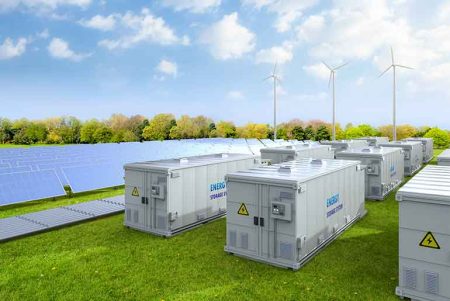
This pioneering project will integrate approximately 900 MWp of solar capacity with 3,000 MWh of Battery Energy Storage System (BESS), enabling flexible power delivery and peak load management. Unlike traditional renewable projects, the FDRE model guarantees dispatchable electricity — a crucial component for ensuring reliability and reducing dependence on fossil-fuel-based peaking plants.
A senior industry executive called the project a “watershed moment” for the Indian renewable sector, noting that “for the first time, renewables will be treated as a firm source of power — capable of supplying electricity whenever required, not just when the sun shines.”
The FDRE tender floated by SJVN Limited — a Mini Ratna PSU under the Ministry of Power — is India’s first large-scale initiative to combine generation and storage in a single, integrated model. The tender received overwhelming participation from industry majors, being oversubscribed more than three times, signaling high investor confidence in India’s renewable-plus-storage market.
With this win, Reliance Power has firmly positioned itself as a frontrunner in India’s solar-plus-storage segment. The company’s total renewable portfolio now exceeds 4 GWp of solar and 6.5 GWh of storage capacity across ongoing and upcoming projects.
The project is expected to play a key role in supporting India’s 500 GW non-fossil energy target by 2030, improving grid flexibility, and enabling 24/7 clean power supply to DISCOMs.
By introducing a firm renewable tariff mechanism, India is signaling its readiness to move beyond intermittent renewables toward a reliable, dispatchable green energy grid. The successful award of this tender marks a strategic inflection point in integrating large-scale Battery Energy Storage Systems (BESS) with renewable energy — an approach essential for maintaining grid stability, frequency regulation, and peak load balancing as renewable penetration deepens.
While the achievement is significant, large-scale integration of renewable energy and storage comes with challenges. Reliance NU Energies will have to ensure the timely procurement and installation of thousands of battery units, secure robust supply chains for lithium-ion cells, and develop advanced energy management systems capable of seamless operation and dispatch scheduling.
Experts also highlight the need for policy clarity on energy storage incentives, recycling frameworks, and long-term financing mechanisms to sustain the momentum of FDRE adoption.
Reliance Power’s success in this tender reaffirms its strategy to be at the forefront of India’s renewable revolution. The project not only demonstrates the group’s engineering and execution strength but also aligns with its broader vision to enable reliable, clean, and affordable energy at scale.
As India prepares for a future where renewable energy forms the backbone of its power system, FDRE projects such as this one will serve as blueprints for the next phase of the energy transition — one where renewable energy is not just sustainable, but dependable and dispatchable.
 Electrify your feed! Click here to join our Whatsapp group and to get the latest updates, expert insights, and innovations driving India’s energy storage revolution.