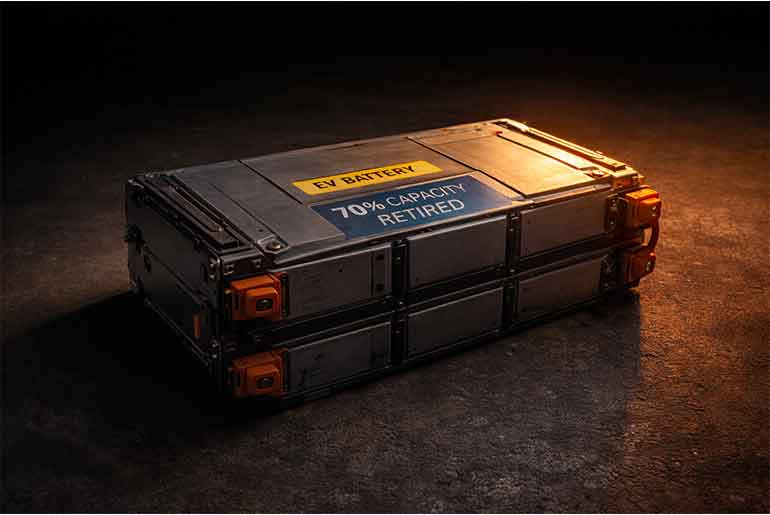
What happens to an electric vehicle battery when it drops to 70 per cent capacity?
For an EV, that battery is no longer considered reliable. The reduced range, performance inconsistency, and safety concerns make it unsuitable for continued use in cars like those made by Tesla. But here’s the irony: at 70 per cent, that same battery still has years of usable life left. It is not dead—it is simply retired early.
This is where the idea of second-life batteries enters the conversation, quietly reshaping how the industry looks at sustainability, cost, and circularity.
The Growing Battery Graveyard
As EV adoption accelerates globally and in India, millions of lithium-ion battery packs will reach their automotive end-of-life over the next decade. Industry estimates suggest that EV batteries typically exit vehicles after 6–8 years, even though their electrochemical lifespan can extend much longer.
In the absence of well-defined pathways for entering a second life, batteries may eventually be stacked up on what is referred to as a “battery graveyard”, storage facilities containing packs that are partially functional or waiting to be recycled or disposed of.
While recycling is a vital part of the battery’s supply chain, it also does not provide a quick fix. The battery recycle process can be energy consuming and consist of several steps, such as separating the pieces of batteries by shredding them; smelting at high temperatures; or leaching with chemicals. Therefore, the recycling process can be expensive and complicated and, in many countries, like India, there are currently not enough facilities for battery recycling on a large scale.
Second-life applications offer a way to delay recycling, extract more value from existing materials, and reduce environmental impact.
What Is a Second-Life Battery?
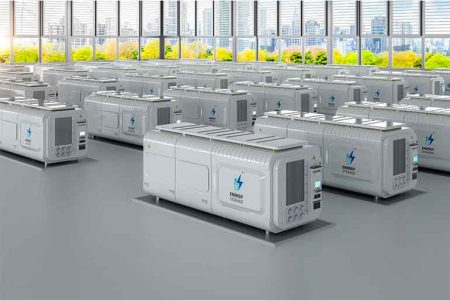
A second life battery is a type of EV battery that has been taken out of a vehicle and is being reused for stationary energy applications. These batteries may be unable to provide the high power density needed for powering a vehicle, but they will typically perform well under predictable and less aggressive demand for power than would an EV battery being used for propulsion.
Typical second-life use cases include:
- Home energy storage systems
- Commercial backup power
- Solar and wind energy storage
- Telecom tower backup
- Street lighting and microgrids
- Rural and off-grid electrification
In these applications, batteries are charged and discharged slowly, often once a day, making them ideal candidates for reused EV cells.
Why Second Life Makes Economic Sense
From a cost perspective, second-life batteries can be 30–70 per cent cheaper than new lithium-ion storage systems. This price advantage is critical for emerging markets, where high upfront costs remain a major barrier to energy storage adoption.
For utilities and developers, second-life batteries offer:
- Lower capital expenditure
- Faster deployment
- Reduced dependency on raw material imports
For EV manufacturers and fleet operators, they provide:
- Additional revenue streams
- Lower total cost of ownership
- Better compliance with ESG and sustainability goals
Instead of viewing retired batteries as liabilities, companies can treat them as assets with extended value.
Second-Life Applications in the Real World
Battery repurposing has already been shown to be possible in various test programmes across the globe.
Currently, in Europe and Asia, refurbished EV batteries are being put together into modular energy systems to support the integration of renewable energy. In the developing world, repurposed EV batteries are being used for powering streetlights, small clinics and microgrid systems instead of diesel generators.
Telecommunications infrastructure represents yet another interesting opportunity. As thousands of telecommunications towers are located throughout remote locations, these same towers could benefit from replacing their lead-acid systems with second-life batteries that are cleaner, quieter, and also less expensive than lead-acid systems.
In India, where grid instability and peak demand challenges persist, second-life batteries could play a role in:
- Peak shaving for commercial buildings
- Backup power for SMEs
- Supporting rooftop solar installations
- Circular Economy in Action
Second-life batteries sit at the intersection of sustainability and practicality.
Instead of extracting new lithium, cobalt, and nickel for every storage requirement, repurposing allows the industry to maximise the value of materials already in circulation. This reduces:
- Mining pressure
- Carbon emissions
- Waste generation
It also creates new economic ecosystems—testing labs, refurbishment centres, system integrators, and monitoring software providers—contributing to job creation and local innovation.
In many ways, second-life batteries represent what the circular economy is supposed to look like: not theoretical, not symbolic, but functional.
The Challenges No One Can Ignore
Despite the promise, second-life batteries are not without complications.
Battery variability is a major issue. No two used batteries age the same way. Differences in driving behaviour, climate, charging habits, and manufacturing batches affect performance.
Testing and certification remain complex. Determining remaining useful life requires advanced diagnostics, standardised protocols, and robust safety checks.
Concerns over safety remain a major issue. Incorrect procedures for handling batteries or inadequate management of temperature or battery management systems (BMS) increase the potential for battery fires.
Currently, there are no regulations hindering the reuse of batteries as at present, regulations are developing, therefore the state of the reuse market is unclear.
Currently there are no regulations restricting. However the state’s rules are developing at this time, and therefore it remains to be seen how this will affect the overall recycling/re-use market.
Where Policy and Industry Must Align
For second-life batteries to scale, coordinated action is needed.
Policymakers must:
- Recognise repurposing as a legitimate sustainability pathway
- Define standards for testing, transport, and reuse
- Align recycling timelines with second-life utilisation
Industry players must:
- Design batteries with second life in mind
- Improve modularity and traceability
- Invest in diagnostics and digital battery passports
The success of second-life batteries depends as much on system thinking as it does on chemistry.
A Practical, Hopeful Path Forward
Second-life batteries may not solve every sustainability challenge in the energy transition, but they offer something rare: a solution that is technically feasible, economically viable, and environmentally meaningful.
They extend the life of materials, lower storage costs, and bring clean energy access to places that need it most. Instead of rushing every used battery into recycling plants, the industry has an opportunity to pause—and reuse.
The battery graveyard does not have to grow. With the right intent and infrastructure, it can transform into a bridge between today’s EV boom and tomorrow’s circular energy economy.
And sometimes, sustainability works best not by reinventing everything—but by giving what we already have a second life.
 Electrify your feed! Click here to join our Whatsapp group and to get the latest updates, expert insights, and innovations driving India’s energy storage revolution.