As India pushes hard toward its ambitious target of 500 GW of non-fossil fuel capacity by 2030, the scale of our clean energy transition has shifted from impressive to downright staggering. Just last month, the Ministry of New and Renewable Energy (MNRE) dropped a mind-boggling update: India’s cumulative installed solar PV capacity has officially crossed 154.23 GW, powered by a record-breaking addition of 44.6 GW in the last fiscal year alone. But if you are only looking at these numbers, you are missing the real story. We have moved far beyond the era of simply installing solar panels on rooftops or isolated patches of land. Today, we are engineering massive, continent-scale ecosystems. We are talking about solar megaplants—gigawatt-scale energy empires that alter local geography, reshape cross-border economics, and completely rewrite the rules of power transmission. Let us pull back the curtain and decode how these massive solar megaplants are quietly becoming the definitive backbone of India’s future energy architecture.
The Cinematic Scale: Oceans of Glass in the Desert
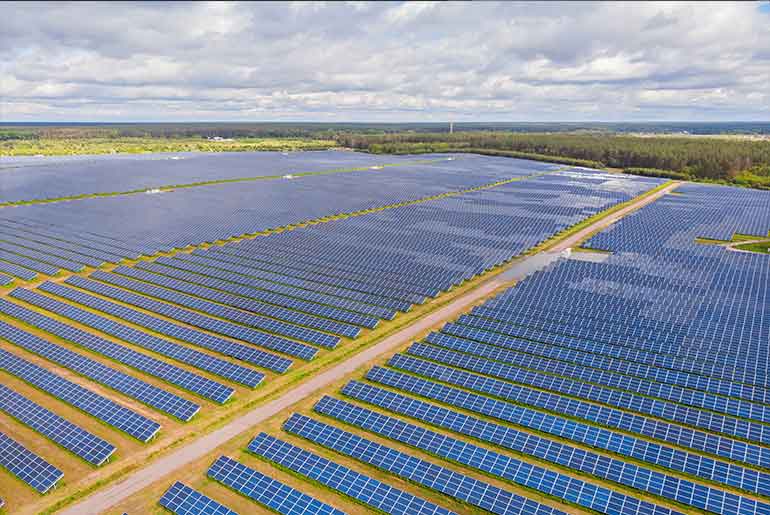
Imagine standing in the salt deserts of Kutch, Gujarat, or the arid stretches of Bhadla, Rajasthan. As far as your eyes can see, the horizon is blurred not by sand, but by an endless ocean of deep-blue silicon panels- The solar PV Panels.
This is not a regular infrastructure project; this is engineering operating at a civilizational scale.
Look at Adani Green’s Khavda Renewable Energy Complex in Gujarat. Spanning over 538 square kilometers—an area nearly five times the size of Paris—this single site is being built to host a jaw-dropping 30 GW of capacity by 2029. As of May 2026, the cluster has already scaled up to operationalize massive initial blocks, running alongside over 1,376 MWh of co-located battery storage.
When you combine Khavda with operational giants like Rajasthan’s Bhadla Solar Park (2,245 MW) and Karnataka’s Pavagada Solar Park (2,050 MW), you realize that India is no longer just building power plants. We are building the foundational machinery to power an AI-driven, highly electrified, data-center-heavy economy.
Tracking the Giants: India’s Top Solar Megaplants
To truly understand the industrial momentum, we have to look at where the capital and engineering are concentrated. The era of the fragmented, small-scale solar farm is giving way to centralized megastructures.
| Project Name | Primary Developer / Operator | Key Scale & Status (2026) |
| Khavda Renewable Complex (Gujarat) | Adani Green / SAEL | 30 GW target by 2029; world’s largest hybrid cluster. |
| Bhadla Solar Park (Rajasthan) | Multiple (NTPC, Adani, IL&FS) | 2,245 MW; pioneering ultra-mega park model. |
| Pavagada Solar Park (Karnataka) | KREDL / NTPC / Avaada | 2,050 MW; engineered across unique pooled land leases. |
| Rewa Ultra Mega Solar (Madhya Pradesh) | RUMSL / ACME | 750 MW; landmark project for direct institutional supply (Delhi Metro). |
| Dholera Solar Park (Gujarat) | Tata Power / Gujarat Ultra Mega | 2.5 GW planned; breaking ground in high-salinity coastal zones. |
The Grid Challenge: Taming the Intermittent Beast
This is where our story gets highly intelligent—and highly urgent. While generating gigawatts of clean electricity from cheap sunlight sounds fantastic on paper, the physical electrical grid operates on a brutal, uncompromising law: Supply must match demand every single second.
When a thick patch of clouds moves over a 2 GW solar park in Rajasthan, the power output can plunge by hundreds of megawatts in a matter of minutes. Conversely, when the sun sets at 6:00 PM, solar generation drops to absolute zero exactly when millions of Indian households turn on their lights, fans, and air conditioners.
This creates the infamous “Duck Curve”—a steep imbalance where the grid faces an evening peak demand crisis just as its largest generation source goes offline.
If we jam too much unbuffered solar power into our transmission lines, we risk localized grid congestion, extreme frequency fluctuations, and forced curtailment (where grid operators literally tell solar developers to shut off power because the lines cannot take it). To make solar megaplants viable, we have to transition them from erratic day-workers to predictable, dependable grid masters.
The Storage & Hybrid Evolution: Securing Round-the-Clock (RTC) Power
How do we fix this multi-gigawatt volatility? The industry is deploying a brilliant dual-weapon strategy: Hybridization and Utility-Scale Battery Energy Storage Systems (BESS).
We are seeing a profound shift in how tenders are structured by agencies like SECI (Solar Energy Corporation of India). Instead of plain vanilla solar, the market is aggressively pivoting toward Round-the-Clock (RTC) renewable power contracts.
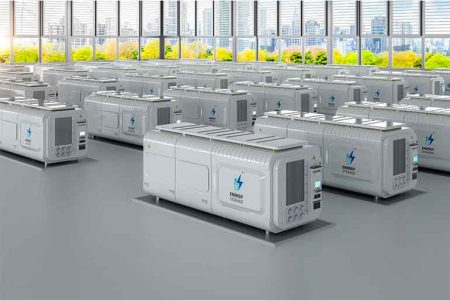
By pairing massive solar arrays with wind turbines on the same site, developers can balance the load: when the sun dips, desert winds typically pick up. And for the ultimate buffer, massive containerized BESS arrays act as giant shock absorbers. They soak up excess solar energy during the midday peak and discharge it seamlessly into the grid during the high-value evening peak.
This transformation changes everything. It turns solar from a cheap, intermittent alternative into a stable, baseload power source that can genuinely begin to displace coal.
The Manufacturing Revolution: Breaking Free from the Import Trap
You cannot build true energy security if you rely entirely on imported components. For years, India’s massive solar ambitions were tethered to supply chains outside our borders, exposing developers to high import duties and global geopolitical friction.
But the domestic landscape in 2026 looks completely different. Driven by the government’s Approved List of Models and Manufacturers (ALMM) regulations and aggressive Production Linked Incentive (PLI) schemes, India’s cumulative solar module manufacturing capacity has exploded to an astonishing 172 GW.
Domestic heavyweights and specialized manufacturers like RenewSys, Waaree, and Vikram Solar are rapidly expanding backward-integrated gigafactories. We are no longer just assembling imported cells into frames; we are manufacturing high-efficiency, cutting-edge TOPCon modules right here on Indian soil.
Building on a continental scale brings massive physical, social, and ecological challenges. Securing contiguous tracts of thousands of acres of land is arguably the steepest hurdle an infrastructure developer faces in India.
Even when projects are safely situated in seemingly empty terrain like the Rann of Kutch or western Rajasthan, developers run directly into complex desert ecosystems, migratory bird corridors, and intense local biodiversity concerns.
Then comes the hidden paradox of solar energy: Water.
To maintain optimum efficiency, millions of solar panels spread across dusty, dry deserts need to be cleaned regularly. In water-scarce regions, using millions of liters of pristine groundwater just to wash dust off glass is an ecological disaster waiting to happen.
To tackle this, the industry is shifting toward automated innovation:
- Robotic Dry Cleaning: Deploying waterless, autonomous cleaning robots that glide across module rows at night.
- Agrivoltaics: Elevating panel structures to allow local farmers to cultivate shade-tolerant crops underneath, maximizing dual land use and creating a sustainable microclimate.
The Policy Engine Driving the Boom
None of this monumental growth is happening in a vacuum. It is steered by a tightly coordinated playbook of policy interventions from the Ministry of Power and MNRE.
The extension of the Inter-State Transmission System (ISTS) waiver*has allowed developers to generate power in resource-rich states like Rajasthan and Gujarat and transmit it to power-hungry industrial zones across India without crushing tariff penalties.
Simultaneously, initiatives like the PM Surya Ghar: Muft Bijli Yojana are rapidly scaling decentralized rooftop adoption (surpassing 26 GW), proving that the clean energy transition is moving forward on two parallel tracks: massive utility-scale megaprojects acting as the heavy muscles of the grid, and distributed rooftop systems empowering individual households.
Conclusion: The New Architecture of a Nation
When you take a step back and look at the vast expanse of India’s clean energy journey, it becomes clear that solar megaplants are no longer isolated engineering experiments. They are not just collections of panels designed to meet environmental targets or corporate ESG metrics.
They are the active, beating heart of a grand, reinvented national infrastructure.
By tying together massive land management, sophisticated high-voltage transmission corridors, localized chip-to-panel manufacturing, and intelligent battery storage, India is fundamentally rewiring how its society is powered. We are building an energy empire designed to outlast the age of fossil fuels—proving to the rest of the world that a developing superpower can leapfrog its way into a cleaner, self-reliant, and resilient future.
 Electrify your feed! Click here to join our Whatsapp group and to get the latest updates, expert insights, and innovations driving India’s energy storage revolution.