


India’s race from announced GWh to real manufacturing power
For years, India’s battery storage story was largely a story of future demand. The numbers sat in policy documents, tender announcements and long-term power-sector plans. Storage was necessary for renewable integration, grid balancing and peak management, but the physical footprint of that ambition — factories, production lines, qualified cells and large-scale BESS manufacturing — was still taking shape.
That is changing.
In the first half of 2026 alone, India added 8.2 GWh of battery energy storage capacity, almost 84 times the 98.4 MWh added in the first half of 2025. By the end of June, cumulative installed battery storage had reached 9.3 GWh. The acceleration is visible not only in commissioned projects but also in procurement: 28 GW of battery storage capacity was tendered during the first half of 2026.
The scale expected ahead is considerably larger. According to the Ministry of Power, India is projected to require 8.68 GW/34 GWh of BESS by 2026–27, rising to 47.24 GW/236 GWh by 2031–32. The government estimates that meeting the latter requirement will involve investment of about ₹3.49 lakh crore. That is no longer a niche manufacturing opportunity. It is the beginning of an industrial market. And wherever a large industrial market begins to take shape, factories follow.
Across India, companies are now announcing, constructing, commissioning or qualifying facilities that could fundamentally change the country’s position in the battery value chain.
The IEA says 108 GW of new battery storage was deployed globally in 2025, 40% more than in 2024. Around 80% of new battery capacity was utility-scale, while LFP represented around 90% of deployments.
Other manufacturers are pursuing large-scale BESS and cell manufacturing ambitions, while system integrators are simultaneously expanding their own production capabilities. The result is a landscape increasingly crowded with GWh figures.
But this is where the industry’s most important question begins.
What exactly does a GWh announcement mean?
A factory can be announced long before its equipment is installed. A production line can be installed before it is qualified. A qualified line can operate below its designed utilisation. And a factory can possess impressive nameplate capacity without yet having the supplier network, workforce, quality systems, customer approvals or order book needed to turn that capacity into commercially sustainable production.
In other words:
Capacity is not capability.
That distinction will define the next phase of India’s BESS manufacturing story.
FROM ANNOUNCEMENTS TO OUTPUT
India’s battery-manufacturing race is moving from announced GWh to demonstrated industrial capability. As factories move towards production, the questions are whether lines are running, yields are stable, products can be reproduced across batches, chemistries and formats can be qualified, and orders exist to sustain utilisation.
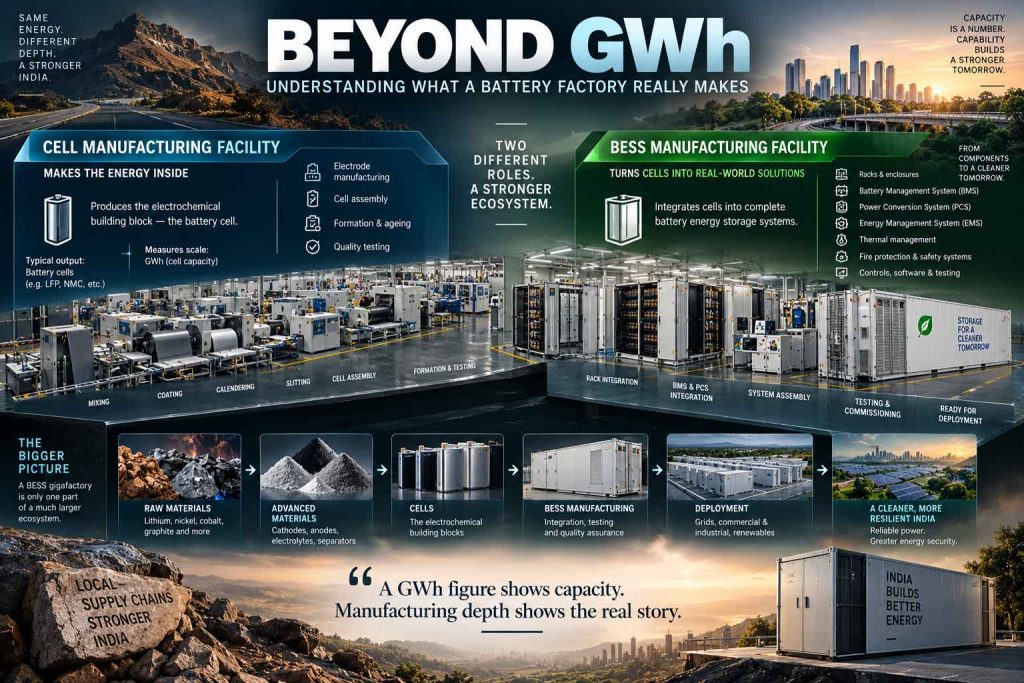
Manufacturing depth matters: a GWh figure shows capacity, but not what is produced or how much technology and supply-chain control sits with the manufacturer. A cell factory produces the electrochemical building block, while a BESS facility integrates cells with racks, BMS, PCS, EMS, thermal management, fire protection and controls. These represent distinct layers of manufacturing capability.
THE GWh TRAP
Consider two hypothetical 10 GWh facilities: one manufacturing cells and another assembling BESS systems. Their capacity numbers are identical, but their outputs are not.
This distinction matters in India, where system integration is expanding while domestic cell manufacturing remains at an early stage. In March 2026, the Ministry of Heavy Industries reported that 40 GWh had been awarded under the 50 GWh ACC PLI programme, while only 1 GWh had been installed. Domestic ACC demand was still largely being met through imports.
The lesson is simple: announced GWh is not the same as operating manufacturing capacity.
FIVE DIFFERENT NUMBERS
For India’s BESS manufacturing story, five numbers must be kept separate. Announced capacity signals investment intent, but not production. Installed capacity means production infrastructure and machinery are in place, although commercial output may not yet be stable. Qualification capacity marks the testing and validation stage before products become repeatable, customer-approved offerings. Amara Raja’s 60 MWh Customer Qualification Plant, commissioned in Telangana in July 2026, illustrates this stage, ahead of its planned 16 GWh manufacturing programme.
Operational capacity indicates that production lines are running and products are reaching customers.
Then comes utilisation — perhaps the most revealing number. A factory designed for 10 GWh but producing 2 GWh remains a 10 GWh facility on paper, but its economics and industrial maturity are very different from a plant consistently producing near its intended capacity.
The distinction is crucial: capacity tells us what a factory could produce; utilisation tells us what it is actually delivering.
THE FACTORY BEHIND THE BATTERY
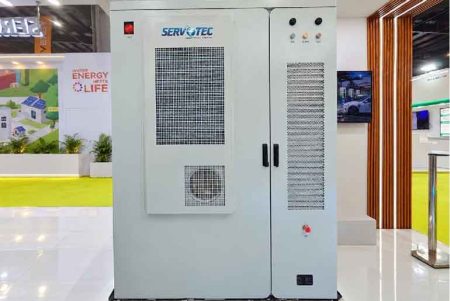
A BESS gigafactory is not simply a large facility producing battery cells. A complete storage system brings together cells, modules or packs, battery management systems, power conversion systems, energy management software, thermal management, protection equipment, enclosures and grid controls. The depth of a manufacturing operation therefore depends on which of these layers it can design, manufacture, integrate and test in-house, and where it remains dependent on external suppliers.
That also means that not every facility described as a gigafactory represents the same industrial capability. One plant may manufacture cells, another may assemble modules and packs, while another may integrate imported cells into racks, containers and complete BESS systems. These facilities can all have large GWh figures attached to them, but the underlying manufacturing activity is different. For India, the distinction matters because the country’s emerging storage ecosystem is developing across several layers, from cell manufacturing and pack assembly to BMS, PCS, EMS and system integration.
Manufacturing depth is ultimately determined by what happens beyond the installation of machinery. It requires process engineering, qualified suppliers, controlled production, testing and quality systems that can consistently deliver products to specification. As factories move from assembly towards deeper cell and system manufacturing, the ability to control more of these processes becomes increasingly important for cost, localisation and technology ownership.
The real industrial test begins once production starts. A line must repeatedly deliver qualified products with consistent quality, predictable yields and full traceability across batches. Defects, process variation and supplier inconsistencies have to be identified and corrected before they affect field performance. In that sense, the measure of a gigafactory is not only how much capacity has been installed, but how reliably that capacity can be converted into products that customers can qualify, deploy and depend on.
What separates a gigafactory on paper from a gigafactory that is actually producing at scale? What are the operational, supply-chain, manpower, qualification and utilisation challenges that companies must overcome?
Hiren Pravin Shah, Managing Director, CEO, REPLUS Engitech, said, “A gigafactory shouldn’t really be judged by the GWh number that gets announced. The real test is whether it can produce at scale, every day, with consistent quality, safety and yield.
That’s where automation, AI and Industry 4.0 systems make a material difference, including things like automated cell sorting, highly accurate and metered thermal adhesive application, laser welding and end-of-line testing, all of which help reduce process variation. Digital systems and AI-led tools can add another layer of process monitoring and control.
At REPLUS, our Pune facility has been built around this approach, with a fully automated line, advanced BMS and end-of-line testing, along with BESS container-level validation. But technology alone isn’t enough as you also need a qualified supply chain, trained people, strong testing protocols and field-service capability behind it. In the end, sustained throughput and repeatable field performance matter more than the nameplate capacity that gets announced.
Vatsal Kundalia, Managing Director, Advait Greenergy Private Limited, said, “A gigafactory on paper is a capacity number. A real gigafactory is one that can repeatedly convert that capacity into qualified, dispatchable systems at the required cost, quality and delivery schedule. The difficult part begins after the building and production lines are ready. You need a stable supplier base, trained manpower, testing infrastructure, process discipline, customer qualification and enough order visibility to keep utilisation at commercially sensible levels. Without those, headline GWh capacity can remain significantly ahead of actual output.
This is why I would judge the next phase of India’s BESS manufacturing by utilisation and repeatability, not announcements. Can a facility produce the same quality across batches? Can it adapt its architecture to different applications? Can it deliver projects on schedule and support them after commissioning? Most importantly, can it improve economics as volumes rise? We have seen in other manufacturing sectors that capacity creation is only the first step. Industrial capability is built when engineering, supply chain, production and field feedback begin operating as one system. That is when a factory starts becoming a scalable business.”Rajesh Kaushal, Vice President and BG Head – Power & Energy Solutions, Delta Electronics India, said, “India’s energy story right now is one of scale. We have crossed 291.73 GW of renewable capacity and are racing towards 500 GW by 2030. Naturally, everyone wants to be part of the storage build-out that goes with this, and the gigafactory announcements reflect that ambition. That is a good sign for the country.
But ambition and delivery are two different things. Announced capacity is an important indicator of investment confidence, but the industry’s next measure of progress must be operational capacity. A gigafactory that matters is one where lines are running consistently, manufacturing yields are stable, products are qualified, and output is reaching customers. Government data shows the scale of this transition: around 178 GWh of additional cell manufacturing capacity has been announced outside the ACC PLI beneficiaries, while commissioned capacity under the allocated PLI programme remains at an early stage.
This is normal for a young industry finding its feet. But it means utilization is the real number to watch, not installed capacity alone. As India’s storage story matures from announcement to execution, the differentiator will increasingly be sustained production, quality, utilization and reliable delivery at scale.”
WHAT HAPPENS AFTER THE LINE STARTS?
A factory does not become competitive simply by reaching its designed capacity. It has to learn and improve. Every production batch generates information on yields, defects, component performance and process stability. Customer qualification and field deployment add further data, creating a continuous loop:
Engineering → Production → Testing → Deployment → Field Data → Engineering
This feedback loop becomes increasingly important as battery chemistries, cell formats, thermal architectures and power-electronics configurations evolve. A gigafactory therefore needs enough flexibility to adapt without making earlier investments obsolete.
INDIA’S GIGAFACTORY RACE
The factories are coming. But the map looks very different when cells, BESS systems and actual production are separated. India’s BESS manufacturing landscape is no longer a story of a handful of proposed battery plants. It is becoming a multi-layered manufacturing ecosystem spanning cells, packs, BESS containers, power electronics and system integration. The distinction matters because the word gigafactory is now being applied across very different manufacturing models.
At Jamnagar, Gujarat, Reliance is building one of the country’s most ambitious integrated battery manufacturing platforms. The company says it is on track to reach 40 GWh of annual battery manufacturing capacity in 2026, with a longer-term plan to scale the energy-storage manufacturing capacity to 120 GWh. Its broader green-energy complex is designed around integration across the battery value chain, rather than simply assembling finished storage systems.
At Sanand, Gujarat, Tata Group company Agratas is taking a cell-manufacturing route. Its first phase is planned at 20 GWh annually, with production targeted for 2027. The facility has moved beyond civil construction: the steel structure was completed in April, manufacturing-readiness activities followed, and the first process equipment arrived in September 2026. The site now moves into equipment installation, commissioning and operational preparation.
In Telangana, Amara Raja has already crossed an important qualification stage. Its 60 MWh Customer Qualification Plant, commissioned in July 2026 with an investment of about ₹500 crore, is designed to produce cylindrical and prismatic lithium-ion cells across multiple chemistries for customer validation. It forms part of the company’s ₹9,500 crore, 16 GWh Giga Corridor, with the first 2 GWh commercial cell facility targeted for 2027. Amara Raja is also building a separate 5 GWh BESS manufacturing facility, with start of production targeted for Q4 FY2027, showing how the company is developing both cell and system-level capabilities rather than treating them as interchangeable capacities.
Exide Energy Solutions is following another cell-manufacturing path in Bengaluru. Its greenfield facility is planned at 12 GWh in two 6 GWh phases, with electrode manufacturing, cell assembly and formation processes being installed and commissioned. The cylindrical line is already under internal validation, while the prismatic line is targeted for commissioning in FY2026–27. The company is also producing battery modules and packs at its Prantij facility in Gujarat.
Ola Electric represents one of the clearest examples of a cell factory moving from construction into production. Its Krishnagiri gigafactory began cell manufacturing in March 2024, with an initial 1 GWh production capacity that is expandable to 20 GWh. The facility includes in-house electrode production, cell assembly and formation. Government data reported in March 2026 put Ola’s installed ACC capacity at 1 GWh against its 20 GWh PLI allocation.
The government’s numbers provide an important reality check. Under the ₹18,100 crore ACC PLI programme, 40 GWh had been awarded to four companies by March 2026, but only 1 GWh had been installed. The beneficiaries were Ola, Reliance’s two entities and ACC Energy Storage, with the latter allocated 5 GWh in Dharwad, Karnataka. The government also said domestic ACC demand continued to be met largely through imports. But India’s manufacturing race extends beyond cells.
At Bidadi, Karnataka, Pace Digitek’s Lineage Power operates a dedicated BESS manufacturing platform. The company had 2.5 GWh of installed capacity in 2025, expanded this to 5 GWh in 2026, and is targeting 10 GWh by Q3 FY2027. It has already delivered BESS containers representing more than 1.5 GWh, while its latest ₹488.46 crore order from NTPC GE Power Services covers BESS containers, BMS and EMS for the Barh project, along with long-term maintenance and warranty support.
JSW Energy is also building system-level capability. Its subsidiary operates a 5 GWh-per-year battery assembly plant in Pune and in July 2026 secured a ₹443.74 crore order for 200 MW/400 MWh of BESS and PCS solutions. Here again, the manufacturing number refers to battery assembly rather than domestic cell production.
Waaree Energy Storage Solutions has taken another step into this segment. Its BESS container manufacturing facility at Rola, Gujarat, began production in July 2026, marking the first stage of a planned 20 GWh manufacturing roadmap. The company has also stated plans to add lithium-cell and battery-pack manufacturing later in the year.
The map is expanding further. Premier Energies and RCT Energy India have signed a binding term sheet for a 12 GWh BESS manufacturing facility in Seetharampur, Telangana, with a 6 GWh first phase expected to begin operations in FY2027–28.
In Gujarat, Powertrac has ordered a 10 GWh battery-pack assembly line for a planned facility in Surendranagar. The line will assemble prismatic lithium-ion cells into packs and integrate them into containerised BESS for C&I and utility applications, with commercial production targeted for January 2027.
Other new system-level platforms are also emerging. SilicIndia Energies is commissioning a 5 GWh automated BESS facility in Mandvi, Gujarat, with a 17-station production line covering cell intake through container integration. Its current model uses sourced cells, while cell manufacturing is planned as a later phase.
These projects reveal the real shape of India’s manufacturing race.
The country is not building one type of gigafactory. It is building several layers of the BESS industrial stack.
Some facilities are making cells. Others are assembling packs. Others are integrating complete BESS containers, PCS, BMS and EMS. A smaller number are attempting deeper vertical integration across several stages.
That is why simply adding up every announced GWh figure can produce a misleading picture.
India’s manufacturing map is becoming larger. The more important question is how much of that capacity is moving from announcement to production — and how much industrial value is being created at each layer.
THE MAP IS BIGGER THAN THE CELL
A BESS manufacturing ecosystem extends far beyond cells. It spans materials, cells, packs, BMS, racks, containers, PCS, EMS, thermal management, safety systems and system integration, followed by EPC, commissioning and long-term O&M.
India may not control every upstream material immediately, but it can deepen capabilities in areas such as power electronics, electrical systems, automation, software, controls, thermal engineering and system integration.
The government’s 10 GWh PLI-ACC tender for grid-scale stationary storage also signals that BESS is developing its own manufacturing pathway alongside EV batteries.
The question is therefore no longer simply whether India can build batteries. It is which layers of the BESS value chain India can manufacture competitively and eventually control.
THE BESS VALUE CHAIN IS A TECHNOLOGY STACK
A utility-scale BESS extends far beyond the cell. It combines cell, pack/rack, BMS, PCS, EMS, controls, thermal and safety systems, grid integration, software and service.
Each layer performs a distinct function, from storing energy and managing temperature to controlling dispatch, protecting the battery and responding to grid conditions.
Therefore, manufacturing capability cannot be measured by cell production alone. It also depends on how much engineering, software and system-integration knowledge is built around the cell.
India has announced large-scale cell manufacturing capacity. What are the hardest parts of actually achieving competitive cell production at scale—and which parts of the value chain will remain import-dependent for the foreseeable future?
Hiren Pravin Shah, Managing Director, CEO, REPLUS Engitech, said, “India’s manufacturing depth is improving, but it’s still uneven across the BESS value chain. We already have meaningful capability in battery-pack assembly, BMS and EMS design, system integration, enclosures, racks and thermal engineering. REPLUS, for instance, develops BMS and EMS in-house and runs automated battery-pack manufacturing.
The bigger gap is still upstream, particularly in cells and critical cell materials. Wood Mackenzie estimated in August 2026 that India had only about 2 GWh of commissioned cell-manufacturing capacity, and the Ministry of Heavy Industries is currently running a process to allocate 10 GWh of ACC manufacturing capacity for grid-scale stationary storage under the PLI programme. NITI Aayog has also documented localisation gaps across cathode and anode active materials, separators, electrolyte and other cell inputs.
There is also scope to deepen localisation across PCS and critical power electronics. So real localisation has to move beyond final assembly and extend across cells, materials and critical electronics.”
Vatsal Kundalia, Managing Director, Advait Greenergy Private Limited, said, “India can already create meaningful domestic value at the system level, particularly in pack engineering and assembly, electrical architecture, enclosures, thermal systems, controls, software integration and increasingly in BMS, PCS and EMS. The bigger gap remains upstream. Cell manufacturing is still at an early stage relative to the capacity being announced, and the Government itself stated in March 2026 that domestic ACC demand continued to be met largely through imports. Under the ₹18,100 crore ACC PLI programme, 40 GWh had been awarded at that point, while only 1 GWh of installed capacity was reported.
So localisation should not be reduced to a binary question of whether the cell is Indian. The more useful question is how much engineering knowledge and control are being retained domestically. India should simultaneously deepen cell capability and localise the layers surrounding it, including BMS, PCS, EMS, thermal management, safety systems and qualified component vendors. A system can use an imported cell today and still contain substantial Indian engineering. The objective should be for every successive generation to carry less critical dependency and more locally owned capability.”
Rajesh Kaushal, Vice President and BG Head – Power & Energy Solutions, Delta Electronics India, said, “India’s growth story in energy has always moved in stages. We built our solar manufacturing base this way, and storage is following the same path. Today, we are genuinely strong on the system side: power conversion systems, system integration, battery packs, containers, structural components, and increasingly the software layer, particularly the Energy Management System that determines how the battery charges and discharges.
The cell is where the next chapter is still being written. Domestic ACC cell manufacturing is at an early-stage relative to India’s future requirements, while upstream components and critical materials remain important localization gaps. Building greater self-reliance here will require sustained investment.
This is the natural next stage of India’s manufacturing journey. More importantly, localization should be measured by domestic value addition, not simply final assembly. BESS is an integrated energy system involving cells, BMS, PCS, EMS, thermal management, safety systems and grid controls. With the right policy push and continued investment in areas including cathodes, anodes and electrolytes, India can move towards deeper end-to-end manufacturing capability across the storage value chain.”
 THE GRID IS MAKING POWER ELECTRONICS MORE IMPORTANT
India’s BESS manufacturing race is moving beyond the battery itself. As storage becomes a larger part of the power system, the power-electronics and control layer is becoming a critical part of system performance.
In July 2026, CEA’s advisory called for 100% grid-forming inverters in upcoming BESS projects of 50 MW and above, with projects subject to EMT studies, commissioning demonstrations and periodic verification under the applicable grid-connectivity framework. Projects with bids concluded by August 10, 2026, or purchase orders placed before July 10 were exempted.
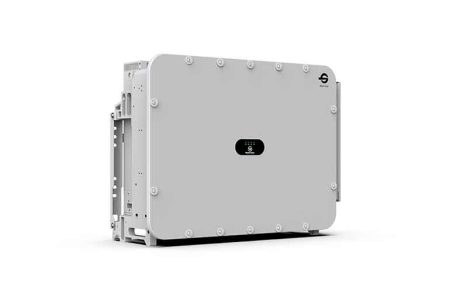
This changes the role of the PCS. It is no longer simply a device converting DC to AC. Grid-forming systems can contribute to voltage and frequency support and black-start capability, making inverter controls an increasingly important part of grid-scale storage. CEA had already begun assessing domestic manufacturing capacity for grid-forming inverters through its February 2026 communication to manufacturers.
There are already signs of this capability developing domestically. In January 2026, Delta Electronics India agreed to supply 100 Make-in-India 1.1 MW bidirectional PCS units, totalling 110 MW, for multiple BESS projects, including projects associated with BSPGCL and AEML.
The opportunity extends into BMS algorithms, EMS software, grid-forming controls, thermal management, protection, SCADA and system diagnostics. These capabilities rarely appear in a factory’s GWh headline, but they increasingly determine how effectively that capacity performs once connected to the grid.
THE OPERATING-DATA ADVANTAGE
The other emerging asset is field data. India added 2,668.54 MW / 7,785.6 MWh of BESS capacity during FY2025–26, creating a growing base from which manufacturers can learn about degradation, efficiency, thermal behaviour, response performance, faults and maintenance.
For manufacturers, the value lies in turning that operating experience into better controls, more accurate warranties, improved system design and stronger diagnostics.
The manufacturing advantage of the next decade may therefore come from two capabilities working together: power electronics that make batteries grid-ready, and operating data that makes the next system better than the last.
THE ECONOMICS OF GOING GIGA
A large capacity number ultimately has to work on a balance sheet. Land, equipment, utilities, workforce, inventory, testing, financing and supplier development all create costs before a factory reaches meaningful utilisation.
The Ministry of Power projects India’s BESS requirement at 8.68 GW/34 GWh by 2026–27, rising to 47.24 GW/236 GWh by 2031–32, with estimated investment of around ₹3.49 lakh crore by 2031–32.
The opportunity is substantial, but projected demand does not automatically become factory orders. A gigafactory must convert capacity into consistent production, sufficient utilisation and competitive economics. That will be one of the biggest tests of India’s manufacturing race.
A gigafactory’s economics ultimately depend on utilisation. High output allows fixed costs such as depreciation, financing and manpower to be spread across greater volumes, while under-utilised capacity can leave manufacturers carrying substantial costs. The challenge is balancing investment timing with market demand and technology changes: building too early risks low utilisation, while building too late risks missing demand or locking capital into outdated technology. India’s projected storage requirement provides a strong long-term demand signal, but national demand does not automatically translate into factory orders. Between the two sit tenders, auctions, project financing, technology qualification, procurement decisions and commissioning schedules. A tender can be delayed, an awarded project can face execution challenges, and a qualified manufacturer can still lose an order on price. For manufacturers, therefore, the critical question is not simply how much storage India will need, but how much of that demand can become visible, contracted factory demand.
What are the biggest economic risks of building very large BESS manufacturing capacity in India? How should companies balance utilisation, capex, pricing pressure, technology changes, supply-chain dependency and demand visibility?
Hiren Pravin Shah, Managing Director, CEO, REPLUS Engitech, said, “Right now, I would put supply-chain dependence at the top of the list, because it feeds directly into cost, utilisation and delivery certainty. India still depends heavily on imported cells and upstream battery materials, while the broader global lithium-ion battery supply chain remains highly concentrated in China.
The IEA estimates China accounted for over 80% of global battery-cell production in 2025, around 85% of cathode active material and over 90% of anode active material.
A geopolitical conflict, export restriction or shipping disruption can affect availability, lead times and pricing fairly quickly. For a gigafactory with high fixed costs, prolonged under-utilisation can really hurt the economics. Ways to manage this include diversified sourcing, chemistry-agnostic manufacturing, strategic inventory and deeper domestic value addition.”
Vatsal Kundalia, Managing Director, Advait Greenergy Private Limited, said “For me, capacity utilisation is the first risk because it influences almost everything else. A large plant operating materially below its intended utilisation carries depreciation, manpower, financing and overhead costs without the volume required to absorb them. This becomes more challenging if pricing is simultaneously falling or customers delay projects. Therefore, manufacturing capacity should ideally be built against a visible demand pipeline and ramped in a disciplined manner rather than assuming that announced market demand will automatically convert into factory orders.
Technology and supply-chain risk come immediately after that. BESS is evolving quickly, so manufacturers need facilities and engineering teams that can accommodate changes in chemistry, form factors and system architecture without making earlier investment obsolete. Procurement also matters because dependence on a narrow overseas supplier base can introduce price and lead-time volatility. In our view, going giga should therefore be a capital-allocation decision, not a branding decision. The winning manufacturers will be those that balance capacity with orders, localisation with competitiveness, and technology flexibility with disciplined investment.”
Rajesh Kaushal, Vice President and BG Head – Power & Energy Solutions, Delta Electronics India, said, “India’s renewable capacity has crossed 291.73 GW, and our energy storage requirement is set to grow significantly. The Central Electricity Authority projects BESS requirement at around 34.72 GWh by 2026–27, rising to 236.22 GWh by 2031–32. Industry projections further indicate that cumulative installed BESS capacity could reach around 346 GWh by 2033 under a base-case scenario. That scale is real and it is coming. The economics question is about pacing, building capacity in step with that curve rather than running ahead of it.
Utilization is the biggest risk. A plant built for 2030-level demand but commissioned into a market still finding its pricing floor will carry costs against volumes that have not arrived yet. Aggressive underbidding in recent tenders has also raised bankability concerns. Manufacturing scale ultimately has to be supported by bankable and sustained demand, not only projected demand.
Supply chain dependency is another risk, since a meaningful share of cells and components are still imported. Technology evolution must also be factored into long-term investments, because gigafactory assets need to remain competitive across multiple technology cycles.
The manufacturers who succeed will be those who match capacity with real demand, deepen localization progressively, maintain competitiveness and have the financial strength to bridge the gap.”
WHEN SCALE STARTS WORKING — AND WHEN IT DOESN’T
The economics become particularly interesting at scale. Wood Mackenzie’s August 2026 analysis estimated that a 5 GWh cell-manufacturing facility could operate at around -10% EBITDA, with breakeven at approximately 10 GWh and positive margins requiring around 20 GWh, under its modelling assumptions. These are not universal thresholds for every Indian factory; they illustrate how heavily manufacturing economics can depend on scale and utilisation.
That creates an unusual paradox. A company may need scale to become competitive. But it needs demand to justify that scale. And it needs competitiveness to win the demand. This is the classic industrial chicken-and-egg problem. The solution cannot simply be build bigger.
It has to be:
Build → qualify → secure orders → increase utilisation → improve yields → reduce costs → expand
The sequence matters.
A factory that jumps straight from announcement to enormous capacity without sufficient demand risks carrying a heavy cost structure before its production economics have matured.
THE CHINA COST QUESTION
Cost competitiveness remains another major test. Wood Mackenzie estimates that Indian-made cells currently cost 25–40% more than imported cells, citing limited scale, higher financing costs and an underdeveloped supplier ecosystem. Yet it also finds India’s underlying manufacturing cost position globally competitive, with a 154% cost advantage over Japan and 9% over South Korea, placing India second only to China among major manufacturing destinations.
This creates the central challenge: localisation must eventually become economically competitive localisation.
Domestic manufacturing cannot rely indefinitely on policy support or higher-cost supply if Indian BESS systems are to compete for large projects. The real test will be whether scale, supplier depth, technology learning and higher utilisation can progressively close the cost gap.
Localisation carries its own economic tension. More domestic content can strengthen supply-chain resilience, create jobs and build industrial capability. But replacing imports with higher-cost domestic alternatives before suppliers reach sufficient scale can increase project costs.
Wood Mackenzie’s modelling estimated that moving from less than 20% domestic content to 100% domestic content could increase total CAPEX by around 30% for a benchmark 100 MW, two-hour BESS project. This is a modelled scenario, not a universal project outcome, but it illustrates the cost challenge facing localisation.
At the same time, government policy is pushing the industry towards greater domestic value addition. The ACC PLI programme requires manufacturers to progressively increase domestic value addition, reaching 60% within five years, while 10 GWh of the 50 GWh ACC allocation has been earmarked for grid-scale storage.
The policy direction is therefore clear. The challenge is making localisation economically sustainable. Suppliers need higher volumes, better yields, deeper raw-material sourcing, lower equipment and financing costs, and predictable demand.
The objective is not simply to localise more. It is to make domestic manufacturing competitive enough to stand on its own.
Battery technology keeps changing while gigafactories are designed for long operating lives. Chemistries, cell formats, energy density, thermal architectures, BMS, EMS and PCS requirements can all evolve, creating a capital-allocation risk for manufacturers. Highly specialised lines may deliver efficiency but become harder to adapt; flexible facilities can accommodate change but may require greater investment.
Supply-chain dependency creates another financial exposure. Reliance on concentrated overseas suppliers can leave manufacturers vulnerable to price volatility, freight costs, currency movements, lead-time disruptions, geopolitical restrictions and export-policy changes. If customer contracts have fixed pricing, rising input costs can directly pressure margins.
For this reason, localisation should not be treated simply as achieving a percentage of domestic content. Its deeper purpose is to reduce critical dependencies while maintaining technological flexibility and commercial competitiveness.
A gigafactory’s economics extend well beyond its headline investment. Alongside construction and equipment costs come working capital, inventory, maintenance, manpower, quality control, R&D, customer qualification, warranties, after-sales service and technology development.
These costs become harder to absorb when production remains below capacity, making utilisation the bridge between manufacturing scale and commercial viability.
Expansion therefore has to remain closely connected to demand. India’s BESS market can support substantial manufacturing growth, but tenders, project timelines, technology costs and procurement decisions will not move in a straight line. Projects can be delayed, technologies can shift and manufacturing plans may need revision.
The companies best positioned to navigate these cycles will need more than production capacity. They will need financial strength to sustain operations through periods of lower utilisation and changing market conditions.
A successful gigafactory should become more efficient as it becomes larger. Yields should improve, procurement should strengthen, supplier networks should deepen, automation should advance and defect rates should decline. Engineering teams should accumulate experience, while field data should improve subsequent product generations.
That is when scale begins to compound. The factory is no longer simply producing more units; it is learning to produce them better, more reliably and more competitively.
This is the difference between capacity and capability. A 20 GWh announcement represents potential capacity. A 20 GWh facility consistently producing qualified systems, improving yields, securing repeat customers and operating competitively represents industrial capability.
THE BANKABILITY TEST
A BESS factory’s real test begins after the product leaves the production line. Developers, lenders, insurers and operators need evidence that the system will perform reliably over its long operating life.
That means demonstrated availability, degradation, safety, warranties, service capability, software support and access to replacement components. A manufacturer must also have the financial and technical strength to honour those commitments years after commissioning.
Bankability, therefore, is not determined by factory capacity alone. It is built through proven performance and the ability to stand behind the system throughout its life.
What will ultimately determine which Indian BESS manufacturers become globally bankable and survive the next decade — technology, cost, track record, warranties, balance sheet, service capability, or something else?
Hiren Pravin Shah, Managing Director, CEO, REPLUS Engitech, said, “For a developer or lender looking at a 15 to 20-year asset, bankability really comes down to confidence that both the product and the manufacturer will still perform when the warranty gets tested years down the line. Price per kWh matters, but it’s only one part of the decision.
Buyers will look at things like operating track record, independent testing, safety certification, degradation data, efficiency and availability guarantees, warranty terms, augmentation strategy, and the financial strength standing behind those commitments.
In this regard, REPLUS has commissioned over 200 MWh of BESS projects across India and global markets, with more than 1 GWh under execution, along with factory-level and container-level testing capability.
EY has also warned that aggressive BESS economics get difficult when things like degradation, augmentation, financing, foreign exchange exposure or equipment quality are underpriced. The gigafactories that survive will be the ones that prove repeatable quality, secure supply, technology flexibility and long-term serviceability, not just the ones with the largest announced capacity.”
Vatsal Kundalia, Managing Director, Advait Greenergy Private Limited, said, “Bankability begins where the factory brochure ends. A developer or lender is not only buying a battery system; they are underwriting whether that system will perform, whether degradation stays within committed limits, whether warranties can be honoured and whether the supplier will still have the technical and financial capability to support the asset years later. That means validated performance data, safety and quality certifications, a credible operating track record, bankable warranties, strong service capability and confidence in the manufacturer’s balance sheet and supply chain.
The survivors will therefore not necessarily be the companies that announce the largest capacities. They will be the ones that create repeatable operating evidence. Every successfully commissioned project should strengthen the next one through better engineering data, improved controls, more reliable vendor qualification and more accurate lifecycle assumptions. Cost will remain important, but utility-scale storage cannot become a lowest-price-only business because the consequences of poor performance are spread over many years. Ultimately, a globally credible Indian BESS manufacturer will have to prove not just that it can build a system, but that customers and lenders can trust that system for its full operating life.”
Rajesh Kaushal, Vice President and BG Head – Power & Energy Solutions, Delta Electronics India, said, “India’s storage sector is moving from a policy priority to a genuinely bankable infrastructure asset, and that shift changes what lenders and developers look for. A 15–20-year commitment is not a bet on this year’s capacity number. It is a bet on whether the manufacturer will still be dependable a decade from now, through demand cycles and technology shifts.
That trust is earned through track record. How has the complete system performed in the field over years, not months? What is its demonstrated availability, efficiency, degradation and safety performance? How robust are PCS, EMS, thermal management and controls? Financial strength behind the plant matters just as much, since the early years of any large facility often run below full capacity.
As India’s storage market scales towards its 2030 targets, the gigafactories that last will be those that grow capacity alongside real, contracted demand, build genuine depth in the value chain, and remain financially disciplined. Ultimately, bankability will be determined not by manufacturing capacity alone, but by lifecycle performance, technology reliability, service capability and the ability to stand behind the system throughout its operating life.”
THE GIGAFACTORY IS ONLY THE BEGINNING
India’s BESS manufacturing story is moving from ambition to execution. The country is building the factories, but the next phase will be defined by what happens inside them.
Production must become repeatable. Yields must improve. Supply chains must deepen. Technology ownership must expand. Costs must become competitive. Orders must support utilisation, while deployed projects generate the operating data needed to strengthen future products.
This is why the largest GWh announcement may not be the most meaningful milestone. A factory can announce 20 GWh, a company can plan 40 GWh, and the industry can announce hundreds more. But the harder measure is how much capacity becomes consistent, competitive and bankable production.
The question India will ultimately have to answer is simple:
How many GWh can it manufacture reliably, competitively and with enough proven performance for developers and lenders to trust?
The future will therefore be decided not by capacity alone, but by capability that compounds into trust.
 Electrify your feed! Click here to join our Whatsapp group and to get the latest updates, expert insights, and innovations driving India’s energy storage revolution.