For anyone expecting loud EV subsidies or dramatic renewable capacity announcements, the Union Budget 2026–27 may have felt underwhelming at first glance. There were no headline-grabbing giveaways, no flashy mission names promising overnight disruption. But for those who understand how energy systems actually scale — through materials, infrastructure, and supply chains — this budget marks a decisive turning point.
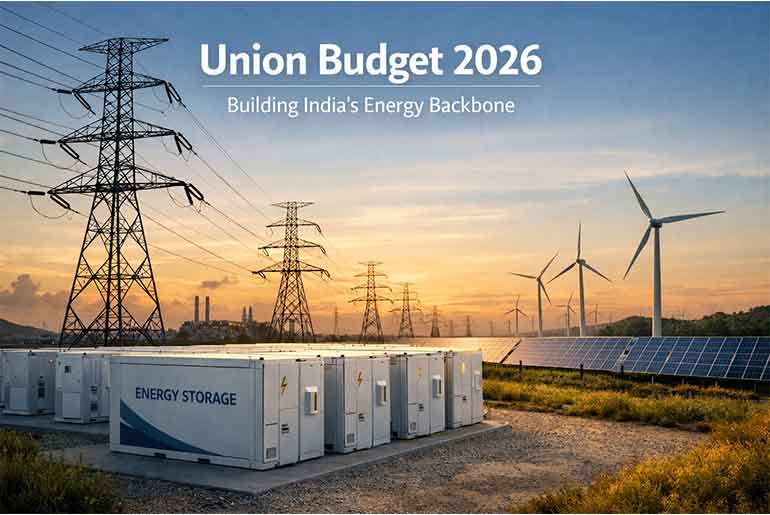
Budget 2026 is not about selling more electric vehicles or adding another gigawatt to solar headlines. It is about making India structurally capable of producing, storing, transmitting, and controlling energy at scale. In that sense, it is one of the most important budgets for the battery, energy storage, and power ecosystem in recent years — even if it doesn’t announce itself loudly.
This is a budget written for the long game.
Energy Security Moves from Policy Goal to Industrial Strategy
The most important signal in Budget 2026 is not tucked inside a single scheme or allocation. It lies in the way energy is treated throughout the document — no longer as a standalone sector, but as national infrastructure.
With public capital expenditure raised to a record ₹12.2 lakh crore, the government has doubled down on building the physical and industrial backbone required for a stable, resilient energy system. Transmission lines, freight corridors, ports, industrial clusters, and logistics networks may not sound like energy policy at first, but they determine whether renewables can be evacuated, whether batteries can be deployed at scale, and whether domestic manufacturing can compete globally.
Energy security is no longer framed purely in terms of imports and fuel prices. It is now linked to who controls materials, who manufactures components, and who owns system-level capability.
That shift in thinking underpins almost every budget decision relevant to the energy ecosystem this year.
Infrastructure Spending: The Silent Enabler of Storage and Renewables
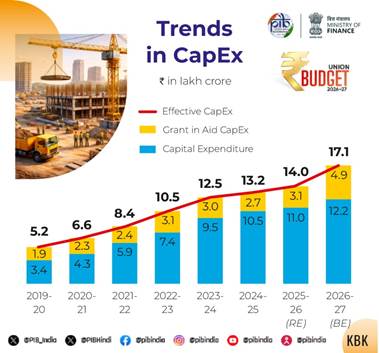
At ₹12.2 lakh crore, public capex in Budget 2026 is not just a fiscal number — it is a signal to the market. A significant portion of this spending flows into transport, transmission, and logistics infrastructure, which directly affects the pace at which renewable energy and energy storage projects can be executed.
One of the persistent challenges facing India’s renewable expansion has been evacuation. Solar and wind capacity has grown rapidly, but grid readiness has struggled to keep pace. Congestion, curtailment, and delayed interconnections have limited the effective utilisation of clean power.
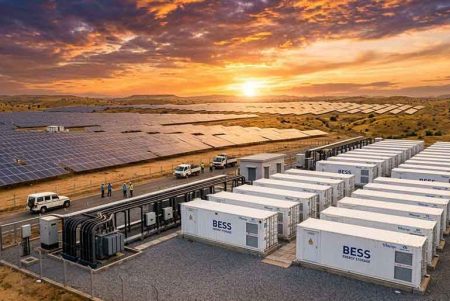
By prioritising transmission expansion, dedicated freight corridors, and inland waterways, the budget addresses these bottlenecks indirectly but decisively. For the energy storage sector, this is critical. Grid-scale battery energy storage systems (BESS) are only viable when integrated into a robust transmission network capable of absorbing variability and dispatching power efficiently.
In effect, Budget 2026 does not announce a grand storage mission — it creates the conditions under which storage becomes unavoidable.
Beyond transmission, direct allocations to renewable deployment have also been strengthened. The Ministry of New and Renewable Energy (MNRE) received an allocation of ₹32,914 crore, a year-on-year increase of around 24%. Within this, solar energy funding rose to ₹30,539 crore, reflecting continued support for both utility-scale and distributed solar deployment.
There is a renewed focus on both rural and decentralised solar energy sources. The budget of ₹5,000 crores set aside for the PM KUSUM programme has been increased for solarising agricultural feeders and pumps. The PM Surya Ghar: Muft Bijli Yojana has included another allocation of ₹22,000 crores for the current year, which will help assist in the adoption of rooftop solar energy.
Energy Storage: From Optional Asset to Grid Necessity
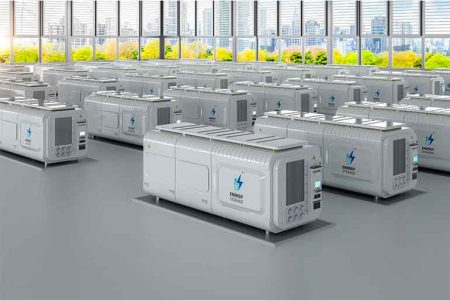
One of the most important shifts underway in India’s power sector is the recognition that energy storage is no longer optional. As renewable penetration increases, storage moves from being a pilot technology to a core grid asset.
The path that Budget 2026 sets for the transition is not by providing direct support payments but rather through developing a system of investments which means that storage will be part of this system very soon. Investment into infrastructure like transmission expansions, renewable evacuation corridors and hybrid projects facilitates a scenario in which batteries and pumped storage are key components of future grid development.
Industry estimates already suggest a sharp rise in grid-scale storage tenders over the next 12–18 months. With renewable capacity additions continuing and peak demand rising, utilities and system operators will increasingly rely on batteries to manage intermittency, frequency regulation, and peak shaving.
This budget sets the stage for that acceleration — quietly, but firmly.
Critical Minerals and Rare Earths: The Strategic Core of the Budget
Perhaps the most consequential announcement for the battery and energy ecosystem is the government’s push on rare earths and critical minerals.
Dedicated mining and processing corridors for rare earth minerals are to be constructed in states, including Odisha, Andhra Pradesh, Tamil Nadu, and Kerala, according to Budget 2026. This may seem like a niche market but has much larger impacts than you might think.
Rare earths are foundational to modern energy systems. They are essential for:
- Permanent magnets used in EV motors and wind turbines
- Power electronics and high-efficiency drives
- Advanced energy conversion and control systems
To improve upon import dependence, the government is focusing on domestic exploration, processing through the value chain of a product. This will help mitigate the strategic threat of import dependence within India’s energy transition.
As a result, this will aid government agencies in establishing themselves as upstream participants within the global clean energy supply chain, rather than simply being downstream assemblers. For battery manufacturers, EV OEMs and renewable equipment suppliers, this means that over time, there will be less cost volatility and reduction of geopolitical risk.
More importantly, it aligns India’s energy strategy with global realities, where access to critical materials increasingly determines technological leadership.
Semiconductor Mission 2.0: Strengthening the Energy Electronics Backbone
It is common to view the India Semiconductor Mission 2.0 as primarily focusing on consumer electronics and IT hardware, considering the allocated budget of ₹40,000 crore. That said, it also has a very important role/impact in terms of energy.
When we consider that batteries, chargers, inverters, grid control systems, and powertrains for EVs are all highly reliant on advanced semiconductors (chips) and power electronics, we can see why the lack of a domestic capability to manufacture semiconductors will leave India’s quest for energy self-sufficiency unfulfilled.
By strengthening semiconductor fabrication and packaging capacity, Budget 2026 supports:
- Battery management systems (BMS)
- Power conversion systems
- Grid automation and smart metering
- EV drivetrain electronics
This is a foundational investment that underpins almost every advanced energy technology — from storage to smart grids.
Manufacturing Over Subsidies: A Mature Policy Shift
One of the clearest signals in Budget 2026 is what it chooses not to do. There are no major new consumer subsidies for EVs or rooftop solar. Instead, the focus is firmly on manufacturing capability.
Customs duty rationalisation and the addition of capital goods to duty-exempt lists for EV and battery manufacturing may not make headlines, but they significantly alter project economics. By reducing the cost of importing critical manufacturing equipment — from electrode coating machines to formation and testing systems — the government lowers barriers to entry for serious manufacturers.
This shift reflects a maturing policy mindset. Rather than incentivising demand in isolation, the government is prioritising:
- Scale
- Cost competitiveness
- Supply-chain resilience
Budget 2026 provides duty-free access on 35 capital goods related to battery making for electric vehicles. Examples of these goods are: Electrode Coating Machines; Winding systems; and Formation and Testing Equipment. As a result, capital expenditures for cell and pack manufacturing plants have been significantly reduced, which makes it easier for major manufacturers to invest in projects.
For the battery industry, this approach favours long-term players over speculative entrants.
Power Generation: Less Noise, More Structure
Unlike previous budgets, Budget 2026 does not rely on dramatic renewable capacity announcements. Instead, it focuses on system readiness.
Hydro and pumped storage projects receive renewed attention as balancing assets. Transmission infrastructure is treated as a prerequisite, not an afterthought. Grid resilience and reliability emerge as underlying themes.
This structural approach acknowledges a simple truth: renewable energy growth is no longer constrained by generation technology, but by system integration. Batteries, hydro, and digital grid management are now the limiting factors — and this budget begins addressing them.
Alongside renewables and storage, the budget also extends customs duty exemptions for nuclear power projects, reinforcing the role of clean baseload capacity in a grid increasingly dominated by variable generation.
What the Budget Did Not Do — and Why That Matters
Equally important is what Budget 2026 leaves out.
There is no standalone national battery recycling mission, despite growing volumes of end-of-life cells. There is no explicit technology bet on sodium-ion or solid-state batteries. And there is no dramatic storage-specific allocation.
Rather than indicating neglect, this restraint reflects strategic caution. The government appears intent on building foundational capability before making technology-specific commitments. This avoids premature lock-in and allows industry-led innovation to shape outcomes.
For businesses, this signals opportunity — particularly in recycling, second-life applications, and alternative chemistries — where policy frameworks are likely to follow market maturity.
A Budget for Builders, Not Spectators
Union Budget 2026–27 will not excite consumers or generate instant headlines. But for companies building batteries, storage systems, power electronics, and energy infrastructure, it is quietly transformative.
It favours:
- Manufacturing over imports
- Systems over silos
- Long-term capability over short-term incentives
In doing so, it separates serious participants from opportunistic entrants.
India’s energy transition is entering a new phase — one where success depends less on ambition and more on execution. Budget 2026 does not promise quick wins. It promises something more valuable: the foundations for an energy system that can actually scale.
For the battery and energy ecosystem, that may be the most important signal of all.
 Electrify your feed! Click here to join our Whatsapp group and to get the latest updates, expert insights, and innovations driving India’s energy storage revolution.