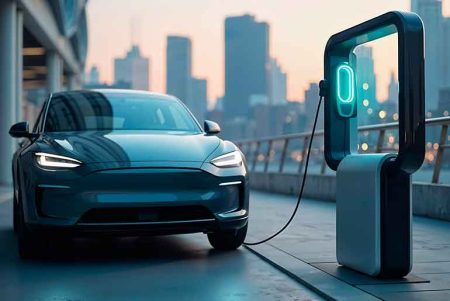
In recent years, EV manufacturers have increasingly faced production delays linked to shortages of battery-grade materials that meet strict purity standards. As electric mobility scales, access to consistent, high-purity lithium, nickel, cobalt and graphite has become a defining constraint. Data from industry analysts show that battery raw material costs accounted for over 60 % of total EV battery value in 2024, underscoring how critical material quality and availability are to the entire manufacturing process. This dynamic highlights a core reality of the energy transition: electrification alone does not determine sustainability. Material quality and supply integrity now sit at the center of EV manufacturing.
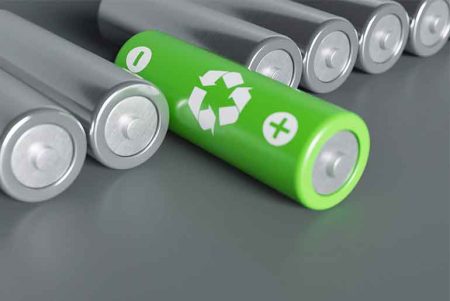
High-purity recycling directly addresses this constraint by transforming end-of-life batteries and manufacturing scrap into materials that can be fed back into cell production without compromising performance or safety. EV batteries operate within narrow chemical tolerances. Even trace impurities can reduce energy density, shorten cycle life, or increase the risk of thermal instability. As manufacturers push toward higher-range batteries and faster charging, these tolerances become even tighter. Recycling methods that deliver inconsistent or low-grade outputs may recover volume, but they fail to meet the specifications required for modern battery chemistries. Sustainability, in this context, is not about recovery alone. It is about recovering materials at a quality that keeps them in the EV value chain.
The scale of the challenge is growing rapidly. Global EV sales crossed 14 million units in 2024, and India’s EV battery demand is projected to grow at over 30 percent annually through the end of the decade. Each electric vehicle battery contains significant quantities of lithium, nickel, cobalt, manganese, copper, and graphite. Mining and refining these materials from virgin sources is energy-intensive, water-heavy, and often concentrated in a small number of geographies. Recycling offers a way to reduce environmental pressure, but only if the recovered materials can replace newly mined inputs on a one-to-one basis. Low-purity recovery still forces manufacturers to rely on primary refining, which negates much of the environmental benefit.
High-purity recycling changes this equation by closing the loop at the chemical level. Advanced hydrometallurgical processes are now capable of recovering lithium, nickel, cobalt, and other elements at battery-grade purity, often exceeding 95 percent recovery rates. The implication is significant. Each tonne of battery-grade material recovered through recycling avoids multiple tonnes of mining waste, reduces carbon emissions associated with extraction and transport, and cuts water consumption dramatically. Studies have shown that recycled battery materials can have up to 40 percent lower carbon intensity compared to virgin materials, depending on the process and energy mix used. These gains only materialize when the recycled output meets manufacturing standards.
There is also a supply-chain dimension that manufacturers can no longer ignore. Battery production schedules are increasingly affected by price volatility and geopolitical risk around critical minerals. High-purity recycling introduces a domestic, predictable source of materials that is insulated from many of these shocks. For EV manufacturers, this translates into better cost control, reduced exposure to export restrictions, and shorter supply chains. As raw material costs continue to make up a majority of battery value, access to recycled, battery-grade inputs becomes a strategic advantage rather than a sustainability add-on.
Policy and regulation are beginning to reflect this reality. Extended Producer Responsibility frameworks, minimum recycled content mandates, and traceability requirements are being introduced across major EV markets. These policies implicitly favor high-purity recycling because compliance depends not just on recovery volumes, but on whether recycled materials can be reintegrated into new batteries. Manufacturers that rely on low-grade recycling streams may meet waste targets, but they will struggle to meet recycled content and performance requirements simultaneously.
From an economic perspective, high-purity recycling also creates more value per tonne of waste. Recovering battery-grade lithium, nickel, and cobalt allows recyclers to sell directly into the battery supply chain rather than into lower-value applications. This improves the commercial viability of recycling operations and attracts long-term investment into the sector. Over time, this helps scale capacity, improve technology, and reduce costs, creating a reinforcing cycle that benefits both manufacturers and the environment.
The future of EV manufacturing will be shaped as much by material quality as by vehicle design or battery chemistry. High-purity recycling ensures that the materials powering the transition to electric mobility do not become its weakest link. By keeping critical minerals in circulation at the standards required for next-generation batteries, it offers a path where environmental responsibility, supply security, and industrial growth move in the same direction. In that sense, high-purity recycling is not just a sustainability solution. It is the foundation on which a resilient EV ecosystem must be built.
 Electrify your feed! Click here to join our Whatsapp group and to get the latest updates, expert insights, and innovations driving India’s energy storage revolution.