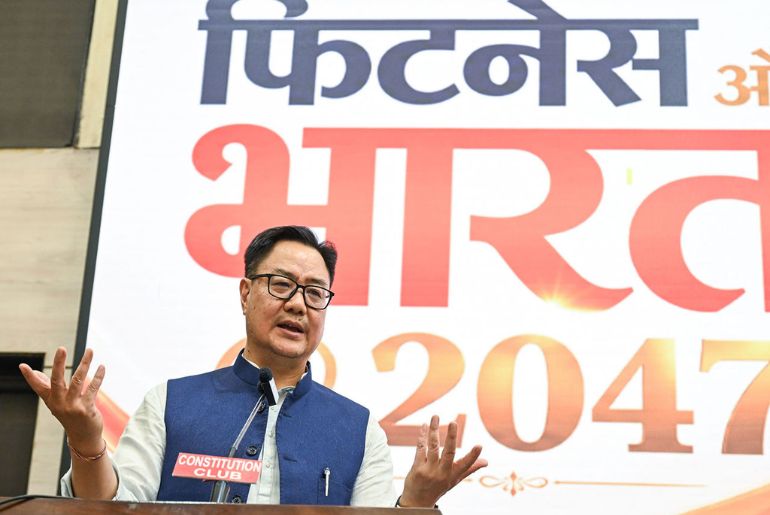
Union Power and Housing & Urban Affairs Minister Manohar Lal Khattar has called for accelerated reforms in Haryana’s power sector, emphasizing smart metering, reduction of power distribution losses, financial discipline, and timely payment of government subsidies to strengthen the state’s electricity distribution system. The directions were issued during a high-level review meeting on Haryana’s power sector attended by Haryana Power Minister Anil Vij, senior state officials, representatives of the Ministry of Power, and power sector CPSEs.
During the review, Manohar Lal stressed that electricity should be treated as an economic resource and that power utilities must operate on sound commercial principles. He urged the state utilities to focus on reducing power procurement costs, rationalizing expenditures, improving revenue realization, and strengthening operational efficiency.
A key focus of the meeting was the rollout of smart meters. Haryana committed to begin on-ground smart metering work from August 31, 2026, with the Centre advising the state to expedite award and implementation of projects. The minister recommended a phased rollout of prepaid smart meters, beginning with government offices, public institutions, and government employees, before expanding to high-consumption consumers with loads above 10 kW. Incentive mechanisms for voluntary adoption were also discussed.
Manohar Lal also highlighted the need for further reduction in Aggregate Technical and Commercial (AT&C) losses. While Haryana has significantly improved its loss levels over the past decade, he directed utilities to undertake all pending loss-reduction works on a priority basis with clearly defined timelines. He further called for efforts to narrow the gap between power supplied and billed consumption while moving toward near-zero transmission and distribution losses.
Another important issue discussed was the financial health of distribution companies. The minister emphasized timely settlement of government department dues and subsidies through an automated payment mechanism, noting that prompt payments are essential for improving DISCOM liquidity and ensuring sustainable operations.
The meeting also reviewed Haryana’s future power requirements. The state currently has contracted power capacity of around 16,552 MW, which is sufficient to meet the projected peak demand of 16,454 MW in 2026. However, demand is expected to rise to nearly 19,500 MW by 2029-30, prompting the need for proactive resource planning and transmission infrastructure expansion.
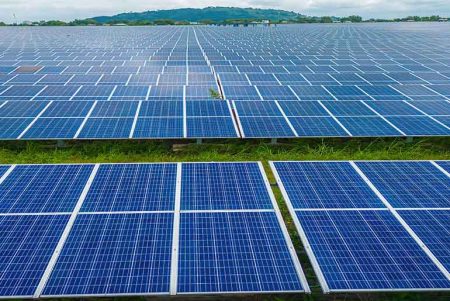
Progress under the PM Surya Ghar: Muft Bijli Yojana was also reviewed. Haryana aims to install 2.2 lakh rooftop solar systems during the current year, with nearly 86,000 installations already completed. The minister directed officials to prepare a focused action plan to expand consumer enrollment, particularly among small and middle-income households.
The review comes as Haryana continues efforts to modernize its power sector, improve DISCOM finances, enhance consumer services, and prepare for rising electricity demand driven by economic growth and increasing electrification across the state.
 Electrify your feed! Click here to join our Whatsapp group and to get the latest updates, expert insights, and innovations driving India’s energy storage revolution.