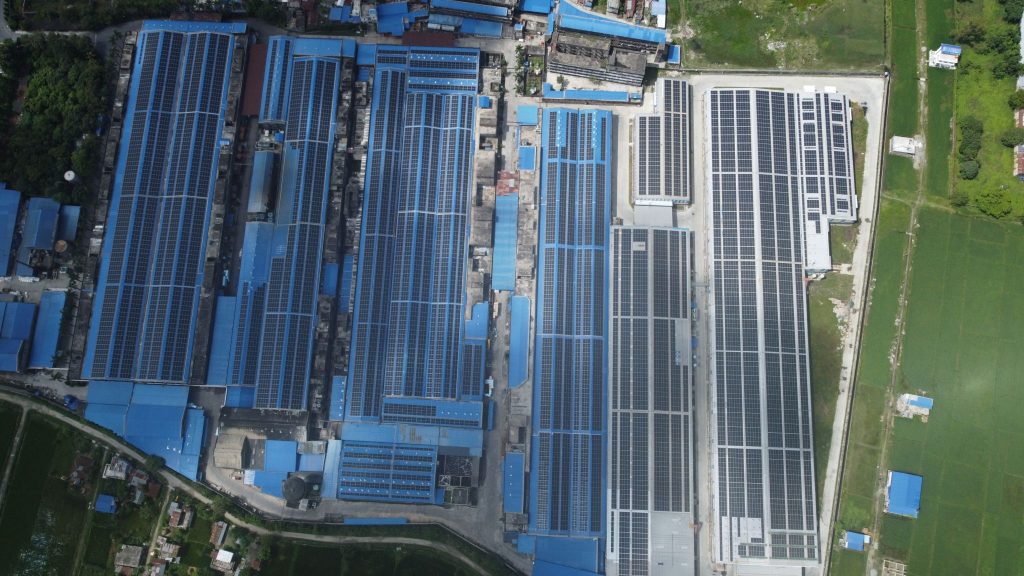
As the global energy landscape pivots from simple solar generation to complex, “round-the-clock” hybrid systems, the conversation is shifting from mere capacity to the sophisticated nuances of control and synchronization. Leading this charge is Prozeal Green Energy Limited, a company that has consistently proven its engineering mettle with landmark projects, such as the massive 9.9 MWp rooftop installation at Reliance Spinning Mills in Nepal. However, as the industry moves toward utility-scale Battery Energy Storage Systems (BESS), the challenges are no longer confined to hardware—they reside in the “control philosophy” that keeps the grid stable.
In this exclusive dialogue, Shweta Kumari, Sub-Editor of The Battery Magazine, engages in a thought-provoking discussion with Shobit Rai, Co-Founder & Managing Director of Prozeal Green Energy Limited. Together, they peel back the layers of energy storage—exploring why battery price is rarely the most critical variable for project viability and how to future-proof assets for a 25-year lifecycle amidst rapid technological evolution.
From the technical hurdles of synchronizing fundamentally different dynamic systems to the rise of “control-driven differentiation,” let’s delve deeper into the strategies and operational discipline defining the future of integrated energy.
As Prozeal moves from standalone solar to hybrid + storage, what is the biggest integration hurdle in synchronizing multiple energy sources?
The biggest hurdle is not hardware integration; it’s control philosophy alignment across fundamentally different dynamic systems. Solar, batteries, and the grid all operate on different response timescales. Solar is irradiance driven and intermittent, batteries are dispatchable but chemistry constrained, and the grid expects predictable, stable behaviour.
The challenge is synchronizing these through a control architecture where PCS behaviour, EMS dispatch logic, and grid code obligations don’t conflict under edge conditions, low SCR, fast ramps, partial cloud events, or grid disturbances. Most issues arise not during normal operation but during transitions: solar drop-offs, battery SOC threshold crossings, or grid voltage events. Getting those transitions right requires iterative tuning and field validation, not just controller specs.
With battery prices fluctuating, how do you ensure long-term project viability in BESS deployments?
We stop treating battery price as the core variable and instead engineer around throughput, degradation slope, and availability. A cheaper battery with aggressive degradation or restrictive warranty conditions often destroys long term returns.
Viability comes from conservative C rate selection, realistic usable SOC windows, and dispatch strategies that respect thermal and ageing limits. We also model revenue under derated capacity over time, not nameplate assumptions. In parallel, we push suppliers hard on transparency around cycle definitions, temperature penalties, and replacement triggers. Long term economics is less about buying cheap batteries and more about avoiding premature capacity loss that disrupts contracted performance.
Are Indian C&I clients truly ready for the CAPEX of storage, or is the market still subsidy-dependent?
C&I clients are selectively ready not ideologically, but operationally. Where power quality, peak demand charges, or outage risk are material, storage CAPEX is being justified without subsidies. However, clients expecting storage to behave like a static asset often underestimate O&M discipline and control complexity.
Subsidies accelerate decisions, but they don’t create technical readiness. What’s shifting now is client understanding of energy reliability as a balance sheet risk, not just a tariff line item. The challenge isn’t willingness to invest its aligning technical expectations with what storage can and cannot guarantee over 10–15 years.
How do you ensure asset longevity (20–25 years) when battery technology itself evolves rapidly?
Asset longevity is ensured by designing the balance‑of‑plant and control architecture for 20–25 years, while treating batteries as replaceable sub‑systems. Conservative C‑rates, tight thermal control, and realistic SOC windows do more to extend life than chemistry upgrades and allow future cell replacements without redesigning the entire plant.
Prozeal Green Energy also see LDES as a structural solution to lithium‑ion degradation limits. Hybrid architectures, where lithium handles fast response and LDES provides endurance, reduce cycling stress and improve long‑term predictability. Longevity ultimately comes from system architecture and operating discipline, not from betting on a single battery technology.
What are the most common mistakes developers make while sizing BESS for industrial applications?
The most common mistake is sizing purely on energy (MWh) instead of operational power behaviour (MW over time). Industrial loads are dynamic, start ups, harmonics, short peaks and batteries are often undersized on inverter capacity or thermal handling for those transients.
Another mistake is assuming flat degradation. Real sites experience uneven stress—certain strings or racks age faster due to layout or airflow. Ignoring auxiliary loads, cooling power, and minimum SOC buffers also leads to underperformance. BESS sizing must reflect actual load profiles, not averaged spreadsheets.
In the push for RTC power, do you see grid stability risks being underestimated?
Yes, particularly in weak grids. RTC is being framed as an energy availability problem, but it is fundamentally a dynamic stability problem. High inverter density, low inertia, and coordinated dispatch can introduce control interactions that are not visible in static studies.
The risk isn’t blackouts, its persistent oscillations, nuisance tripping, and reduced grid resilience during disturbances. Grid forming capabilities help, but only when backed by disciplined tuning and conservative protection settings. RTC without system level thinking shifts risk from fuel uncertainty to control instability, which is harder to diagnose.
How is Prozeal addressing the skill gap in operating and maintaining high-voltage battery systems?
By acknowledging that traditional solar O&M skills are insufficient. High voltage DC systems demand a different safety mindset, diagnostic capability, and response discipline. Prozeal Green Energy focus on procedural rigor over vendor dependence, lock out philosophies, fault interpretation, and layered escalation paths.
We also train teams to understand system behaviour, not just alarms. Knowing why a rack isolates or why PCS curtails under specific grid conditions is critical. Skill gaps are closed not through one time training, but through controlled exposure to real faults, post event analysis, and continuous SOP refinement.
What is one underestimated trend in India’s energy storage space that could define 2026?
The rise of control driven differentiation. Hardware will continue to commoditize, but projects will increasingly be separated by how intelligently they respond to grid conditions, degradation, and dispatch uncertainty.
Systems that can adapt setpoints, predict stress, and balance asset health against revenue in real time will outperform identical hardware configured statically. By 2026, storage success in India won’t be about who installs the most megawatt hours, it will be about who keeps them stable, predictable, and bankable over time.
 Electrify your feed! Click here to join our Whatsapp group and to get the latest updates, expert insights, and innovations driving India’s energy storage revolution.