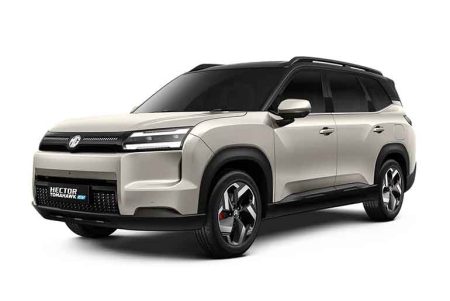

India’s EV manufacturing sector is accelerating rapidly, shifting from a niche space to large-scale production. Current forecasts indicate that annual output could rise from nearly 125,500 units in 2024 to around 1.33 million units by 2030. This dramatic growth trajectory positions India to become the world’s fourth-largest producer of electric cars. The expansion reflects stronger policy support, expanding local supply chains, and increasing consumer acceptance, all of which are reshaping India’s position in the global EV landscape.
Micro-factories in India demonstrate an impressive speed of learning, where a technician trained to fit seats on an ICE rickshaw can quickly transition to handling high-voltage wiring and thermal management for battery modules within just weeks. This rapid adaptability reflects the ground-up improvisation and multi-skilled nature of India’s workforce, which blends curiosity with a fearless approach to mixing traditional and modern techniques.
Beyond the micro-factories themselves, their influence extends to local vendor workshops providing components such as welded frames and forged brackets, and even benefits nearby roadside eateries that serve shift workers. Previously, auto parts had to be transported from distant hubs, but the rise of micro-factories has fostered agile, locally rooted supply chains, creating opportunities for families running cable harness businesses from their garages and former migrant workers securing stable employment closer to home. This interconnected ecosystem not only supports resilience and flexibility but also democratizes industrial growth by embedding manufacturing deep within local communities, making an impact that goes well beyond the factory walls.
One micro-factory in western India pivoted its night shift to customizing a batch of e-three-wheelers for a rural healthcare provider, attaching portable vaccine coolers. The sense of achievement when those vehicles left for the interior villages could never be captured as a ‘feature delivered’; it was about the convergence of mobility, healthcare, and community resilience.
Fleet managers and entrepreneurs running last-mile logistics in burgeoning cities prefer dealing with micro-factories. The proximity reduces downtime, and custom maintenance requests, battery swaps, and even retrofits (like side-loading cargo boxes) can be turned around in days, if not hours. One operator shared how he could specify a 150 km range on a fleet destined for hilly terrain while conserving costs for a flatland fleet with lighter loads and lower battery specs. This level of granularity in product adaptation, born out of direct dialogue rather than product brochures, keeps both sides agile and accountable.
For traditional MSMEs, the EV push is both a challenge and a liberation. Some vendors speak of early uncertainty, “Will these new EV parts disrupt the business?” quickly replaced by stories of how micro-factories enable diversification. Jig makers who once supplied actuator arms for a well-known scooter brand now supply bespoke mounts and brackets for EVs being built within their own district. Their workshops, modest but bustling, showcase what it means to localize not just parts, but hope and aspiration as well.
Micro-factories are reshaping how manufacturing teams operate. Instead of sticking to fixed roles or being treated as numbers, workers learn several skills and move easily between jobs whether that means trim fitting or diagnostics. The smaller, more flexible setup also brings new opportunities for women and young workers. One college student from a nearby town, for instance, picked up battery safety training through a government program and later guided her team through a busy production run.
What sets these micro-factories apart is their ability to adapt to changing demand, supply delays, local needs, and customer expectations. Their real success comes from sharp, on-ground execution and a clear sense of how India’s towns and cities function, rather than from flashy marketing claims.
This emerging tapestry woven from the experiences of factory floor workers, young engineers, fleet managers, MSME owners, and service technicians makes India’s micro-factory model not just relevant, but deeply human, original, and distinctly auto-sector focused. No marketing. No promotion. Just the voice of those building and relying on India’s new mobility backbone.
 Electrify your feed! Click here to join our Whatsapp group and to get the latest updates, expert insights, and innovations driving India’s energy storage revolution.