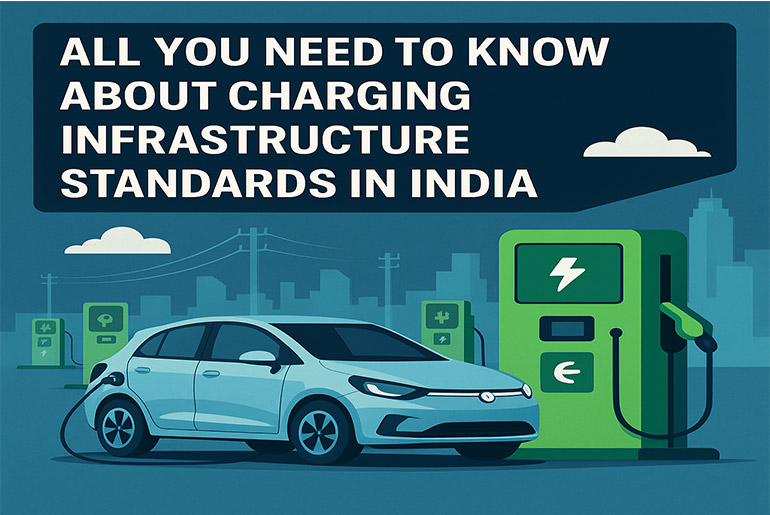
The EV revolution in India isn’t just about batteries, motors, or range — it is about the invisible backbone that keeps everything moving: standards for charging infrastructure. As India transitions from fuel pumps to charging points, to AC slow charging to megawatt systems, it has never been more important to have clear and uniform standards.
Today, the charging ecosystem in India is rapidly developing, with a carefully orchestrated mix of globally accepted protocols, quasi-national frameworks, safety levels, and interoperability requirements. Gaining a basic understanding of this subject is not only for engineers or OEMs, it is important for anyone who wants to understand where, in fact, India’s infrastructure for electric vehicles is headed.
The Rise of a Multi-Standard Ecosystem
India didn’t adopt a single charging protocol. Instead, the country embraced a multi-standard ecosystem to accommodate everything from two-wheelers to commercial fleets to heavy-duty e-buses.
This diversity was necessary — but it also made harmonization crucial.
The broad foundations look like this:
- AC Charging: Bharat AC001 and Type-2
- DC Fast Charging: Bharat DC001, CCS2 (the dominant standard), and CHAdeMO (phasing out)
- Heavy-Duty & Fleets: GB/T and growing interest in Megawatt Charging Systems (MCS)
But behind these acronyms lies a deeper story of how India is shaping a charging network that works for everyone, not just premium EV owners.
AC Charging Standards: Where India’s EV Journey Begins
For most buyers, charging starts at home or in small commercial spaces.
This is where AC standards matter.
Bharat AC001 was India’s first attempt to create a national identity for charging — a simple, low-power, grid-friendly solution used widely in early EV adoption.
But as the market matured, India aligned with global best practices using Type-2 AC charging, which supports higher power levels and smoother communication between charger and vehicle. Today, Type-2 is the de-facto AC standard across OEMs.
This shift matters because it lays the foundation for:
- safer home charging,
- smart-meter–based billing, and
- automated load management systems across apartments and offices.
DC Fast Charging: The Real Battlefield
If AC charging is the foundation, DC fast charging is where the real transformation happens.
India initially relied on Bharat DC001, designed for low-power, fleet-oriented charging. But as higher-range cars entered the market, the country migrated to CCS2, now the most widely supported fast-charging protocol for passenger and commercial EVs.
Why CCS2 won:
- higher efficiency,
- wider OEM compatibility,
- future-proof power scaling,
- and alignment with global best practices.
CHAdeMO support is fading, while the Chinese GB/T standard continues in pockets of fleet and bus operations. Over time, India is expected to unify largely around CCS2 for fast charging — until megawatt standards reshape the picture again.
The Next Frontier: High-Power Charging for Fleets & Highways
Intercity travel, logistics, and long-haul transport require a different league of charging.
This is where global megawatt systems come in.
India’s regulators are already preparing the ground for high-power solutions that will support:
- electric trucks,
- large e-buses, and
- dedicated highway charging corridors.
The Megawatt Charging System (MCS) — capable of delivering power in the 1–3 MW range — is likely to become the backbone of future freight electrification.
Safety, Interoperability & the Push for Standardization
Behind the scenes, multiple agencies — CEA, BIS, and state DISCOMs — are shaping rules that ensure chargers don’t just work fast, but work safely.
Key areas of focus include:
- fire and thermal protection norms,
- communication protocols (OCPP, OCPI),
- cybersecurity requirements,
- and interoperability guidelines that allow any EV to charge anywhere.
This ensures India doesn’t end up with fragmented “islands” of incompatible chargers — something that slowed EV adoption in several mature markets.
Why These Standards Matter for India’s EV Future
Charging is more than plugging in a cable.
It defines convenience, safety, business models, OEM partnerships, and even consumer confidence.
As India accelerates toward 2030 EV targets, its charging standards will determine:
- how fast fleets transition to electric,
- how reliable the nationwide charging network becomes,
- how much investment private players bring in, and
- how ready India is for the next wave of technologies — from V2G integration to battery swapping to autonomous charging.
India’s charging standards are not just evolving — they’re maturing into a structured, future-ready ecosystem that supports mass EV adoption and sets the stage for a cleaner, smarter mobility era.
 Electrify your feed! Click here to join our Whatsapp group and to get the latest updates, expert insights, and innovations driving India’s energy storage revolution.