The future of energy storage in India is no longer being written in policy rooms alone — it is unfolding in the market, driven by price swings, demand peaks, and opportunity. Merchant Battery Energy Storage Systems (BESS), operating without fixed contracts, are beginning to test a bold idea: can volatility itself become a viable business model?
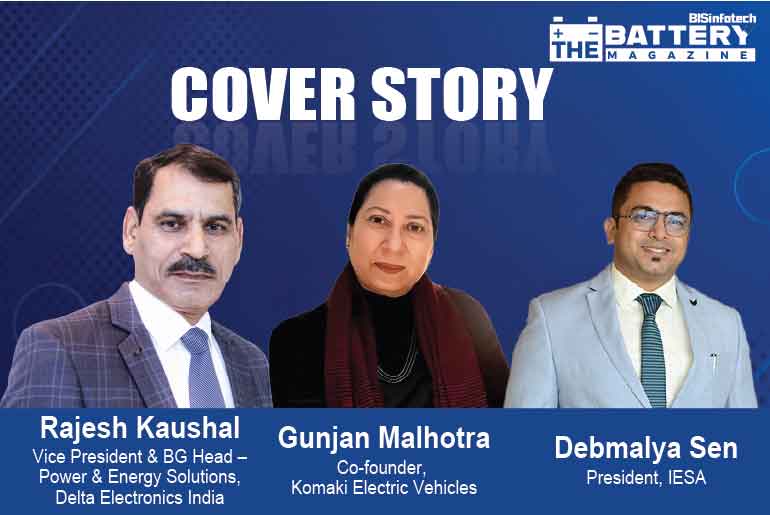
As renewable energy expands, India’s power markets are showing sharper intraday price movements — low prices during solar peaks and steep spikes in the evening. This gap is where storage finds value. According to Debmalya Sen, current arbitrage opportunities are strong enough to support early deployments, though this window may narrow as competition grows. Rajesh Kaushal highlights that the shift is already underway, with market conditions improving and merchant viability moving from theory to reality. At the same time, Gunjan Malhotra points out that consistency in price signals will be key for scaling this model.
What emerges is a clear narrative — merchant BESS is not just about arbitrage, but about adaptability, multiple revenue streams, and evolving market structures.
To understand where this opportunity truly stands, it is time to delve deeper.
Merchant BESS relies heavily on price arbitrage — do current power market dynamics in India offer sufficient volatility to ensure project viability?
Debmalya Sen, President, IESA, said, “Yes, the price arbitrage in the market today is high enough for BESS to be deployed as a merchant. Moreover, just this year the price trends in HP-DAM have been very encouraging for BESS Merchants. But this window will not be so lucrative for a long time. Soon with players populating this space we will see the opportunity losing out as we have seen in the US and EU markets for BESS.”
Rajesh Kaushal, Vice President and BG Head – Power & Energy Solutions, Delta Electronics India, said, “Yes, in selected markets and operating conditions. India is beginning to show the right volatility for merchant BESS, but viability is still project specific. If you look at how India’s power exchanges behave on any given day — solar generation peaks around noon, prices crash, then evening demand hits and prices spike sharply — that gap is exactly where a battery makes money. This isn’t happening occasionally anymore; it is becoming increasingly frequent as renewable penetration rises. Ember’s 2025 report actually confirmed that merchant BESS became profitable in India for the first time in 2024, without any government subsidies or guaranteed contracts. Just pure market returns. That’s a big deal. And here’s the thing — as more solar comes onto the grid chasing India’s 500 GW target, these swings are only going to get bigger and more predictable. So the market conditions aren’t just good right now — they’re getting better. The real conversation in the industry has shifted from “can this work?” to “how fast can we move?”
Gunjan Malhotra, Co-founder of Komaki Electric Vehicles, said, “India’s power markets are starting to show some price variation, especially with the growth of real time and day ahead trading. But it is still not steady or deep enough compared to more established markets. For merchant BESS to work at scale, these price swings need to become more consistent over time.
The trend is positive. More renewables, changing peak demand, and grid needs are already creating price gaps at certain times. As the market grows and more players come in, these gaps should become clearer, which will support merchant BESS over time.”
Beyond arbitrage, how critical is revenue stacking (ancillary services, capacity markets, hybrid models) for making merchant BESS sustainable in India?
Debmalya Sen, President, IESA, said, “It is important to understand the interplay of various revenue sources available to a project. These sources vary based on market, use case, and period. For example, in markets where current renewables penetration is relatively lower (e.g., US), near-term revenue will primarily be driven by capacity and ancillary services, with energy arbitrage becoming a stronger driver over time. Moreover, not all revenue streams are available simultaneously – the optimal or suboptimal choice to engage in energy arbitrage vs. ancillary services in a given time frame can materially impact project revenues. Finally, state-specific revenue streams such as Massachusetts’ Clean Peak Standard can be evaluated as additive to energy arbitrage, ancillary services, and capacity revenues. What we have seen globally is that only merchant cannot make a project viable in the long run you have to look for other revenue streams to make a project viable”
Rajesh Kaushal, Vice President and BG Head – Power & Energy Solutions, Delta Electronics India, said, “Revenue stacking is essential for long-term sustainability. Energy arbitrage alone may create upside, but it may not deliver stable returns across the battery lifecycle. Think of it this way — if you’re running a battery purely on price arbitrage, you’re leaving a lot of money on the table. The developers who are going to win in this space are the ones treating a battery as a multi-service asset, not a single-trick one. India’s grid needs balancing services, frequency regulation, peak shaving — and a battery can do all of it. Ember’s numbers indicate that combining exchange arbitrage with ancillary services can materially improve project returns up to 24%. That’s the kind of number that makes serious infrastructure investors sit up and pay attention. The key is having smart dispatch logic behind the battery that knows when to do what and in which market. Get that right, and merchant BESS isn’t a risky bet anymore — it starts looking like a very solid infrastructure investment.”
Gunjan Malhotra, Co-founder of Komaki Electric Vehicles, said, “Revenue stacking is needed for merchant BESS in India. Arbitrage alone doesn’t quite work yet, as price gaps are still uneven and don’t always give steady returns. Having more than one revenue source helps balance this and makes the project more workable.
As the market evolves, opportunities in ancillary services, peak load management, and hybrid models with renewables will play a key role in stabilising revenues. A diversified approach allows BESS operators to capture value across different use cases, making projects more resilient and bankable in the long run.”
From a technology and cost perspective, how should developers evaluate 2-hour versus 4-hour storage configurations in the Indian context?
Debmalya Sen, President, IESA, said, “For merchants 2 hr, 4 hr, 1 cycle, 2 cycle systems dont matter much, its on the opportunity they will cater to which matters, thus a lot of mix configurations are often seen in merchant projects. Where based on opportunity the same battery can be operated multiple times in a day to only a half cycle in a day.”
Rajesh Kaushal, Vice President and BG Head – Power & Energy Solutions, Delta Electronics India, said “The right choice depends on use case and revenue opportunity. Honestly, framing it as a choice between the two is the wrong starting point. Right now, 2-hour systems make a lot of sense — India’s evening peak is sharp and short, so a fast-cycling battery earns well in today’s market. But if you look at where tenders are going in 2025 — 4-hour systems, multi-cycle models, solar-plus-storage combos — the direction is very clear.
So what’s the smart move? Build modular. Design your system so it performs well today but can scale up duration as the market grows. Developers who lock themselves into rigid configurations now are going to find themselves at a disadvantage in three to four years. The ones building adaptable systems from day one are already thinking several steps ahead — and that’s exactly the right approach for a market moving as fast as India’s.”
Gunjan Malhotra, Co-founder of Komaki Electric Vehicles, said, “In the Indian context, the choice between 2 hour and 4 hour storage comes down to use case and cost discipline. A 2 hour system fits short needs like peak shaving, frequency support, and quick charge and discharge, without adding much to the cost.
A 4 hour system gives more flexibility, especially with renewables, since it can handle more energy during longer peak hours. It costs more upfront, so returns depend on how well that extra capacity is used.
Developers should base their decision on demand, grid needs, and revenue options. In many cases, a 2 hour setup works to begin with, while 4 hour systems can be added as the market grows and more use cases come in.”
What is the current stance of financial institutions towards funding merchant BESS projects without long-term PPAs or guaranteed offtake?
Debmalya Sen, President, IESA, said, “This is a challenge, BESS itself has been facing challenges for getting financing over that merchants will be difficult. As long as a merchant is tied up to any project in future this should be taken care of, For now, we see projects where the BESS has been commissioned before the IPPs FDRE project and they use the BESS as a merchant till the time the wind and solar gets commissioned.”
Rajesh Kaushal, Vice President and BG Head – Power & Energy Solutions, Delta Electronics India, said, “Financial institutions remain interested but cautious. A year back, walking into a room with lenders and pitching merchant BESS without a PPA was a tough conversation. Today, that same conversation is genuinely different. Lenders are engaged, they’re asking the right questions, and they’re showing selective appetite — provided the project has a credible revenue story and a committed developer behind it. That’s a fair ask, and it’s one good projects can absolutely meet. What’s also helped is that the RBI has extended green financing ECB access to battery storage, which means developers can now tap into international capital at competitive rates. The first set of merchant projects that actually operate well and prove the numbers will make every lender conversation after that significantly easier. That first wave is happening right now, and the financing market will follow closely behind it.”
Gunjan Malhotra, Co-founder of Komaki Electric Vehicles, said, “Banks in India are still cautious about funding merchant BESS projects without long term PPAs or clear offtake. The main concern is that earnings can fluctuate, since they depend on market prices instead of fixed contracts, which makes the risk harder to assess.
We’re just starting to see things pick up. Some projects are getting funding, especially where developers can show multiple revenue sources and a clear plan for operations. As market mechanisms mature, price signals become more consistent, and policy support improves, lender confidence is expected to strengthen. For now, a hybrid approach with partial contracting or revenue visibility tends to be more favourable from a financing standpoint.”
Do emerging frameworks like SECI’s CfD mechanism provide a viable bridge towards a fully merchant storage market in India?
Debmalya Sen, President, IESA, said, “Its just the start we need to see how these mechanisms work , CfD ofcourse is a welcome intervention, but we need much more to happen to truly see what merchants can do.”
Rajesh Kaushal, Vice President and BG Head – Power & Energy Solutions, Delta Electronics India, said, “Absolutely — and it’s a smart piece of policy design. Here’s how it works simply: developers participate in live power exchanges during peak hours and trade at real market prices. If prices fall below the agreed level, SECI covers the difference. If prices move above the strike level, settlement terms apply as per bid framework. So, you get real market participation with a floor protecting your downside. For lenders, that floor provides just enough comfort to say yes. For developers, it’s genuine market exposure that builds operational expertise. And for the market overall, it starts creating the track record that eventually makes full merchant financing possible without any support at all. Many countries are still debating how to handle this transition. India has gone ahead and built a practical solution. That’s worth recognizing — it puts India genuinely ahead in how thoughtfully it’s approaching storage market development.”
Gunjan Malhotra, Co-founder of Komaki Electric Vehicles, said, “Emerging frameworks like SECI’s CfD mechanism can play an important role in bridging the gap between early stage uncertainty and a fully merchant storage market. They give a better sense of what earnings might look like, which helps reduce risk while still letting developers benefit if prices go up.
In India right now, pricing is still settling, so these structures make it easier to finance projects and bring more players in. As the market grows and revenues become steadier, the need for this kind of support may come down, but for now it helps get projects off the ground.”
 Electrify your feed! Click here to join our Whatsapp group and to get the latest updates, expert insights, and innovations driving India’s energy storage revolution.