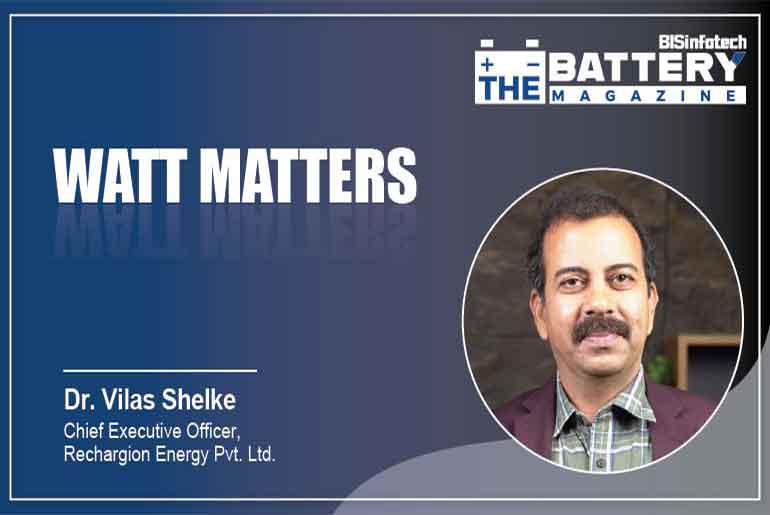
India’s pursuit of energy independence is entering a decisive phase—one that may no longer be defined by lithium alone. As global supply chains tighten and geopolitical dependencies deepen, the search for alternative battery chemistries is no longer optional, but strategic. At the forefront of this transition stands Dr Vilas Shelke, Chief Executive Officer, Rechargion Energy Pvt. Ltd., whose work in sodium-ion technology signals a compelling shift from convention to innovation.
Emerging from a rare lab-to-market journey rooted in CSIR-NCL, Rechargion represents a new breed of deep-tech enterprises attempting to bridge India’s long-standing gap between scientific excellence and industrial scale. From developing proprietary electrode materials to demonstrating high-cycle, safe, and cost-efficient battery performance, the company is steadily building a case for sodium-ion as a viable, domestically aligned alternative.
Yet, the road ahead is layered with challenges—from scaling beyond pilot facilities to navigating cost competitiveness in a lithium-dominated ecosystem. Through this conversation, Dr. Shelke offers sharp insights into technology readiness, safety paradigms, supply chain resilience, and India’s opportunity to redefine its position in the global energy landscape.
Read on as Rechargion’s journey unfolds at the intersection of innovation, ambition, and national energy priorities.
- Rechargion’s journey from a CSIR-NCL spin-off to a commercially advancing battery innovator reflects a rare lab-to-market transition. What were the defining moments that validated your technology beyond the laboratory, and what remains the biggest gap between scientific success and commercial scalability in India?
The lab-to-market transition goes through different phases from ‘Publication, Patent, Product to Profit’. A laboratory scale prototype is based on deep scientific understanding and critical knowhow generated over the years of experience. Nevertheless, there is a luxury of ideal laboratory conditions, high purity chemicals, sophisticated equipment under which the prototype is built or tested. You may get breakthrough results and excellent analytical numbers. We had all these benefits as a spin-off from the well-equipped CSIR-National Chemical Laboratory. However, developing a pilot-scale prototype for a nascent technology like sodium-ion battery was uphill task. Setting up a first-of-its-kind dedicated sodium ion battery cell fabrication plant with end-to-end solution was a major success for the Rechargion team. The substantial financial support from the Ministry of Heavy Industries, US-India Science & Technology Endowment Fund and SocialAlpha allowed us to design and customize the plant for specific needs. For the first time we made 4 Ah capacity cells from our proprietary electrode materials and tested them for 5000 cycles and then raised the bar to 20 Ah capacity and 10,000 cycles. Moreover, as a part of United Nations Industrial Development Organisation funding, we demonstrated in-field deployment and validated the performance for micro-mobility, renewable energy storage and for drone applications.
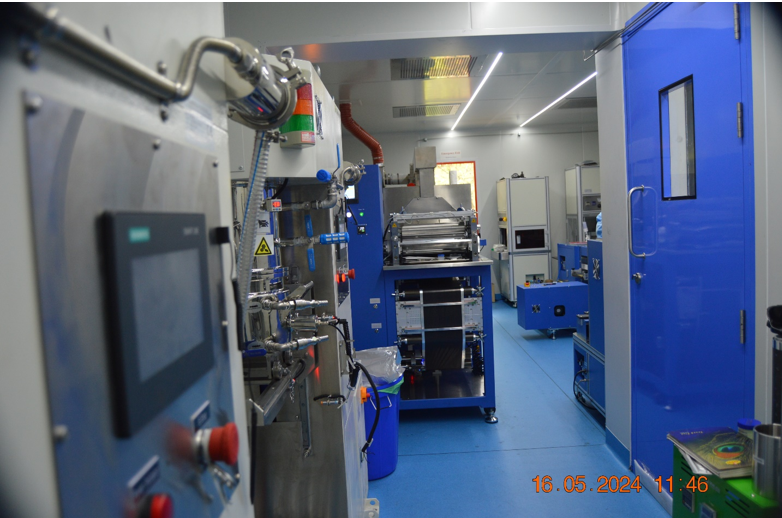
Despite these successes, commercial scalability remains herculean task and there is hardly any success story outside China or neighbouring countries for battery cell manufacturing. There is a wide gap between pilot scale kilo-factory and commercial scale giga-factory. The crucial link is a ‘mega-factory’ which is essential to derisk a new technology, to build the upstream/ downstream supply chain and to decode the techno-commercial paradox. India has minimal chance to match the scale and cost of Li-ion batteries with China as it controls the entire value chain from mining to manufacturing. The sodium ion battery offers a window of hope for a self-reliant energy nation since all the resources are available domestically. It is just a matter of desire and time!
- Your sodium-ion technology’s ability to be discharged to 0V introduces a fundamentally different safety paradigm. How do you see this feature reshaping not just transportation safety, but also the economics of storage, logistics, and insurance within India’s battery ecosystem?
The lithium-ion batteries have non-symmetric structure with aluminium current collector on cathode side and copper on the anode. Aluminium can alloy with the graphite anode during charge-discharge cycle. Discharging Li-ion battery to zero volt can cause irreversible degradation. Therefore, these batteries are designed to retain 20-30 % state of charge. It creates safety and security concern during storage and transport of the batteries, particularly in check-in baggage at airport. Alternatively, sodium ion battery does not have this concern. They can be discharged fully. 0V storage offers a logistic flexibility, safe installation and cost saving for the electric mobility as well as large-scale renewable energy storage projects. It’s inherently low thermal runaway adds another safety layer and reduces the chances of fire. These aspects will help for the faster adoptability of electric vehicles in India.
- While sodium-ion batteries are gaining attention globally, the real differentiation often lies in material engineering. How critical is your proprietary work on electrode materials in achieving long cycle life and cost efficiency?
Across multiple battery chemistries, the basic sandwich structure of anode-separator-cathode with electrolyte remains the same. The major innovation can be done on the active materials of anode, cathode and electrolyte salt. Rechargion has developed proprietary cathode material with polyanionic composition and hard carbon anode material from ubiquitous raw material source. We used advanced analytical tools to understand the crystal structure of polyanionic compounds and incorporated a strategy to stabilize the structure for innumerable intercalation and de-intercalation cycles. Our innovative approach resulted in a cycle life of more than 10,000 with 80% capacity retention. It means the battery life can be warranted for 25 years that is more than the electric vehicle or stationary storage project life. So the end-user is not required to change the battery pack during the life cycle of vehicle. This reduces the life time cost and increases the adoptability. Since the raw materials are abundantly available the bill of materials is low and with similar manufacturing process the overall Bill of Goods Manufactured can be significantly low for the sodium ion battery as compared to Li ion battery.
- India’s climatic and infrastructure conditions present a unique stress test for battery technologies. How have your chemistries been engineered to withstand high temperatures, inconsistent charging patterns, and grid instability without compromising performance or safety?
A battery stores energy electro-chemically but heat is generated when ions are attached or detached from electrode during charging-discharging cycles. Since Li-ion has strong intercalation force with electrode, the heat generation is significant. In Indian climatic condition, a slightly elevated temperature or a mechanical shock can trigger a thermal runaway and within seconds the temperature can reach to hundreds of degrees Celsius and the battery catches fire or even explodes. Such catastrophe is avoided in sodium ion battery as the intercalation force and resultant heat generation is less. This is advantageous for inconsistent or faster charging and discharging within 30 minutes during peak load. The grid instability, hot climatic conditions, and mechanical vibrations will not degrade the battery permanently.
- With lithium iron phosphate (LFP) batteries becoming increasingly cost-competitive due to global scale, how does Rechargion plan to position sodium-ion as a viable economic alternative in the near term, especially within India’s price-sensitive market?
The cost reduction for LFP battery is governed by the demand-supply arithmetic. In last few years ramped up the lithium minerals mining and cell manufacturing to a gigantic scale. Since the supply is more than the demand the cost reduced substantially. However, as per International Energy Agency data, after 2027 the demand is increasing exponentially mainly triggered by the electric mobility and stationary storage applications. The supply side being the same, the demand-supply gap will widen drastically. The critical strain on upstream supply chain and any undue geo-political tensions creates price volatility. Already, there is lots of turmoil in the global energy sector and another disruption may have far reaching consequences.
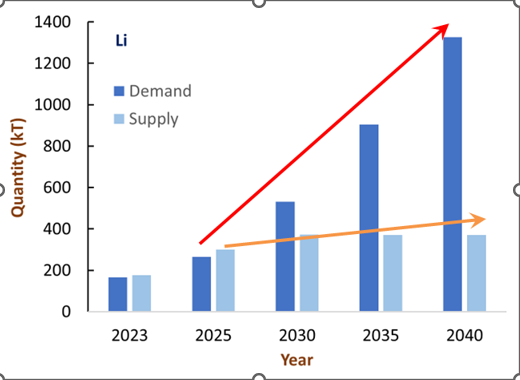
A complete dependence on a single technology is always risk prone. Already the cost of lithium carbonated has jumped from less than 9000 to above 20,000 USD/ton just in last six months. Therefore, de-risking a technology with resilient supply chain is our strategy. The abundance and ubiquitousness of sodium and other elements for our technology mitigates the supply chain risk. For our ambition of ‘Self-reliant Energy Nation’ reducing import dependence and building local value chain is essential. Our methodical approach is to setup a ‘Mega-factory’, to achieve techno-commercial viability and to achieve cost parity with the market benchmark. It is not a competition but a coexistence of two technologies with a selectivity for the customer based on price, life, safety, sustainability, and performance metrics. As an innovation driven enterprise, Rechargion is positioned to offer alternative solution for the global energy crisis.
- With your recent advancements and certifications, how are you prioritizing between mobility applications (2W/3W EVs) and stationary storage (BESS), and which segment do you believe will drive faster adoption in India?
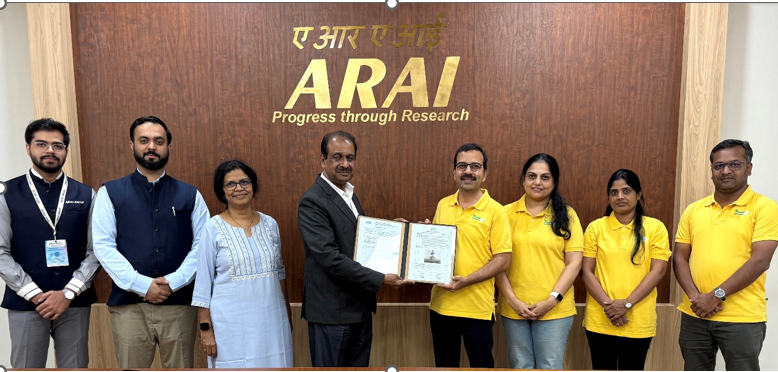
Energy is a need but safety is a right. Any energy storage product must comply with the stringent safety tests in accordance with IEC standard. Rechargion is the first company in India to achieve IEC62660 validation for sodium ion battery cells. India’s energy storage market is colossal with a need for 200 hundred giga-factories. With our limited manufacturing capability, initially we target electric 2/3-wheeler market. Our product with moderate energy density, exceptionally high cycle life, fast charging and ultimate safety features is suitable for low end electric mobility sector and it can boost the faster adoption. The demand for stationary storage sector is very high but there may be some reluctance for a new technology.
- As the global battery supply chain shifts towards a “China+1” strategy, do you see Rechargion primarily as a solution for India’s energy independence or as a global technology player, and what will it take to compete at that level?
Over the years China has built a strong synergy of ‘Mines-Materials-Machines-Manpower-Manufacturing’ at enormous scale. Competing with them for Li-ion technology is next to impossible. The sodium ion battery provides a fair chance as an emerging technology. Rechargion team has indigenously developed the critical knowhow and has the core competency to take the innovation from ‘kilo’ to ‘giga’ scale. We take a pride in promoting a battery ‘of India, by India, for India’! As a company born and supported from Government of India initiative, we envisage the Energy Independence for the country. Reaching out to the rural, remote and under-privileged sections for their energy needs is our priority. Nevertheless, we are also aiming for the European and American Market to fit into their China+1 strategy. For more than a century, in petroleum dominated energy sector India has always been vulnerable and a needy nation. Even after the emergence of solar energy sources and Li-ion batteries, our foreign dependence remained the same. We wish to bring India on global map as an energy exporter country with sodium ion technology at the forefront.
 Electrify your feed! Click here to join our Whatsapp group and to get the latest updates, expert insights, and innovations driving India’s energy storage revolution.